
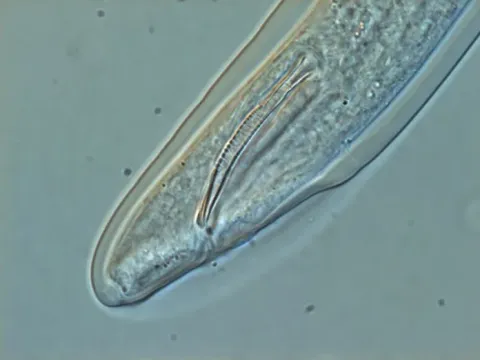
Paratrichodorus lobatus
Paratrichodorus lobatus
Paratrichodorus lobatus is a species of ectoparasitic nematode belonging to the family Trichodoridae. These microscopic organisms are known as 'stubby-root' nematodes because their feeding activities significantly disrupt the development of plant root systems.
What the section contains
Paratrichodorus lobatus
They possess a specialized feeding apparatus known as an onchiostyle, which is a curved, hollow tube used to pierce the cell walls of roots. Unlike endoparasitic nematodes, they remain outside the root tissue while extracting nutrients, moving freely through soil pore spaces.
The life cycle of this species is relatively short, allowing for multiple generations within a single growing season under favorable moisture and temperature conditions. They are highly dependent on soil water content, as they require a film of moisture to move and reach new root tips.
These nematodes are obligate parasites, meaning they survive and reproduce by feeding on the living roots of host plants. When host plants are absent, they may survive for a period in the soil, although their population density typically declines.
Dissemination occurs primarily through human activity, including the movement of infested soil on farm machinery, tools, and the transport of infested plant nursery stock or tubers. Water runoff during heavy rainfall can also facilitate their spread across agricultural fields.
Paratrichodorus lobatus has a broad host range, impacting various vegetable crops, cereals, and bulbous ornamentals. They thrive in light-textured or sandy soils, which offer optimal pore sizes for their mobility and feeding activities.
Direct damage occurs when these nematodes feed on the meristematic tissues of root tips. This feeding causes the cells to collapse, leading to the cessation of root elongation. Consequently, the root system becomes stunted, stubby, and highly branched, severely limiting the plant's nutrient uptake capacity.
A critical indirect threat posed by this species is its role as a vector for Tobraviruses, such as the Tobacco Rattle Virus (TRV). The virus is transmitted to the plant during the nematode's feeding process, leading to systemic infections that are often more destructive than the nematode damage itself.
Visible damage symptoms include stunted plant growth, chlorosis, and reduced crop yields. In tubers like potatoes, the viral infection leads to 'spraing'—a condition characterized by necrotic arcs or rings inside the flesh, making the produce completely unmarketable.
The severity of the damage is often exacerbated by environmental stress, such as drought or nutrient deficiency, as the compromised root system is unable to compensate for the plant's needs in challenging growing conditions.
Field observation often reveals patchy growth, where groups of plants appear significantly smaller and less vigorous than the surrounding healthy crops. These patches may expand over several years if the nematode population is not managed.
Upon examination of the root system, one will observe a lack of fine root hairs and the presence of 'stubby' root ends. In some cases, the roots may appear thickened or gnarled, and secondary decay caused by opportunistic soil-borne fungi may be present on the damaged tissue.
Above-ground symptoms typically manifest as signs of physiological stress, including leaf yellowing, wilting during hot parts of the day, and overall poor plant development. Viral symptoms, such as mosaics, ringspots, or leaf crinkling, may also appear on the foliage.
The presence of necrotic patterns inside tubers or taproots is a diagnostic indicator of viral infection transmitted by these nematodes. These internal symptoms significantly impact the shelf life and quality of harvested produce.
Confirming the presence of Paratrichodorus lobatus requires specialized diagnostic procedures, including soil sampling and extraction followed by taxonomic identification under a microscope or molecular testing to determine the presence of the species and associated viruses.
Effective management begins with preventative measures, such as the use of nematode-free certified planting materials and the thorough cleaning of equipment to prevent the cross-contamination of fields with infested soil.
Crop rotation serves as a fundamental cultural practice; planting non-host crops can significantly reduce the nematode population over time. Strategic use of cover crops or green manures that have antagonistic properties can also help suppress their numbers in the soil.
Chemical control via soil fumigation or the application of nematicides can be effective but is generally reserved for high-value crops with significant infestation levels. These applications must be performed according to strict safety regulations and soil moisture guidelines to ensure efficacy.
Biological control methods are increasingly recognized as part of an integrated approach. The introduction of specific beneficial microorganisms that target or compete with nematodes can foster a healthy soil environment and improve overall crop tolerance.
- Conduct soil testing before planting to assess population density.
- Avoid movement of soil from infested areas to clean sites.
- Implement crop rotation with non-host resistant cultivars.
- Maintain optimal soil fertility to help plants tolerate root damage.