
Paraburkholderia andropogonis
Paraburkholderia andropogonis
Description
How to identify
Paraburkholderia andropogonis is a gram-negative, aerobic, rod-shaped bacterium within the Burkholderiaceae family, known for causing systemic bacterial infections in plants.
This pathogen is versatile and can persist in crop debris and soil for extended periods, making it a recurring threat in agricultural environments with high humidity.
The bacterium infects host plants through stomata or mechanical wounds, subsequently colonizing the vascular system and intercellular spaces of the plant tissues.
Accurate identification usually requires specialized laboratory techniques, including selective plating, biochemical assays, or molecular methods like PCR analysis.
As an obligate pathogen, it is highly adapted to the internal environment of its hosts, which facilitates rapid colonization during favorable climatic conditions.
What it damages
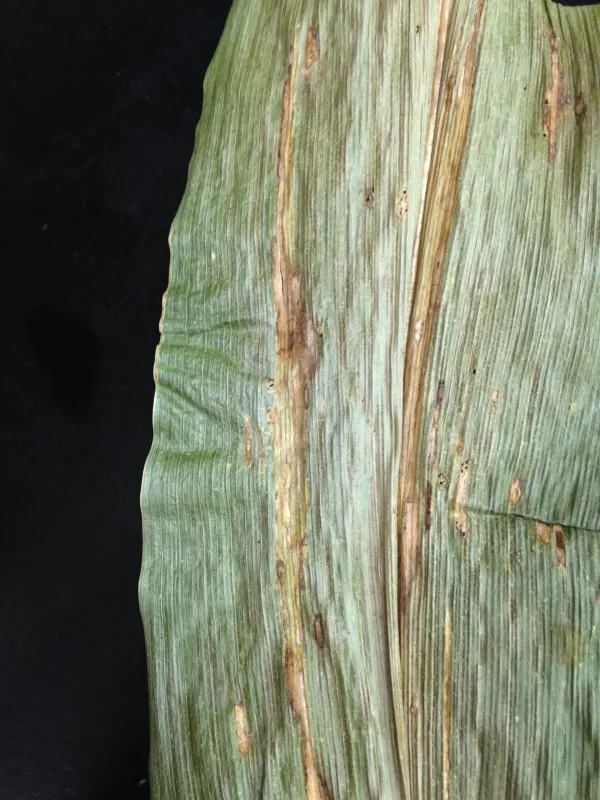
The primary agricultural crop affected is corn (Zea mays), where it causes the condition commonly referred to as bacterial stripe or leaf spot.
The pathogen also infects a wide variety of other plants, including sorghum, carnations, clovers, and several leguminous species, causing localized to systemic necrosis.
Infection results in reduced photosynthetic capacity, stunted plant growth, and diminished yield quality due to the necrosis of green leaf tissues.
In ornamental plants like carnations, it triggers stem rot, which can lead to complete loss of crop value and significant financial distress for producers.
The cumulative damage often includes poor seed germination, structural weakness of the stem, and susceptibility to secondary opportunistic infections.
Signs of infestation
Initial symptoms are characterized by small, water-soaked spots on the leaves, which gradually develop into reddish-brown or purple elongated lesions.
As the disease progresses, these lesions merge to form large necrotic stripes running parallel to the leaf veins, often accompanied by chlorotic margins.
Stem tissues may become darkened and softened, indicating internal decay, which can lead to the wilting and eventual collapse of the infected plant.
Under high humidity, a bacterial exudate may be visible on the surface of lesions; upon drying, this exudate often leaves a thin, whitish film or crust.
In affected corn, ears may show reduced development and stunted grains, reflecting the systemic interference with nutrient transport within the host plant.
Control measures
Effective management begins with the use of pathogen-free, certified seeds to prevent the introduction of the bacteria into clean fields.
Implementing a strict crop rotation schedule helps reduce the pathogen load in the soil by removing the host plants required for its survival.
Sanitation practices, such as the deep incorporation or removal of crop residue, are essential to eliminate primary inoculum sources after harvest.
Breeding for and planting resistant crop varieties remains the most sustainable approach to mitigating the impact of this bacterial pathogen on production.
Where risk levels are high, chemical control measures using copper-based bactericides can be employed to protect sensitive plants during susceptible growth stages.
Causes diseases · 1
Discussion
No discussions yet — be the first.