
Paratrichodorus pearsoni
Pearson
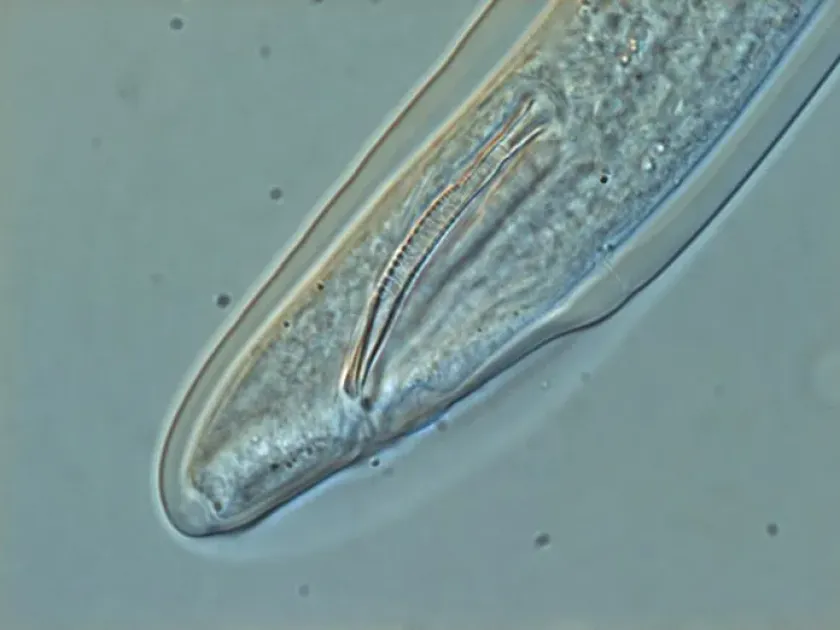
Description
How to identify
Paratrichodorus pearsoni is a species of free-living soil nematode belonging to the family Trichodoridae, order Triplonchida.
These nematodes are commonly referred to as "stubby root nematodes" due to the characteristic damage they inflict on the root systems of host plants.
The taxonomic classification places them within the kingdom Animalia, phylum Nematoda, class Adenophorea, and family Trichodoridae.
They possess a specialized feeding apparatus known as an onchiostyle, which is used to pierce plant cells and extract their contents, often transmitting viruses in the process.
Accurate identification requires specialized diagnostic techniques, including the analysis of specific morphological structures under high-magnification microscopy.
What it damages
The primary economic significance of Paratrichodorus pearsoni is its role as a vector for Tobacco Rattle Virus (TRV) and other related tobraviruses.
It causes significant damage to various agricultural crops, including potatoes, sugar beets, and various ornamental bulbous plants.
By feeding on the root tips, these nematodes inhibit root elongation, causing the roots to become stunted, thickened, and heavily branched.
Plants affected by the virus transmitted by these nematodes show severe symptoms such as spraing or internal necrosis in potato tubers.
Overall plant vigor is severely reduced, leading to yield losses and a decrease in the marketable quality of the harvested produce.
Signs of infestation
Fields infested with Paratrichodorus pearsoni often show patchy crop growth, with stunted and discolored plants appearing in localized areas.
Below-ground examination reveals "stubby" root systems where the primary roots have stopped growing due to repeated feeding by the nematodes.
Leaf symptoms may include mottling, yellowing (chlorosis), and mosaic patterns, which are direct consequences of viral infection.
Potatoes infested with TRV often show distinct internal ring patterns or necrotic lesions when sliced, rendering them unusable.
Since symptoms can be ambiguous, laboratory testing of soil and root samples is essential for confirming the presence of this specific pathogen.
Control measures
Integrated pest management strategies for this nematode involve systematic crop rotation with non-host species to deplete nematode populations.
Strict weed control is vital as many common weeds serve as reservoirs for both the nematode and the viruses it transmits.
Chemical control via soil fumigation or the application of nematicides is possible but is typically reserved for high-value agricultural crops.
Using resistant or tolerant cultivars is considered the most sustainable and economically viable approach to managing the damage caused by Paratrichodorus pearsoni.
Improving soil health and maintaining balanced nutrient levels can assist the host plants in mitigating the damage sustained by the root system.
Causes diseases · 1
Discussion
No discussions yet — be the first.