
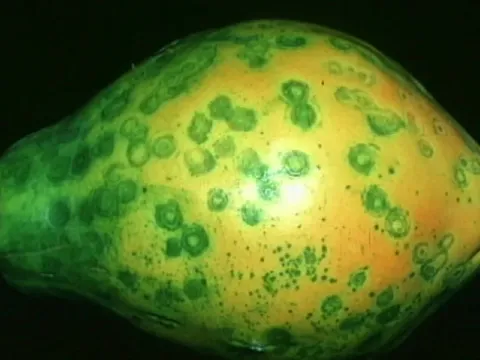
Papaya ringspot virus
Papaya ringspot
The Papaya ringspot virus (PRSV) is a plant pathogenic virus belonging to the family Potyviridae, genus Potyvirus. It is a single-stranded RNA virus known for causing severe economic losses globally.
What the section contains
Papaya ringspot virus
There are two primary biological strains: PRSV-P, which infects papaya and cucurbits, and PRSV-W, which is limited to cucurbit species like melons and cucumbers without affecting papaya.
The virus is primarily transmitted by aphids in a non-persistent, non-circulative manner. This means the vector picks up the virus during a brief probe and transmits it almost instantly to the next host.
Diagnostic identification is achieved through laboratory techniques including Enzyme-Linked Immunosorbent Assay (ELISA) for protein detection and Reverse Transcription Polymerase Chain Reaction (RT-PCR) for viral RNA.
Once inside the plant, the virus moves systemically via the phloem to invade all growing tissues, leading to severe physiological stress and developmental disruption.
The virus affects a diverse range of crops, primarily the Caricaceae family (papaya) and the Cucurbitaceae family, which includes cucumbers, pumpkins, squash, watermelons, and cantaloupes.
In papaya, the infection leads to fruit deformity, ring spots, and significantly reduced yield. It often causes the plant to become stunted, eventually leading to death or total loss of commercial value.
In cucurbits, the damage manifests as mosaic patterning on leaves, curling, and a drastic reduction in fruit setting, often resulting in crops that are unmarketable.
The severity of the damage is highly correlated with the age of the plant at the time of infection; earlier infection typically results in the most debilitating symptoms.
The cumulative economic impact includes direct yield losses, increased costs for monitoring and pest management, and the occasional total abandonment of cultivated plots.
The initial symptoms on papaya foliage include vein clearing followed by a mosaic pattern consisting of yellow and green mottling on the leaf blades.
The most iconic sign is the appearance of distinct concentric ring spots or water-soaked oily streaks on the surface of the developing fruit, which often darken as the fruit matures.
Stem and petiole tissue may develop dark, greasy-looking streaks, indicating the movement and systemic proliferation of the virus within the conductive vessels.
Plants display shortened internodes and stunted growth, creating a characteristic bush-like appearance at the apex where the leaves become crowded and distorted.
Floral abortion is a frequent occurrence in highly infected plants, and any fruit that does develop is often misshapen, small, and lacking in standard aesthetic quality.
The most effective long-term management strategy is the deployment of resistant varieties or genetically engineered crops, which have proven highly successful in regions like Hawaii.
Cultural practices, such as removing infected host plants and eliminating weeds that act as reservoirs for the virus, help in reducing the primary inoculum pressure.
While chemical control of aphid vectors is difficult due to the non-persistent nature of transmission, maintaining healthy crops via proper fertilization and irrigation can help plants endure mild infections.
Establishing spatial isolation between young plantations and older, potentially infected areas is a crucial step in delaying the onset of the disease.
Adhering to strict quarantine protocols when moving plant material between regions is essential to prevent the introduction and spread of new viral strains to disease-free areas.