
Passalora castellanii
Passalora castellanii
Passalora castellanii is a fungal plant pathogen classified within the Ascomycota division. It is recognized as a specific agent causing various foliar diseases in different host plants.
What the section contains
Passalora castellanii
The fungus operates as a parasite, establishing itself within the intercellular spaces of host leaves. It draws nutrients from the plant cells, leading to chlorosis and tissue necrosis.
Biologically, it propagates via conidia produced on conidiophores. These spores are dispersed by wind, rain splashes, and physical contact, allowing the fungus to spread rapidly under favorable weather conditions.
The pathogen is known for its ability to survive in plant debris, remaining dormant until environmental triggers, such as moisture and temperature, initiate its development.
Microscopic identification remains the gold standard for diagnosing this specific species, focusing on the size, septation, and pigmentation of its conidia compared to other Passalora members.
This pathogen primarily infects members of the Amaranthaceae family, including various beet crops. It causes significant damage to the photosynthetic area, which is vital for energy production.
By attacking the leaves, the pathogen reduces the plant’s ability to store carbohydrates, which leads to stunted root development and decreased sugar content in the final harvest.
Heavy infections can cause premature leaf senescence and defoliation. A loss of leaf mass severely impacts the plant's physiological efficiency and overall crop productivity.
In addition to direct losses, the damage caused by the fungus makes crops more susceptible to secondary infections, such as root rots or bacterial soft rots.
The economic damage is particularly high in regions with prolonged humid periods, where the pathogen can cause widespread leaf spot epidemics.
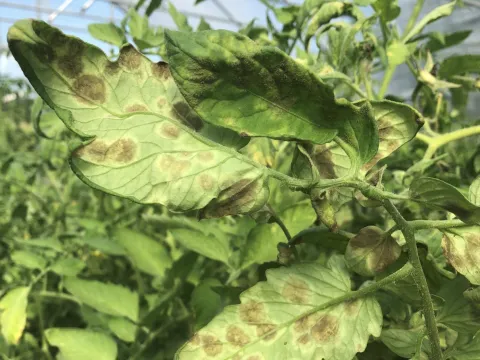
The disease typically manifests as small, circular or irregular spots on the leaf surface. As the infection progresses, these spots often expand and coalesce.
A distinctive feature of Passalora castellanii is the development of a grayish-olive velvety layer on the underside of the spots during periods of high humidity.
Symptoms initially appear on the older, lower leaves of the plant. As the fungus releases spores, the infection moves upward to the younger foliage.
Necrotic tissues in the centers of the spots may turn light brown or gray, while the surrounding area might remain yellow due to the toxin production of the fungus.
Severe cases result in the drying and curling of leaves, giving the field a scorched appearance if the infestation is not checked at the onset.
Cultural control is the most effective approach to managing this pathogen. Implementing a strict crop rotation schedule helps reduce the primary inoculum in the soil.
Tillage practices should aim to incorporate infected crop residues into the soil, promoting decomposition and minimizing the survival rate of the fungal structures.
Fungicide applications are recommended when the weather forecast predicts extended moisture periods, which are conducive to sporulation and infection cycles.
Choosing resistant or tolerant cultivars is a crucial strategy. Breeding programs often focus on enhancing host defense mechanisms to withstand fungal penetration.
Adequate plant spacing and row management help improve air circulation within the canopy, which lowers the relative humidity and discourages fungal germination.