
Maize chlorotic mottle virus
Maize chlorotic
Maize chlorotic mottle virus (MCMV) is a member of the Machlomovirus genus within the Tombusviridae family. It is a single-stranded RNA virus and a significant threat to global maize production.
What the section contains
Maize chlorotic mottle virus
The virus is notable for its synergistic interaction with Potyviruses, such as Sugarcane mosaic virus. This interaction triggers Maize Lethal Necrosis (MLN), a disease that can destroy entire fields within a single growing season.
The primary transmission vectors are insects, specifically corn rootworm (Diabrotica spp.) and thrips. These insects acquire the virus by feeding on infected plant tissues and subsequently transmit it to healthy crops.
MCMV is highly stable and can persist in soil, crop debris, and even on seed surfaces for long periods. Its ability to reside in alternative grass hosts during the off-season makes eradication extremely challenging.
The genetic diversity of the virus and its rapid evolution mean that agronomists must remain vigilant and implement integrated pest management strategies to mitigate its spread.
The primary host is maize (Zea mays). While infection can occur at any growth stage, early infection during the vegetative phase (V2–V8) causes the most severe stunting and economic damage.
Infected plants exhibit severe stunting, reduced internode length, and a distinct chlorotic appearance. These physiological changes drastically impair the plant's ability to produce sufficient energy through photosynthesis.
As the disease progresses, systemic chlorosis develops into necrosis. The necrosis often begins at the leaf margins and moves inward, leading to the premature death of the foliage and significant biomass reduction.
Reproductive success is severely compromised, with plants producing small, deformed, or sterile ears. Grain filling is either non-existent or results in shriveled, poor-quality kernels.
Beyond direct yield loss, MCMV-infected plants are significantly more vulnerable to secondary stressors, including fungal infections and environmental pressures like heat and drought, which accelerate crop collapse.
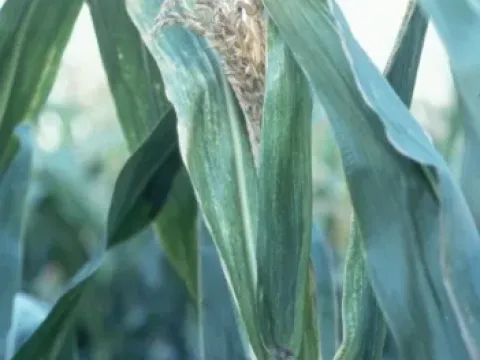
Initial symptoms include fine, chlorotic streaks that appear on the leaves. These streaks eventually broaden and coalesce into wider, yellowish bands that run parallel to the leaf veins.
A hallmark sign of the infection is the severe stunting of the plant compared to healthy neighbors. The leaves may show characteristic yellowing followed by necrosis at the edges and tips.
The visual impact on a field is often described as a mosaic or mottled pattern. Patches of sickly, stunted, and yellowing plants are clearly visible among the healthier portions of the field.
On the reproductive organs, symptoms include partial or complete failure of ear development. If ears do form, they are often poorly filled, twisted, and have an irregular arrangement of kernels.
Confirming the disease requires laboratory diagnostics, such as ELISA or PCR, because field symptoms can easily be confused with nutrient deficiencies, herbicide phytotoxicity, or other viral infections.
Management of MCMV relies entirely on prophylactic and preventive measures, as there is currently no direct cure for viral infections in field crops.
The use of resistant or tolerant maize hybrids is the cornerstone of management. Breeders continuously strive to incorporate resistance traits into new lines to keep up with the virus's evolution.
Strict crop rotation is essential to break the life cycle of insect vectors and to reduce the reservoir of the virus in the soil. Maintaining a "host-free" period by destroying volunteer maize and weeds is crucial.
Integrated pest management includes the targeted use of insecticides to control insect vector populations, especially during the early developmental stages of the corn crop.
- Deep plowing of crop residues to promote decomposition.
- Maintaining spatial separation between maize crops of different planting dates.
- Sourcing high-quality, certified, and clean seed.
- Sanitization of farm machinery to prevent the movement of contaminated soil.