
Macrophomina phaseolina
Macrophomina phaseolina
Macrophomina phaseolina is a soil-borne fungal pathogen belonging to the Ascomycota division, notorious for causing charcoal rot in hundreds of different plant species.
What the section contains
Macrophomina phaseolina
The fungus is characterized by the formation of tiny, black, carbon-like structures called microsclerotia, which allow it to survive for years in soil and plant debris.
It is classified as a heat-loving pathogen, thriving in high temperatures ranging from 28°C to 35°C, making it a severe problem in arid and semi-arid agricultural regions.
The pathogen exists in the soil as a facultative parasite, meaning it can survive on dead organic matter until conditions become favorable to infect a susceptible host.
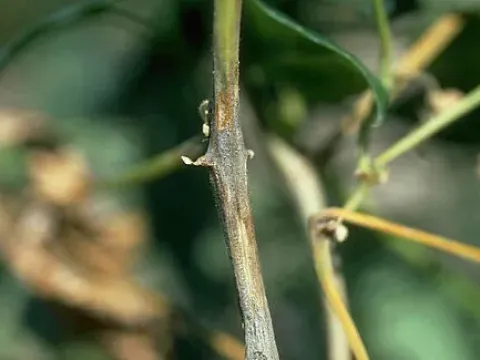
Microscopic analysis of infected tissues reveals the presence of black microsclerotia within the vascular system, which gives the plant tissue a distinct grey or charred appearance.
Macrophomina phaseolina affects a massive variety of crops, with sunflowers, soybeans, maize, sorghum, and beans being among the most economically significant hosts.
The infection begins in the root system and progresses upward, clogging the xylem vessels and preventing the transport of water and nutrients to the upper parts of the plant.
In sunflowers and soybeans, this leads to premature senescence, reduced seed filling, lower oil content, and significant yield losses that can exceed 50% in severe cases.
The disease weakens the structural integrity of the lower stem, leading to widespread lodging, which makes mechanical harvesting extremely difficult and results in harvest loss.
Because the fungus is soil-borne, infected fields often suffer from persistent issues, as the pathogen population grows with each consecutive planting of susceptible crops.
The pathogen is most active during the reproductive stages of the host plant, particularly from flowering through grain filling when the plant is under high water demand.
Outbreaks are heavily correlated with drought conditions, where high soil temperatures and low moisture levels stress the plants, making them highly susceptible to invasion.
The disease symptoms typically appear in mid-to-late summer, coinciding with the peak of seasonal heat and soil water deficit.
The microsclerotia are dispersed through infested soil, contaminated seeds, and agricultural equipment, allowing the pathogen to move between fields easily.
High levels of the pathogen accumulate over time in soils that are monocropped, creating a high-risk environment for subsequent agricultural seasons.
Initial signs include yellowing and wilting of the lower leaves, which eventually progresses to rapid systemic wilting of the entire plant during the hottest part of the day.
Upon splitting the lower stem, one will observe a greyish discoloration of the internal pith and the presence of numerous small black specks, which are the microsclerotia.
Root systems of infected plants often show severe decay, turning brown or black and becoming brittle, resulting in the plant being easily pulled from the soil.
As the disease progresses, the epidermis of the stem may peel off, revealing the internal black fungal mass, confirming the presence of the pathogen.
- Premature wilting;
- Grey/black discoloration of the stem pith;
- Visible black microsclerotia;
- Root rot and fragility;
- Reduced plant height and seed size.
Integrated Pest Management (IPM) is essential for controlling Macrophomina phaseolina, focusing primarily on long-term crop rotation with non-host species.
Improving soil moisture retention through irrigation and appropriate cultivation techniques can reduce the physiological stress that predisposes plants to fungal infection.
The use of resistant or tolerant cultivars is currently the most effective strategy to minimize yield losses in fields with a known history of charcoal rot.
Proper sanitation, including the deep incorporation of crop residues, helps manage the primary inoculum source and limits the survival of the fungus in the field.
Fungicidal seed treatments provide some initial protection, but because the pathogen is soil-borne and aggressive, they have limited efficacy once the plant is established in heavily infested soil.