
Magnaporthe salvinii
Magnaporthe salvinii
Description
How to identify
Magnaporthe salvinii is an ascomycete fungus in the family Magnaporthaceae. Its anamorphic (asexual) stage is widely recognized as Sclerotium oryzae.
This highly specialized phytopathogen is primarily responsible for rice stem rot, a destructive disease that disrupts the physiological functions of the rice plant.
The fungus develops mycelium within the plant stems and eventually produces small, hard, black, globular structures known as sclerotia, which are vital for its survival.
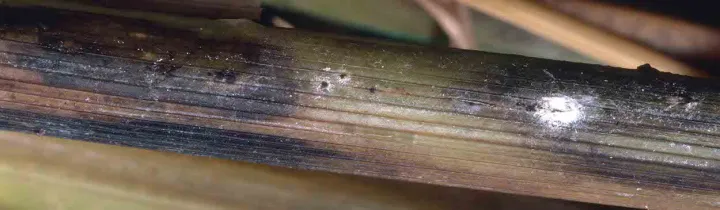
Field diagnosis relies heavily on the presence of these sclerotia within the hollow stems of rice, as well as the dark necrotic lesions that develop near the water level.
As a soil-borne pathogen, it possesses the ability to survive for several years in the soil, making it a persistent threat to rice production systems worldwide.
What it damages
The main host for Magnaporthe salvinii is rice (Oryza sativa). The infection process leads to the decay of the stem base, a condition commonly known as stem rot.
Infected plants suffer from disrupted nutrient and water transport, which weakens the stalk and frequently results in lodging, where the crop falls over before harvest.
The fungus colonization of the lower nodes and internodes restricts the translocation of nutrients to the developing panicle, negatively impacting grain filling.
This results in poorly filled grains, increased chaffiness, and overall yield losses that can be devastating, sometimes exceeding 50% in severe outbreaks.
In addition to cultivated rice, the fungus can infect certain grassy weeds in the field, which serve as alternative hosts and reservoirs for the pathogen between seasons.
When it appears
The infection cycle begins during the rice tillering stage, when favorable soil moisture and temperatures trigger the germination of sclerotia present in the soil.
Disease development peaks during the latter half of the growing season, specifically from the booting to the heading stages when plants are most physiologically active.
Optimal conditions for pathogen spread include warm temperatures between 25–30 degrees Celsius and constant high humidity associated with flooded rice cultivation systems.
Conidia are spread through irrigation water and water splashes, facilitating rapid dispersal throughout the rice paddy and leading to uniform infection across the field.
As the rice plants mature and begin to dry down, the fungus shifts its metabolism to produce a massive number of sclerotia, which persist in the soil and crop debris.
Signs of infestation
Initial symptoms manifest as small, irregular, blackish-brown spots on the leaf sheaths near the water line, which gradually expand and darken over time.
The fungus invades the underlying stem tissue, causing it to soften and rot, which eventually leads to the structural collapse of the rice culm.
When the stems are opened, one can observe a gray mycelial growth accompanied by the characteristic small black sclerotia that look like tiny particles of sand.
Plants often exhibit stunted growth, premature yellowing, and leaf wilting, which can be mistaken for nutrient deficiencies or water management issues.
Under conditions of high humidity, grayish powdery or fluffy fungal growth may appear on the surface of the lesions, indicating active sporulation.
Control measures
The primary strategy for controlling stem rot involves strict adherence to agronomic practices, including crop rotation with non-host species and the use of green manure.
Regulating water levels by draining the fields during critical physiological stages of the rice plant can significantly reduce the spread of the fungus.
Effective post-harvest management, such as removing or burying crop debris, is essential to decrease the primary inoculum load for the following season.
Fungicide applications, specifically targeting triazoles and strobilurins, are effective tools when applied at the onset of the initial symptoms to suppress fungal growth.
Breeding and planting resistant rice varieties offer the most sustainable and economically viable solution for managing Magnaporthe salvinii in long-term agriculture.
Causes diseases · 2
Discussion
No discussions yet — be the first.