
Maize bushy stunt
Maize bushy
The causative agent of Maize bushy stunt (MBS) is a phytoplasma, specifically Candidatus Phytoplasma asteris (16SrI group). This is an obligate, wall-less prokaryotic pathogen that resides and multiplies within the phloem sieve tubes of the host plant.
What the section contains
Maize bushy stunt
The primary vector for the transmission of this pathogen is the corn leafhopper, Dalbulus maidis. Once the leafhopper acquires the phytoplasma through feeding, it remains a carrier for the rest of its life, effectively spreading the disease across corn fields.
Phytoplasmas are specialized parasites that cannot survive outside the plant host or the insect vector. Their biological nature makes them distinct from viruses, as they are susceptible to certain antibiotics, although field control relies mainly on vector management.
Laboratory diagnosis is essential for confirming the presence of the pathogen. Molecular techniques, particularly Polymerase Chain Reaction (PCR), are the industry standard for detecting the specific DNA of the phytoplasma in symptomatic plant tissue.
In nature, the pathogen persists in perennial grasses, which act as inoculum reservoirs. During the off-season, these grasses maintain the phytoplasma population until the next corn planting cycle, when vectors migrate to young crops.
##damage##Maize bushy stunt causes severe physiological disruption, leading to significant yield losses. By blocking the phloem, the pathogen prevents the translocation of carbohydrates, starving the developing ears and roots.
Plants infected at an early growth stage are most severely impacted. The systemic nature of the infection means that once the plant is colonized, it cannot recover, often resulting in complete crop failure for individual infected plants.
The reduction in grain yield is proportional to the timing of infection; early-season spread can devastate an entire field. In endemic areas, MBS is considered a limiting factor for corn production, often forcing producers to choose less susceptible hybrids.
The pathogen's ability to infect various wild grass species complicates management efforts. These wild hosts provide a sanctuary for both the phytoplasma and the leafhopper vector, ensuring the disease remains present in the local landscape.
Economic damage includes direct yield loss, costs associated with insecticide applications, and the loss of seed quality. Maintaining a low incidence of the disease is crucial for profitable corn farming in affected regions.
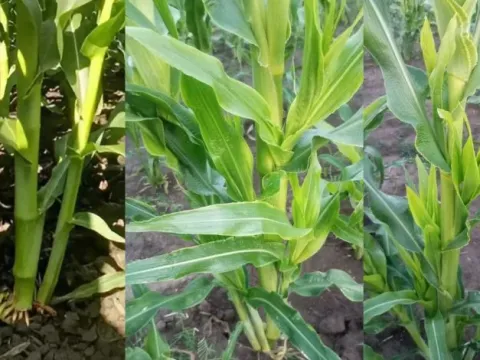
The most characteristic symptom is severe stunting with significantly shortened internodes, giving the plant a bushy appearance. Leaves often exhibit chlorosis or reddish/purplish discoloration, indicating a metabolic imbalance.
Infected plants frequently show excessive proliferation of tillers or axillary shoots, which is a hallmark of the pathogen's impact on plant hormonal balance. The overall architecture of the corn plant becomes distorted and compacted.
Reproductive development is severely hampered. Ears are either completely absent or significantly malformed with poor grain set. This loss of reproductive capacity is the primary cause of the economic devastation caused by the disease.
Root systems of infected plants are typically underdeveloped, making the plants more susceptible to environmental stressors like drought. The stunted growth makes these plants poor competitors against neighboring healthy corn stalks.
- Severe stunting and shortened internodes.
- Chlorotic or reddish discoloration of foliage.
- Proliferation of axillary shoots (bushy appearance).
- Failure of ear development or poor grain filling.
The most effective management strategy is the control of the Dalbulus maidis vector. Systemic insecticides applied early in the crop cycle can significantly reduce the rate of transmission by limiting leafhopper feeding.
Spatial and temporal isolation of corn plantings is a highly recommended practice. Avoiding the staggered planting of corn adjacent to mature fields reduces the migration of infected vectors to young, vulnerable crops.
Genetic resistance is the cornerstone of sustainable management. Growers are encouraged to use resistant or tolerant hybrids, which have been specifically bred to withstand phytoplasma infection and limit symptom development.
Cultural practices, such as the eradication of volunteer corn and susceptible weeds in and around fields, are vital to reducing local inoculum sources. Keeping fields clean limits the survival of the vector and the pathogen during the off-season.
Regular monitoring using yellow sticky traps allows agronomists to track vector population dynamics. Informed decision-making based on these counts ensures that control measures are implemented precisely when needed to protect the crop.