
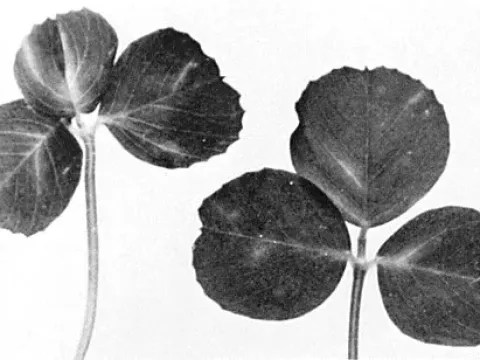
Lucerne transient streak
Lucerne transient
Lucerne transient streak is caused by the Lucerne transient streak virus (LTSV), which belongs to the Sobemovirus genus within the Solemoviridae family.
What the section contains
Lucerne transient streak
The virus consists of small, isometric, non-enveloped particles containing a single-stranded RNA genome, making it quite resilient to environmental degradation.
It is classified as a mechanical and seed-borne pathogen, meaning it can be easily distributed via farm equipment or contaminated sowing materials.
The term "transient" refers to the nature of symptom expression, which can be inconsistent or temporary, often making field diagnosis difficult without laboratory tests.
As a sobemovirus, it requires specific conditions to replicate efficiently and move systemically throughout the host plant's vascular tissue.
The primary host for this pathogen is alfalfa (Medicago sativa), an essential crop for nitrogen fixation and livestock forage production worldwide.
Other leguminous plants can also serve as alternative hosts, creating a continuous reservoir of infection in agricultural landscapes.
The infection leads to reduced photosynthetic efficiency, which significantly inhibits the plant's ability to produce biomass and store root energy for winter survival.
Crop stands suffering from chronic viral infections show decreased longevity and yield, often failing to reach their full productive potential.
Nutritional quality is also negatively affected, as the viral stress alters the metabolic profile of the plant tissue, resulting in lower feed value.
Symptoms often manifest as mild mosaic patterns, chlorotic mottling, or faint streaking along the leaf veins, which may disappear over time.
Infected plants may exhibit stunted growth and shortened internodes, particularly when the initial infection occurs early in the growing season.
During periods of environmental stress, such as drought or high heat, the mosaic patterns may become more pronounced or manifest as localized leaf distortion.
A distinctive feature is that symptoms might disappear after the first cutting, leading to the false conclusion that the crop has recovered.
Despite the lack of obvious foliage symptoms, the virus persists in the crown and roots, maintaining a systemic infection that impacts future harvests.
Implementing a strict policy of using certified, virus-tested seed is the primary defense strategy against introducing the virus into new fields.
Sanitation of harvesting machinery, particularly between different alfalfa fields, is crucial to prevent the mechanical transmission of viral particles.
Effective weed management programs are necessary to eliminate alternative hosts that act as reservoirs for the virus throughout the year.
Integrated crop management should include rotating out of susceptible legumes for several years to break the infection cycle in the soil and root debris.
Monitoring the field for any early signs of stunted patches allows for the timely isolation of infected areas, preventing larger-scale contamination.