
Macrodiplodiopsis dasmazieresii
Macrodiplodiopsis dasmazieresii
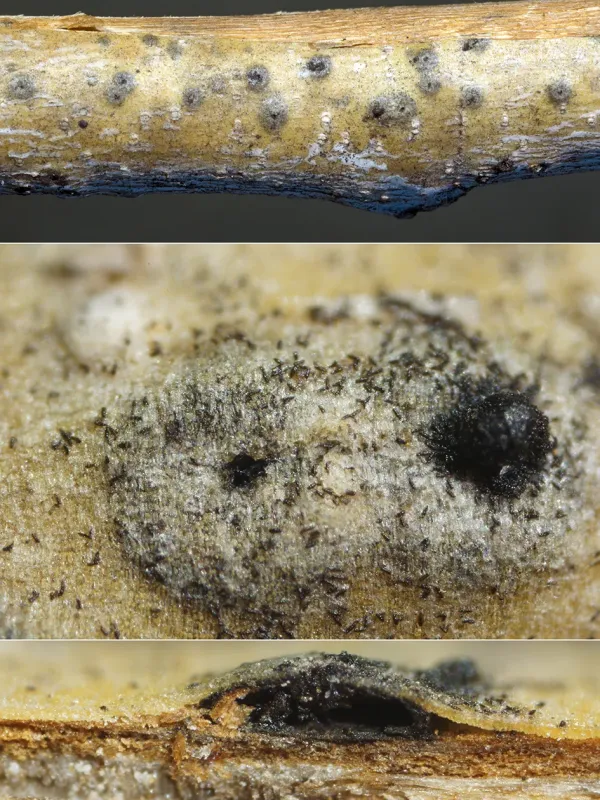
Description
How to identify
Macrodiplodiopsis dasmazieresii is a specialized fungal pathogen categorized within the Dothideomycetes class. It belongs to the Botryosphaeriales order and is recognized as an agent causing necrotic lesions on woody tissues.
The organism primarily exists as a parasitic fungus, although it can exhibit saprotrophic capabilities once the host tissue dies. Its life cycle involves the formation of pycnidia, which serve as the primary reproductive structures.
From a taxonomical standpoint, it is a well-defined ascomycete that requires specific environmental conditions, particularly high humidity, for successful colonization and reproduction on the host plant.
Identification typically involves diagnostic procedures such as culturing the pathogen from infected wood samples onto specialized agar media to examine its morphological traits.
As a pathogen, it is characterized by its ability to penetrate the protective bark layers of woody plants, subsequently causing structural and physiological damage to the vascular system.
What it damages
The fungus causes localized necrosis of the bark, which can lead to girdling of twigs and branches. This disruption of nutrient flow results in wilting and the eventual death of the affected plant parts.
Macrodiplodiopsis dasmazieresii poses a significant threat to young plants and nursery stock, where damage can escalate rapidly if environmental conditions favor the pathogen's growth.
In mature trees, severe infections can weaken the structural integrity of the branches, making them more susceptible to other secondary pathogens and environmental stresses.
The reduction in overall plant vigor is a hallmark of this disease, leading to stunted growth, early leaf senescence, and an overall decline in the aesthetic value of the ornamental planting.
Economic damage is primarily seen in forestry and nursery operations, where high infection rates lead to the loss of marketable materials and increased costs for disease management.
When it appears
The pathogen's activity starts in early spring as temperatures rise, signaling the beginning of the vegetative growth phase for both the host and the fungus.
Throughout the summer, spores produced within pycnidia are dispersed via wind and rainwater, leading to secondary infection cycles and the spread of the disease within the canopy.
As autumn approaches, the fungus gradually shifts its metabolic activity, preparing to overwinter within the infected bark tissues where it remains dormant until the following spring.
Winter conditions serve as a survival phase where the fungus is protected within the host's necrotic tissues, awaiting the return of favorable moisture and temperature conditions.
Understanding these seasonal dynamics is essential for timing the application of fungicides and implementing timely sanitary pruning to reduce inoculum levels.
Signs of infestation
The initial appearance of the disease is marked by the development of darkened, sunken lesions on the bark surface, which are easily overlooked in the early stages.
As the infection progresses, small black fruiting bodies (pycnidia) become visible on the surface of the lesions, often rupturing the bark to release spores.
Cracking and peeling of the bark around the infection site are common, sometimes accompanied by sap flow, which indicates the plant's defense response or severe tissue degradation.
Internally, the necrotic tissue appears discolored, often turning a dark brown or black shade, which contrasts sharply with the healthy, white, or greenish underlying wood.
- Darkened lesions on the bark.
- Visible black pycnidia.
- Bark cracking and peeling.
- Branch dieback.
Control measures
Sanitary pruning is the most effective management practice; all infected branches should be cut back to healthy wood and removed from the site to prevent spore spread.
Disinfecting pruning tools between cuts is crucial to prevent the mechanical transmission of the pathogen from diseased to healthy trees or branches.
Applying protective fungicides during the bud break phase can effectively inhibit primary infection and reduce the overall incidence of the disease in high-risk areas.
Cultural practices that promote tree health, such as adequate fertilization and proper irrigation, significantly increase the host's resistance to infection by the pathogen.
Regular monitoring of woody ornamental species during the growing season is necessary to catch the earliest signs of the disease before it becomes systemic or causes permanent damage.
Causes diseases · 1
Discussion
No discussions yet — be the first.