
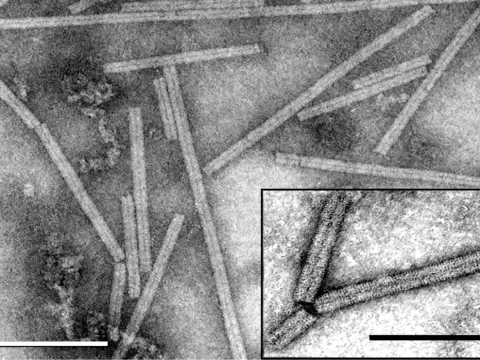
Lychnis ringspot virus
Lychnis ringspot
Lychnis ringspot virus (LRSV) is a plant pathogenic virus belonging to the genus Hordeivirus. It contains a tripartite single-stranded RNA genome and is known to cause significant systemic infections in various host plants.
What the section contains
Lychnis ringspot virus
As a member of the Virgaviridae family, this virus exhibits high genetic variability. It is closely related to barley stripe mosaic virus, sharing similar replication strategies and transmission mechanisms.
The virus is primarily transmitted mechanically via contaminated sap, making agricultural practices such as pruning or harvesting potential pathways for spread. It can also be transmitted through infected seeds.
Environmental stability of the virus allows it to persist on agricultural equipment and plant debris. This resilience makes sanitation protocols critical for controlling the disease in greenhouse and field settings.
Diagnosis usually involves serological tests or molecular methods like RT-PCR, as visual symptoms can sometimes be confused with other viral or physiological disorders.
While originally identified in Lychnis species, the host range includes several significant agricultural crops. It poses a threat to sugar beets and various ornamental plants, causing yield reduction.
The impact of LRSV on sugar beet crops is particularly severe, as it leads to mosaic patterns, distorted leaf development, and significantly reduced root weight and sugar content.
Infected plants suffer from stunted growth and reduced vigor. This metabolic stress makes them more susceptible to environmental extremes and secondary pathogen attacks.
Seed production is highly affected by LRSV infection. Since the virus is seed-borne, the quality of seeds from infected fields is compromised, leading to low germination rates and weak seedlings.
Economic losses are cumulative, arising from reduced marketable yield, increased management costs for sanitation, and the necessity to replace infected seed lots.
The hallmark of LRSV infection is the appearance of ringspot patterns on leaves. These can present as chlorotic or necrotic rings, often developing into complex concentric circles or wavy lines.
Systemic symptoms include mosaic mottling and significant leaf distortion. Leaves may appear crinkled, puckered, or asymmetric, disrupting the plant's normal photosynthetic surface.
General growth reduction is a common indicator. Infected plants often remain significantly smaller than their healthy counterparts, reflecting a systemic invasion of the plant's vascular system.
In advanced stages, veins may show necrosis, and tissue yellowing can spread throughout the foliage. These symptoms are often exacerbated by environmental stress or high humidity.
- Chlorotic or necrotic ringspots
- Mosaic patterns on foliage
- Leaf deformation and crinkling
- Significant stunting of plant height
- Early chlorosis and tissue necrosis
The most effective strategy for LRSV management is the use of virus-free, certified seeds. Implementing strict seed testing protocols is essential to prevent the introduction of the virus into new areas.
Rigorous sanitation of tools and equipment is mandatory. Since the virus is easily transmitted through sap, disinfecting tools between plants or rows is a primary defense mechanism.
Rogueing, or the systematic removal and destruction of infected plants, helps reduce the viral inoculum levels in the field. Early detection is vital for the success of this practice.
Weed management, particularly focusing on species susceptible to Hordeiviruses, is crucial. Eliminating potential reservoirs helps break the virus's survival cycle in the off-season.
Integrated disease management (IDM) remains the only viable approach, as there are no chemical viricides available to cure infected plants once they have contracted the virus.