
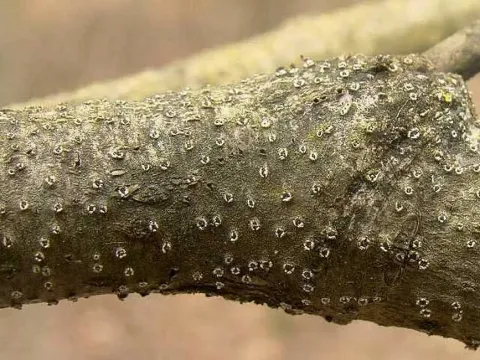
Leucocytospora cincta
Leucocytospora cincta
Leucocytospora cincta is a serious fungal pathogen known for causing perennial cankers and dieback in stone fruit trees. Belonging to the Ascomycota phylum, it is commonly associated with the Cytospora complex, which severely impacts orchard productivity.
What the section contains
Leucocytospora cincta
The fungus develops by invading the bark and cambium layers of the host. Its biological cycle includes the formation of pycnidia, small, dark fruiting bodies that erupt through the bark surface to release conidia under humid conditions.
Survival occurs within infected host tissues throughout the year. The pathogen remains dormant during cold periods and reactivates once temperatures become favorable, utilizing moisture for the dissemination of spores to healthy tissues.
Infection primarily occurs through wounds caused by pruning, insects, hail, or environmental stress such as winter injury. Once inside, the fungus colonizes the host, progressively killing bark cells and girdling branches.
The impact of this pathogen is highly detrimental, as it interferes with the translocation of nutrients and water. If left unmanaged, the fungus can progress from smaller branches to the main trunk, ultimately causing the decline and death of the entire tree.
Stone fruits are the primary hosts for Leucocytospora cincta. It is most damaging to peaches, apricots, cherries, and plums, often leading to significant yield losses in commercial and private orchards.
The most visible sign of infection is the development of localized bark cankers. These areas appear sunken, often with a darker, discolored center, and are frequently accompanied by significant gummosis, where the tree exudes resin as a defense.
In later stages, the bark in infected areas becomes dry, brittle, and eventually cracks. Under close inspection, one can see numerous tiny, dark pimple-like structures — the pycnidia — scattered across the surface of the dead bark.
Foliage on affected branches often shows symptoms of chlorosis and premature wilting. As the canker girdles the limb, the leaves turn brown and drop, followed by the eventual death of the branch itself.
When the bark is scraped away, the underlying wood exhibits a distinct brownish-red discoloration. This internal necrosis often extends deeper into the sapwood than the external symptoms might suggest.
Systemic symptoms occur when the pathogen reaches the trunk. The canopy may become sparse, showing reduced growth vigor, and eventually, the whole tree might collapse due to the inability to maintain vascular integrity.
Effective management requires prompt surgical removal of infected branches. It is crucial to prune at least 10–15 cm below the visible canker into clearly healthy wood, ensuring all mycelium is removed from the orchard.
Disinfection of pruning tools between cuts is essential to prevent spreading the pathogen to healthy trees. Use a 70% alcohol solution or a dilute bleach mixture to sanitize blades after every contact with infected wood.
Chemical control focuses on preventative applications of copper-based fungicides. Spraying during the dormant stage or at the bud swell stage helps protect vulnerable tissues and reduces the initial inoculum pressure in the orchard.
Promoting tree health is a key defensive strategy. Proper irrigation, balanced fertilization, and avoiding nitrogen over-application can help maintain tree vigor, making them more resilient to fungal attacks.
Environmental management involves protecting the bark from sunscald and winter damage. Applying white latex paint to the trunks helps regulate surface temperatures and prevents the cracking that facilitates Leucocytospora cincta entry.