
Lettuce speckles
Lettuce speckles
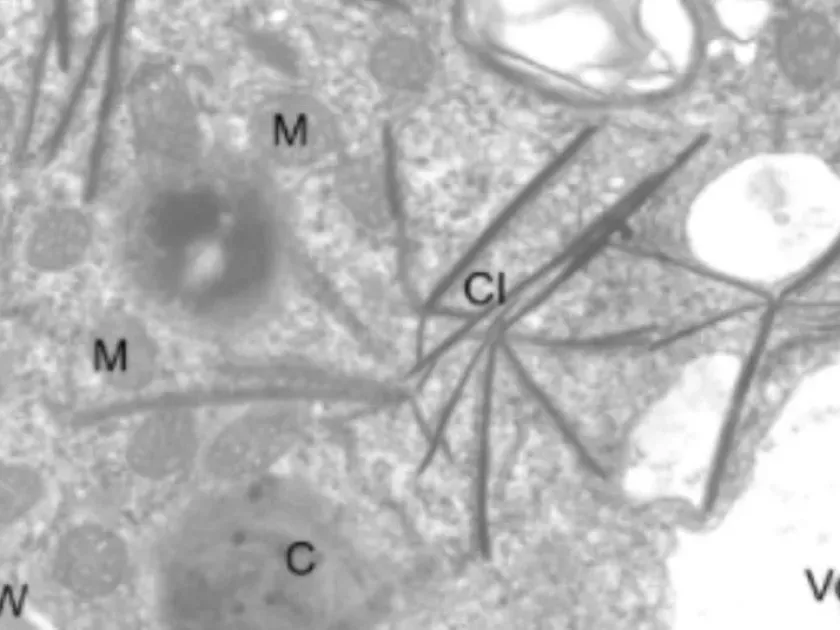
Description
How to identify
Lettuce speckles is a disease caused by the Lettuce speckles virus (LSPV), a member of the genus Sadwavirus. It is a viral pathogen that primarily infects species within the Asteraceae family.
The virus consists of non-enveloped, spherical particles containing a positive-sense single-stranded RNA genome. Its classification within the Secoviridae family places it among important plant pathogens transmitted by biological vectors.
Laboratory diagnosis relies on methods such as ELISA (Enzyme-Linked Immunosorbent Assay) for protein detection or RT-PCR for the specific identification of viral RNA sequences in leaf tissues.
As an obligate parasite, the virus requires living host cells for its replication cycle. It manipulates the host's cellular machinery to produce viral proteins and genomic copies, leading to systemic infection.
In the field, the virus is spread by insect vectors, primarily aphids, which acquire the virus through feeding and transmit it to healthy plants during subsequent feeding sessions.
What it damages
The disease affects various lettuce types, including butterhead, crisphead, and romaine. Infection leads to stunted plant growth, significant loss of vigor, and reduced marketability of the produce.
Host range includes not only lettuce but also various weeds, which act as reservoirs for the virus. This reservoir capacity makes management difficult, as the virus can persist near crop fields.
Early-stage infection can result in severe crop losses, as the virus inhibits proper leaf development and head formation. Plants may remain underdeveloped and fail to meet size or quality standards.
Metabolic disruption within the host plant reduces photosynthetic efficiency, leading to chlorosis and overall plant weakness. This physiological strain can also make the plants more susceptible to secondary pathogens.
Economic damage is compounded by the costs of aphid control and the potential requirement to discard infected batches, which negatively impacts the profitability of lettuce production.
Signs of infestation
The characteristic sign of the disease is the development of small, light-green to yellow specks on the leaves, which gives the disease its common name, lettuce speckles.
As the infection progresses, these specks may merge, causing a mottled or mosaic appearance on the foliage. Leaf deformation and curling are also common, especially in young, actively growing leaves.
Unlike fungal diseases, there are no visible signs of microbial growth or spores on the leaf surfaces. The symptoms are purely internal manifestations of systemic viral replication affecting chlorophyll content.
Infections often show up in patches throughout the field, reflecting the movement and feeding patterns of insect vectors. The severity of symptoms can fluctuate based on environmental conditions and plant age.
Chronic infection results in a distinct stunted habit, where the entire plant appears smaller and less vibrant compared to healthy neighboring plants in the same crop cycle.
Control measures
Management of lettuce speckles focuses heavily on prevention, as there are no chemical virucides available to cure infected plants once they contract the virus.
The primary control strategy involves managing insect vector populations. Regular scouting and the application of appropriate insecticides help reduce aphid numbers, thereby limiting the spread of the virus.
Strict weed control in and around lettuce fields is essential. Removing potential weed hosts eliminates the reservoirs that allow the virus to survive between crop cycles.
The use of resistant or tolerant lettuce varieties is the most effective long-term solution. Breeders focus on integrating genetic resistance into commercial lines to minimize the impact of viral diseases.
Good agricultural practices, such as maintaining spatial isolation between different age crops and ensuring the use of virus-free planting materials, are fundamental to keeping the infection pressure low.
Discussion
No discussions yet — be the first.