
Lettuce mosaic virus
Mirafiori lettuce
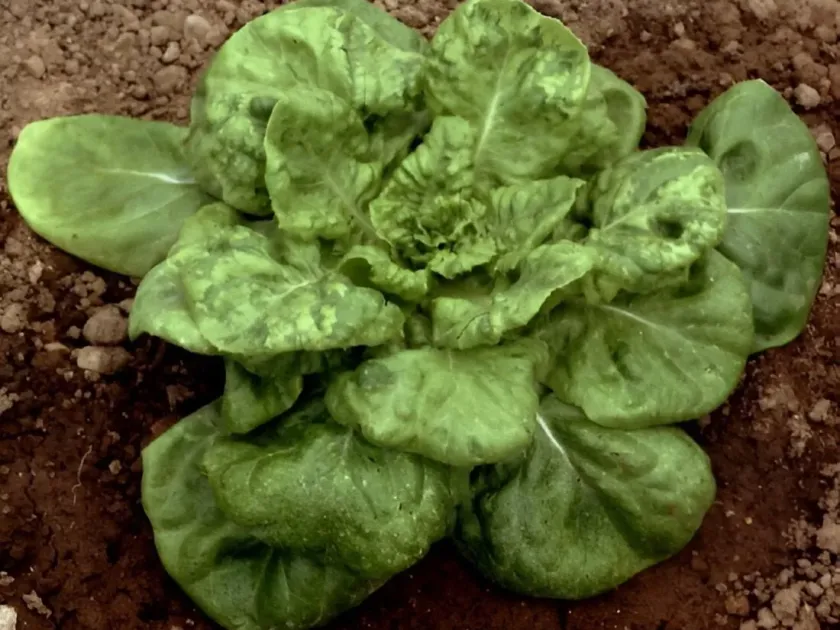
Description
How to identify
Lettuce mosaic virus (LMV) is a plant pathogenic virus belonging to the genus Potyvirus, family Potyviridae. It is an obligate pathogen with filamentous virions approximately 750 nm long, containing a single-stranded RNA genome.
LMV is recognized as one of the most economically significant diseases affecting lettuce crops worldwide. Its ability to be transmitted both mechanically and through seeds makes it a difficult pathogen to manage.
The primary vectors for LMV in field conditions are various aphid species, most notably Myzus persicae. They transmit the virus in a non-persistent manner, picking up the virus during short feeding probes on infected plants and transmitting it almost immediately.
The virus persists in infected seeds and alternative weed hosts within the Asteraceae family. Infected seed lots are considered the most critical source of primary inoculum for new lettuce plantings.
For accurate identification in agricultural settings, serological methods such as ELISA (Enzyme-Linked Immunosorbent Assay) or molecular diagnostic techniques like RT-PCR are routinely used to confirm the presence of the virus.
What it damages
The primary host for LMV is cultivated lettuce (Lactuca sativa). The virus severely impacts the marketability of the crop, causing cosmetic damage that renders the leaves and heads unsellable.
Beyond lettuce, LMV has a broad host range, infecting other crops such as endive, chicory, peas, and chickpeas, as well as numerous wild plant species that serve as reservoirs for the virus.
Infection in young plants leads to systemic deformation, significantly reducing total biomass and yield. In extreme cases, young seedlings may suffer near-total loss, preventing the development of a commercial-grade head.
The economic impact is characterized not only by yield reduction but also by the degradation of crop quality. Affected plants often fail to form tight, uniform heads, significantly reducing their value.
LMV infection weakens the host plant's resistance, making it more susceptible to secondary infestations by fungal and bacterial pathogens, which further complicate the health status of the crop.
Signs of infestation
Early symptoms of LMV infection typically appear on young leaves as a characteristic light green or yellowish mosaic pattern, which eventually spreads across the entire leaf surface.
The leaves of infected plants often become malformed, wrinkled, and exhibit serrated margins. Growth is severely stunted, and the plant often fails to form a proper head or forms a loose, deformed one.
When infection occurs at later stages of development, symptoms may present as leaf mottle and necrotic spotting, particularly on the outer leaves of the rosette.
The visual expression of the disease can vary depending on the lettuce variety and local environmental conditions. High temperatures may sometimes mask symptoms, yet the virus remains highly active and virulent within the tissue.
- Yellowing and vein clearing on leaves;
- Severe leaf curling and morphological distortion;
- Significant stunting or dwarfism of the plant;
- Failure to develop a standard market-sized head.
Control measures
The most crucial strategy for managing LMV is the exclusive use of high-quality, virus-tested seed lots, as certified seeds drastically reduce the risk of primary inoculum introduction.
Implementing strict spatial isolation between lettuce fields and nearby crops or weed reservoirs is vital to preventing the spread of the virus via aphid vectors.
Controlling aphid populations is essential. Using systemic insecticides, as well as physical barriers like protective mesh during the early stages of plant establishment, helps minimize the frequency of primary transmission.
Sound agronomic practices, such as diligent weed management around field margins and the immediate rogueing of any plants showing symptoms, are critical to limiting the secondary spread of the pathogen.
Breeding and planting LMV-resistant lettuce varieties is the most effective and sustainable long-term solution for managing this virus in commercial vegetable production systems.
Causes diseases · 1
Discussion
No discussions yet — be the first.