
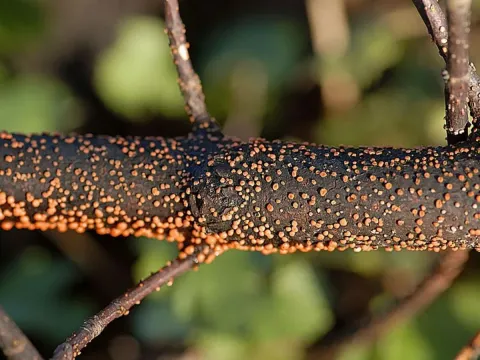
Leucostoma canker
Leucostoma persoonii
The causal agent of Leucostoma canker is the ascomycete fungus Leucostoma persoonii (anamorph: Cytospora leucostoma), belonging to the order Diaporthales. This fungus is a widespread opportunistic pathogen affecting stone fruits.
What the section contains
Leucostoma canker
It typically functions as a saprophyte on dead wood but becomes parasitic when the host tree is weakened by stress factors such as frost, drought, or inadequate pruning.
The fungal mycelium colonizes the bark and cambium layers. As the infection progresses, the fungus produces pycnidia — small, flask-shaped fruiting bodies that erupt through the epidermis.
Spores are disseminated by splashing rain, wind, insects, and pruning equipment. High humidity levels are required for the spores to germinate and infect new tissue.
Field identification can be difficult due to overlapping symptoms with other canker diseases, often requiring laboratory culture isolation for confirmation.
Leucostoma canker affects most stone fruit species, including peaches, apricots, cherries, and plums. The infection leads to the progressive dieback of branches and potential tree mortality.
The primary damage occurs within the vascular system, where the fungus disrupts the transport of water and nutrients, causing the canopy to wither and die.
Infected bark becomes brown, necrotic, and cracked. Gummosis, or the oozing of sap from the infected site, is a common defensive response by the tree that further weakens it.
If the infection girdles the trunk or the main scaffold branches, the tree can die within one or two growing seasons, leading to significant orchard losses.
Damage reduces fruit yield, impairs tree longevity, and necessitates heavy pruning, which alters the structure of the tree canopy.
While the fungus can be active throughout the growing season, primary infection cycles often occur during early spring or late autumn when trees are most vulnerable.
Optimal conditions for fungal development range from 15°C to 25°C combined with high humidity. These conditions accelerate the rate of colonization in weakened tissues.
The mycelium remains viable within the bark and wood throughout the winter. Early spring thaws can trigger the release of spores from overwintering fruiting bodies.
The period of active sap flow is particularly dangerous, especially if pruning is performed without proper sanitation, creating fresh entry points for the pathogen.
Summers characterized by frequent rain increase the risk of disease spread within the orchard, necessitating vigilant monitoring for new cankers.
The first signs are patches of discolored bark, ranging from dark brown to reddish, which often appear sunken compared to the surrounding healthy tissue.
Small, greyish, pimple-like structures — the pycnidia — emerge through the bark surface. Under moist conditions, these structures release spore masses in distinct, coiled tendrils.
Leaves on infected limbs may turn yellow, curl, and die early. A characteristic feature is that these dead leaves often remain attached to the branch for an extended period.
Cross-sections of affected branches show localized necrosis of the wood. The diseased tissue is typically dark and clearly demarcated from the healthy, lighter-colored wood.
- Sunken, necrotic bark lesions.
- Presence of tiny pimple-like pycnidia.
- Gummosis occurring at the infection site.
- Branch dieback and limb failure.
- Persistent withered leaves on dead branches.
Cultural management is the cornerstone of control. Ensuring trees remain vigorous through proper fertilization and irrigation reduces susceptibility to the pathogen.
Pruning should be performed during dry weather. When removing infected branches, cuts should be made at least 10–15 cm below the visible necrosis, followed by sanitation of the tools.
Protecting trees from sunscald and winter injury is essential. Painting trunks with white latex paint can help prevent bark cracking that serves as entry points for the fungus.
Fungicide applications, particularly copper-based sprays during the dormant season, help reduce the overall inoculum load in the orchard environment.
Sanitation is critical; all infected prunings and dead wood should be promptly removed from the orchard and destroyed to prevent further spore dissemination.