
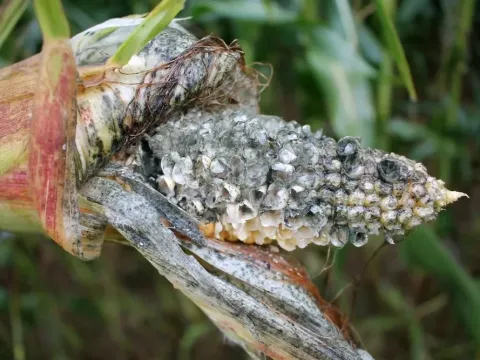
Khuskia oryzae
Khuskia oryzae
Khuskia oryzae is an ascomycete fungus belonging to the family Amphisphaeriaceae, order Xylariales, which acts as a versatile plant pathogen.
What the section contains
Khuskia oryzae
In its anamorph stage, it is widely recognized in scientific literature as Nigrospora oryzae, a fungus frequently isolated from various decaying plant materials.
The fungus is morphologically characterized by the production of dense, black, velvet-like conidial masses that appear on the infected tissues of host plants during the sporulation phase.
The conidia are globose, black, and shiny, which serves as a definitive diagnostic feature when observing the pathogen under a laboratory microscope.
As a member of the class Sordariomycetes, it is known for its ability to persist as a saprotroph before switching to a pathogenic mode when host health is compromised.
The primary host for Khuskia oryzae is rice, where it causes a disease commonly known as nigrospora blight, impacting both the panicles and the grain quality.
Beyond rice, the pathogen has a wide host range, including maize, wheat, sorghum, and millet, often causing cob rot in maize and seed deterioration in various cereals.
Infection leads to significant yield losses, reduced seed viability, and the potential production of mycotoxins that downgrade the market value of the harvest.
The fungus penetrates through wounds or natural openings, colonizing the plant tissues and obstructing the normal development of grains during the ripening stage.
In stored grain, Khuskia oryzae contributes to grain heating and spoilage if moisture levels are not strictly managed, leading to severe economic losses for producers.
The pathogen disseminates via airborne conidia, primarily during periods of high humidity and moderate temperatures that coincide with the grain filling stages of cereal crops.
Warm and rainy weather conditions during the flowering phase provide an optimal environment for the fungus to establish infection on developing seeds and panicles.
In storage facilities, the pathogen remains active throughout the year, provided that the moisture content of the stored material exceeds 15 percent.
The fungus survives the off-season as mycelium or chlamydospores within crop residues left on the field, which act as the primary inoculum for the next growing season.
Infection cycles are repeated whenever weather patterns fluctuate toward high humidity and rainfall, promoting rapid sporulation and secondary infection spread.
Infected rice panicles typically exhibit a visible black, powdery mold that covers the grains, significantly darkening the appearance of the entire head of the plant.
Affected grains are often shriveled, fragile, and may show discoloration ranging from dull grey to deep black, indicating complete colonization by the fungal mycelium.
In maize, the presence of Khuskia oryzae is indicated by a black, dusty layer appearing on the cob, often between the kernel rows or at the base of the cob.
Stalk rot symptoms may also occur, characterized by the weakening of stem tissues and potential lodging of the plants before the harvest stage is reached.
- Blackened panicles and grain heads.
- Sooty mold growth on seeds.
- Reduced thousand-kernel weight.
- Internal structural degradation of the grain.
Effective control measures start with the proper management of crop residues, including deep plowing to bury the inoculum and reduce the risk of primary infection.
Implementing strict crop rotation practices helps to break the pathogen's life cycle by eliminating its host plants from the field for consecutive growing seasons.
Using certified, fungicide-treated seeds is crucial to prevent early-stage infection and ensure vigorous establishment of the crop in the field.
Harvesting at the correct maturity stage and ensuring rapid drying of the grain are essential steps to prevent post-harvest development of the fungal colonies.
In severe infestation cases, the application of systemic fungicides during the flowering stage can protect the developing heads from secondary spore infections.