
Kernel smut of sorghum
Sporisorium cruentum
Description
How to identify
Kernel smut of sorghum is a fungal disease caused by Sporisorium cruentum (formerly Sphacelotheca reiliana). This pathogen belongs to the Ustilaginaceae family and specifically attacks various members of the Sorghum genus.
The fungus is an obligate parasite that survives primarily as teliospores in the soil or on the surface of seeds. Infection typically occurs at the seedling stage, specifically during the germination process before the seedling emerges from the soil.
Once the fungal hyphae penetrate the seedling tissue, the pathogen grows systemically throughout the host plant. The infection remains latent, meaning there are no external symptoms until the plant enters its reproductive growth phase.
The development of the fungus is highly sensitive to soil temperature and moisture. Environmental conditions ranging from 18°C to 25°C are considered optimal for successful infection during the critical window of seed germination.
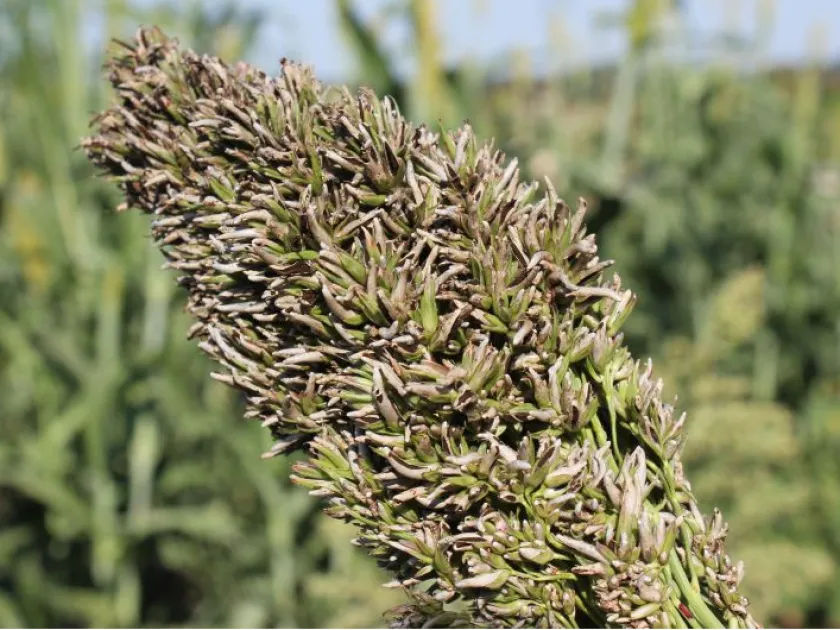
As the plant develops, the fungal mycelium reaches the inflorescence (panicle). It replaces the floral parts with characteristic smut galls, which are masses of dark, powdery spores that ensure the pathogen's dispersal.
What it damages
The disease affects grain sorghum, sweet sorghum, broomcorn, and Sudangrass. The damage is significant because the fungus completely destroys the reproductive capacity of the infected panicle, leading to total yield loss on affected plants.
Beyond individual plant loss, the presence of smut spores contaminates the entire harvest. This reduces the grain quality, makes it unsuitable for storage, and poses risks for downstream processing and human or animal feed.
In fields with high disease pressure, economic losses can be substantial. If left unmanaged, the pathogen population accumulates in the soil over years of continuous sorghum cropping, leading to severe outbreaks.
The systemic nature of the infection can also impair the overall physiological development of the plant, potentially affecting vegetative growth and stress tolerance during the growing season.
The movement of machinery and the wind dispersal of spores mean that the disease can spread rapidly across a farm, turning localized outbreaks into widespread field contamination.
Signs of infestation
The most diagnostic signs appear at the heading stage. Instead of a normal, healthy panicle, the plant produces a structure known as a smut gall, which may be covered by a thin, silvery-gray membrane.
As the plant matures, the membrane ruptures, releasing a dense, black, soot-like cloud of teliospores. This process confirms the maturity of the pathogen and the readiness of spores to infect new sites.
Affected plants sometimes exhibit morphological abnormalities, such as stunted growth or excessive tillering, which distinguish them from healthy neighbors in the same crop stand.
The fungus may infect the entire panicle or only localized florets. Even partial infection renders the panicle unproductive, as the fungal growth displaces the developing grain.
Visual identification is most effective during the early stages of heading, when the contrast between the healthy green tissue and the emerging smut galls is clearly visible to agronomists during scouting.
Control measures
The primary control measure is the use of systemic fungicides as seed treatments. This process effectively kills spores carried on the seed surface and provides protection during the sensitive seedling stage.
Crop rotation is a critical agronomic practice. By rotating sorghum with non-host crops for at least 3–4 years, farmers can significantly reduce the soil-borne spore load, limiting the risk of future infections.
Planting resistant hybrids is the most efficient and sustainable strategy for managing kernel smut. Modern breeding programs focus on developing sorghum varieties that exhibit high immunity to Sporisorium cruentum.
Proper planting management, including waiting for adequate soil warmth, ensures rapid seedling emergence, which shortens the time the plant is vulnerable to soil-borne fungal penetration.
- Utilize only certified, high-quality, and smut-free seed lots.
- Implement strict sanitation measures for agricultural equipment.
- Avoid continuous cropping of sorghum in infested fields to break the disease cycle.
Causes diseases · 1
Discussion
No discussions yet — be the first.