
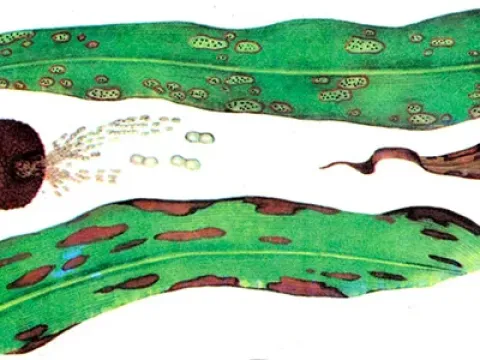
Kernel smut of sorghum
Sphacelotheca cruenta
Kernel smut of sorghum, caused by the fungus Sphacelotheca cruenta, is a significant plant disease belonging to the family Glomosporiaceae, order Ustilaginales. It is a systemic infection that colonizes the plant from the seedling stage.
What the section contains
Kernel smut of sorghum
The fungus survives as teliospores, which remain in the soil or on the surface of seeds. These spores are highly resistant to environmental stress, ensuring the pathogen's persistence in agricultural environments for several seasons.
Infection occurs during seed germination. When environmental conditions are favorable, spores germinate and infect the coleoptile of the sorghum seedling, allowing the fungus to enter the vascular system of the developing plant.
Once inside, the fungal mycelium grows systemically toward the apical meristem. It colonizes the internal tissues of the stem without showing visible symptoms until the plant begins to produce its inflorescence.
The optimal conditions for infection involve soil temperatures between 20°C and 30°C. High soil moisture levels during the germination phase can also influence the intensity of the disease outbreak in a field.
The disease affects various sorghum types, including grain, forage, and broomcorn. The primary damage involves the total replacement of floral structures by fungal spores, leading to complete grain loss in infected panicles.
Infected plants often display stunted growth and abnormal tillering. The development of excessive side shoots is a classic symptom, as the fungus disrupts the hormonal balance of the host plant throughout the growing season.
The pathogen causes significant economic losses by reducing both yield quantity and quality. Furthermore, contaminated grain can contain fungal toxins, making it unsuitable for human consumption or animal feed.
Spore dissemination occurs via wind during the flowering period. These spores easily disperse, contaminating healthy plants and leaving a massive reservoir of inoculum in the soil for future planting cycles.
In cases of severe infestation, yield losses can range from 10% to 50%. The economic impact is compounded if farmers fail to implement seed treatment protocols or use susceptible hybrids in highly infested areas.
Visual symptoms become apparent at the flowering stage when the panicle emerges. Infected plants often show a chlorotic appearance and may reach the heading stage earlier than healthy plants due to hormonal stress.
The most characteristic sign is the development of elongated, slightly curved sori (smut balls) that replace the grain kernels. These sori are covered by a thin, fragile membrane that eventually ruptures.
Upon rupture, a dark, dusty mass of spores is released, which is carried away by the wind. In many cases, the infected panicles are partially enclosed by the leaf sheath, distinguishing this disease from other smut types.
Excessive tillering is a common secondary sign. Because the primary panicle is often stunted or malformed, the plant compensates by producing multiple tillers, which themselves frequently show signs of smut infection.
Following the dispersal of spores, only the central axis of the panicle remains. This bare, blackened structure is a late-stage diagnostic feature, confirming the presence of Sphacelotheca cruenta in the field.
Seed treatment with systemic fungicides is the most effective management strategy. Chemicals targeting basidiomycetes protect the seedling during the vulnerable period of germination and emergence.
Crop rotation is essential to break the infection cycle. Since teliospores can persist in the soil for several years, moving sorghum to a different plot for at least 3 years significantly reduces the local pathogen population.
The deployment of resistant cultivars is the gold standard for long-term control. Breeding programs continuously select for immunity against known races of the fungus to ensure stable yields in high-risk regions.
Cultural practices, such as choosing optimal planting dates when soil conditions promote rapid emergence, help the crop escape the window of maximum vulnerability to infection.
- Use certified, fungicide-treated seeds.
- Implement a 3–4 year crop rotation scheme.
- Rogue and destroy infected plants early in the season.
- Minimize contamination during harvest by cleaning machinery.