
Kluyveromyces marxianus
Kluyveromyces marxianus
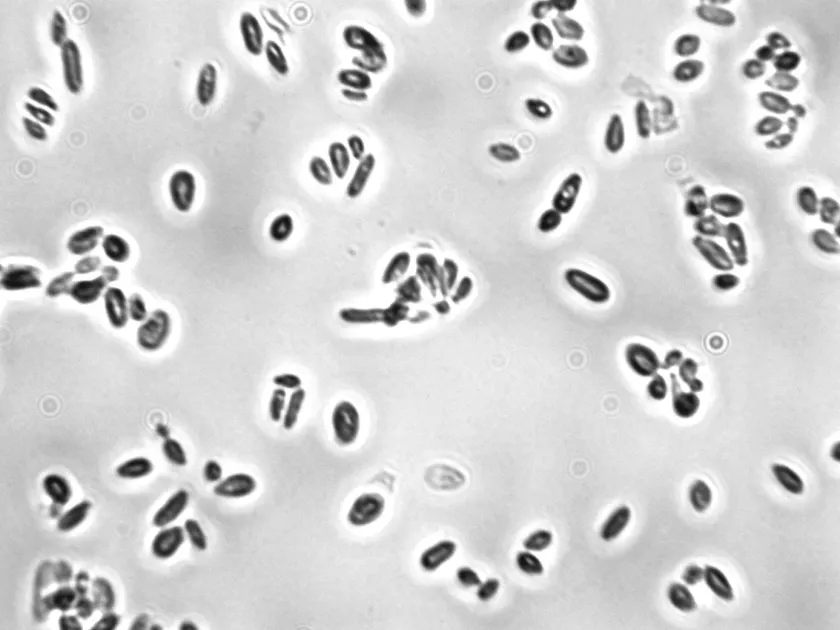
Description
How to identify
Kluyveromyces marxianus is a yeast-like microorganism belonging to the Kingdom Fungi and the family Saccharomycetaceae. In an agricultural context, it is recognized as a significant post-harvest agent capable of causing severe quality degradation.
The organism is characterized by oval or elliptical cells that reproduce by budding. It exhibits high fermentative capacity, which allows it to metabolize sugars in plant tissues rapidly, leading to the breakdown of structural components.
Biologically, this species is noted for its high thermo-tolerance, enabling it to thrive in temperatures that would inhibit many other microflora. This adaptation makes it particularly dangerous in warm climates or poorly cooled storage facilities.
Its lifecycle involves both asexual reproduction by budding and sexual processes under stressful conditions, leading to the formation of ascospores. These spores provide high resistance to environmental factors, ensuring the pathogen remains viable on surfaces.
The systemic position of this yeast highlights its natural association with sugar-rich environments, making it a constant threat to horticultural produce during the storage and logistics phases.
What it damages
The damage caused by Kluyveromyces marxianus is predominantly focused on harvested fruits and vegetables. Crops with high sugar content, such as apples, pears, and various soft berries, are particularly susceptible to this pathogen.
Infection typically occurs through mechanical wounds, such as bruises or skin punctures sustained during harvesting and packaging. These entry points allow the yeast to colonize the internal tissues and initiate a fermentation process.
The disease progression leads to the softening of fruit tissues and the internal degradation of cell wall integrity. This results in the loss of firmness and a distinct ethanol-like odor, rendering the produce commercially unacceptable.
The economic impact is significant, as a single infected fruit in a storage container can rapidly lead to the spoilage of surrounding produce through the spread of the yeast cells and their metabolic byproducts.
Furthermore, Kluyveromyces marxianus acts as a facilitator for secondary infections. By softening tissues and changing the chemical environment, it creates favorable conditions for various soft-rot bacteria to colonize the plant.
Signs of infestation
Initial infection signs include the appearance of localized moist, sunken lesions on the skin of the fruit. These areas are typically light-colored and may expand rapidly under humid conditions.
A white or creamy film composed of yeast cell masses often develops over the infected surface. While this biofilm is relatively thin, it serves as a clear diagnostic indicator of yeast-related spoilage.
Internally, the affected flesh loses its crispness, turning watery and soft. A key diagnostic feature is the presence of small gas bubbles within the tissue, resulting from the active fermentation of sugars.
Microscopic examination of the tissue juice reveals a high concentration of budding yeast cells, confirming the active growth and replication of the pathogen within the plant's vascular system.
In a storage setting, a strong, pungent fermentation smell is often the first warning sign that Kluyveromyces marxianus has infected a batch, necessitating immediate removal of the damaged units.
Control measures
The primary control strategy involves rigorous handling practices during harvest to minimize physical injury. Preventing skin abrasions is the most effective way to block the entry of yeast into the fruit.
Maintaining a cold chain is essential for preventing the development of Kluyveromyces marxianus. Storing produce at low temperatures significantly slows down the metabolic rate of the yeast, effectively halting the fermentation process.
Sanitation of storage facilities and transport containers is a critical requirement. Regular cleaning and disinfection reduce the background levels of the pathogen and limit the risk of cross-contamination.
The application of biological control agents, such as antagonistic yeasts or bacteria, has shown promise in protecting fruits post-harvest. These agents compete with Kluyveromyces marxianus for nutrients and space.
Proper airflow and humidity control within storage rooms prevent condensation on the fruit surface. Keeping the produce surface dry creates an environment that is unfavorable for yeast survival and infection.
Causes diseases · 1
Discussion
No discussions yet — be the first.