
Kutilakesa pironii
Kutilakesa pironii
Kutilakesa pironii is a microscopic fungal pathogen belonging to the Coelomycetes group. As an ascomycete fungus, it acts as a parasitic agent that targets specific ornamental plant tissues, causing significant physiological distress to the host.
What the section contains
Kutilakesa pironii
The fungus is characterized by the production of pycnidia—small, flask-shaped asexual fruiting bodies—which appear as black dots on the surface of the infected plant parts. These structures are the primary diagnostic indicators used for laboratory identification.
The most notable host for this pathogen is the hibiscus (Hibiscus rosa-sinensis). The fungus invades the stems and branches, disrupting the vascular system and potentially leading to systemic dieback if left untreated.
Beyond hibiscus, the pathogen has been observed on various other woody ornamental species. The damage typically involves local necrosis, which can escalate into systemic infection, causing premature defoliation and death of branches.
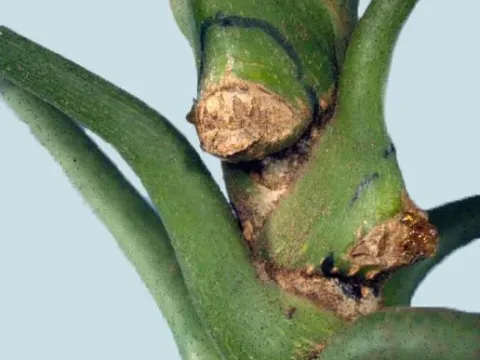
Infection starts with the appearance of black, pimple-like pycnidia emerging through the epidermis of the stems. As the fungus progresses, the bark in affected areas may become fissured, dry, and necrotic.
The foliage above the infected stem area usually shows signs of wilting, yellowing, and eventually dropping. In cases of severe stem girdling, the entire upper portion of the affected plant may die back rapidly.
Kutilakesa pironii thrives in high-humidity environments, particularly in greenhouses and nurseries. Water is the primary vector, with spores being splashed by irrigation or rain onto new host tissues.
High temperatures combined with poor air circulation create an ideal climate for the pathogen to spread. The fungus remains active throughout the year in controlled indoor environments, posing a persistent threat to collection plants.
Managing this pathogen requires a combination of strict sanitation and environmental control. Minimizing leaf and stem wetness is crucial, as is maintaining low relative humidity through proper spacing and ventilation.
- Prune out and destroy infected branches at least 5-10 cm below the visible necrosis.
- Sterilize all pruning tools with a 70% alcohol solution or bleach to prevent transmission.
- Apply systemic fungicides as a preventative measure in high-risk environments.