
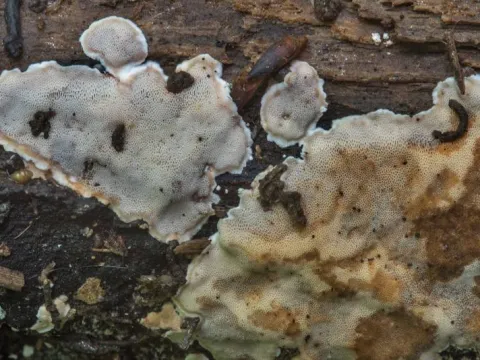
Junghuhnia vincta
Junghuhnia vincta
Junghuhnia vincta is a species of wood-decay fungus belonging to the order Polyporales and the family Steccherinaceae. It is a well-known agent that contributes to the breakdown of woody biomass in forest environments.
What the section contains
Junghuhnia vincta
The fungus is characterized by the formation of resupinate or effused-reflexed fruit bodies that appear on the substrate. The hymenophore is typically porous, featuring small, circular to angular pores, which serve as a primary taxonomic trait for identification.
At the microscopic level, the fungus is distinguished by its hyphal structure and spore morphology. It produces a dense mycelium that penetrates the vascular and structural tissues of trees, effectively decomposing complex wood polymers.
The fungus thrives in moist environments, particularly on dead or decaying hardwood logs, stumps, and occasionally on stressed living trees. It is a common component of the fungal community involved in the decomposition of hardwood forests across various regions.
Understanding the biology of this fungus is crucial for mycologists and foresters alike, as it plays a dual role: as a significant decomposer in nature and as a potential pathogen that compromises the structural integrity of forest stands.
Junghuhnia vincta is primarily known for causing white rot in various hardwood species, including oak, beech, and birch. This rot type is characterized by the degradation of both lignin and cellulose, which are the main components of wood cell walls.
The infected wood loses its structural strength, becoming fibrous, soft, and brittle. This significantly reduces the value of timber, making it unsuitable for construction or high-quality wood processing applications.
Damage to living trees often starts at the base or through wounds in the bark. As the internal rot progresses, the tree loses stability, which increases the probability of tree fall during high wind events, posing a risk to surrounding stands and infrastructure.
In addition to forest health impacts, the fungus can also cause damage to structural timber if stored in inadequately ventilated or damp conditions. This makes it a concern not just for forestry, but also for the lumber storage and construction industries.
The cumulative damage leads to economic losses through timber degradation and the need for premature harvesting of infected areas to prevent the spread of the pathogen to healthy, adjacent trees.
The most visible signs of infection are the fruit bodies that emerge on the bark or wood surface. These fruiting structures are usually cream-colored, becoming darker with age, and exhibit a distinctively porous underside.
Internal examination of the wood reveals white, bleached patches where the lignin has been removed. The texture of the wood changes from dense and solid to soft and fibrous, often showing deep cracks filled with white mycelial mats.
In living trees, canopy thinning and premature leaf discoloration are common symptoms. These signs occur because the fungal infection disrupts the tree's internal water transport system, leading to physiological stress.
Another symptom is the presence of fungal rhizomorphs or mycelial sheets underneath the bark or within internal cavities, which serve as the fungus's network for extracting nutrients from the host.
- Whitish or cream-colored patches in the heartwood.
- Soft, brittle, and fibrous wood texture.
- Porous fungal fruit bodies on the exterior.
- Presence of mycelial mats within internal wood cavities.
- Significant reduction in wood density.
Effective control in forestry involves the systematic removal and destruction of infected trees, especially those showing advanced signs of rot. This reduces the inoculum pressure within the stand and helps prevent further spread.
Sanitation practices should include the prompt removal of fallen timber and stumps that can harbor the fungus. Keeping the forest floor clear of debris prevents the buildup of fungal populations that could potentially attack nearby healthy trees.
In lumber yards, the key to control is moisture management. Timber should be stored in dry, well-ventilated areas, often raised from the ground to prevent moisture uptake, which is a prerequisite for Junghuhnia vincta growth.
Chemical control can be applied through the use of wood preservatives and fungicides, which are essential for treating structural timber intended for use in damp environments. These treatments create a chemical barrier that prevents fungal hyphae from gaining a foothold.
Regular forest health monitoring, including visual inspections and drone surveys, allows for the early detection of infection spots. Implementing proactive silvicultural measures that maintain overall tree vigor can also significantly improve the forest's natural resistance.