
Kernel smut of sorghum
Sporisorium sorghi
Description
How to identify
The causal agent of kernel smut is the basidiomycete fungus Sporisorium sorghi (formerly Sphacelotheca sorghi). It belongs to the order Ustilaginales and is a serious pathogen primarily affecting various species of the Sorghum genus.
The fungus develops systemically within the host plant tissues, gradually replacing the reproductive organs of the sorghum head with a mass of dark teliospores. This systemic nature makes the infection difficult to manage once the plant has reached maturity.
The pathogen reproduces via teliospores that persist on the surface of seeds or within the soil. Infection occurs during the seedling stage, as the spores germinate alongside the seed, leading to the invasion of the young tissues by the fungus.
The biological development cycle is synchronized with the sorghum plant's growth stages. The spores remain viable for several years in dry soil conditions, which contributes to the persistence of the disease in agricultural fields.
Environmental conditions such as soil temperature between +15°C and +25°C and moderate soil moisture are optimal for infection. Rapid plant emergence under favorable conditions helps the seedlings pass through the susceptible phase more quickly.
What it damages
Kernel smut causes direct yield losses by replacing individual kernels with spore-filled sacs known as sori. These sori destroy the potential seed production, leading to significant reductions in grain harvest.
Beyond the loss of seeds, infected plants may exhibit stunted growth, increased tillering, and an overall loss of vigor compared to healthy plants, which negatively impacts the crop's physiological development.
The quality of the grain is severely compromised, as the bursting spore sacs contaminate the healthy kernels during harvest, rendering the product unsuitable for human or animal consumption without intensive cleaning.
The economic impact involves both the reduced weight of the harvested crop and the additional costs associated with disinfecting agricultural machinery and grain storage facilities.
Under severe epiphytotic conditions, kernel smut can lead to yield losses exceeding 50% if appropriate seed treatments and crop rotation strategies are not strictly implemented.
Signs of infestation
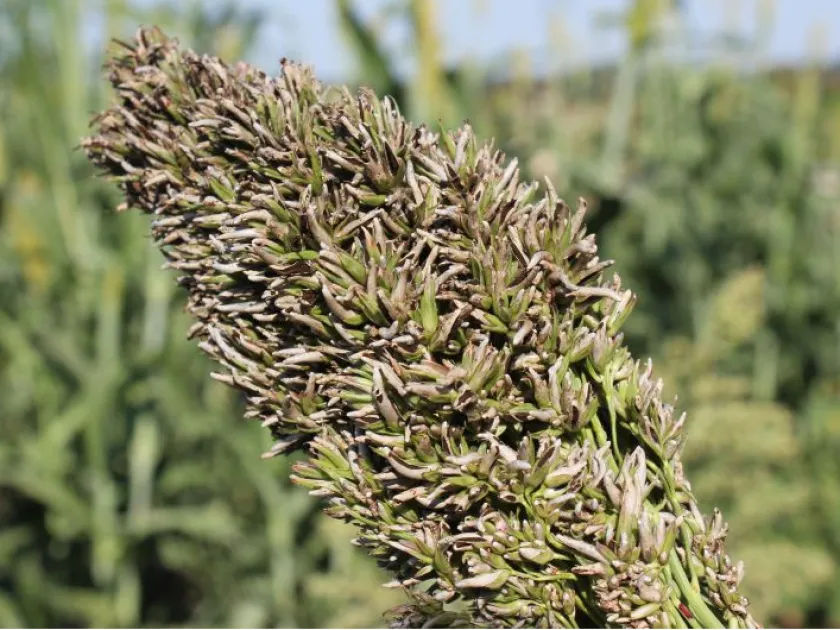
The most distinctive symptom appears during the heading stage, where normal kernels are transformed into elongated or oval-shaped smut sori, initially covered by a persistent grayish-brown membrane.
Once the membrane ruptures, a dark, powdery mass of spores is exposed. Infected plants are often characterized by these deformed heads, which stand out significantly against the healthy portions of the field.
Microscopic examination of the seed surface often reveals a coating of dark spores. Changes in the plant's architecture, including abnormal branching or dwarfing, are also common indicators of a successful systemic infection.
- Transformation of kernels into spore-filled sacs (sori).
- Grayish-brown membranes enclosing the smut spores.
- Dark powdery dust released upon membrane rupture.
- General deformation of the sorghum panicle.
Field diagnosis is most effective at the flowering stage, where symptoms are clearly visible. Careful inspection helps distinguish kernel smut from other similar diseases, such as loose smut or head smut.
Control measures
The primary control method is the application of systemic fungicides to seeds before planting. Proper seed treatment is highly effective at eradicating the pathogen from the seed surface and protecting the emerging seedling.
Implementing a proper crop rotation system is crucial for breaking the disease cycle. It is recommended to avoid planting sorghum in the same field for at least three consecutive years to reduce soil inoculum levels.
Optimizing the sowing dates to ensure rapid germination in warm soil allows the crop to surpass the highly susceptible seedling stage more efficiently, thereby reducing the chances of infection.
Selecting and planting resistant sorghum hybrids is the most sustainable and efficient strategy for long-term management of kernel smut within an integrated pest management program.
Maintaining high agricultural standards, including the rigorous cleaning of planting equipment and the use of certified, disease-free seed, is essential for preventing the widespread dispersal of the pathogen.
Causes diseases · 1
Discussion
No discussions yet — be the first.