
Grapevine fanleaf degeneration
Grapevine deformation
Grapevine fanleaf degeneration is a destructive viral disease caused by the Grapevine fanleaf virus (GFLV). This pathogen belongs to the genus Nepovirus and is responsible for significant economic losses in viticulture regions globally, affecting the longevity and yield of vineyards.
What the section contains
Grapevine fanleaf degeneration
The virus particles are spherical and transmitted primarily by ectoparasitic nematodes of the genus Xiphinema, specifically Xiphinema index. These nematodes acquire the virus while feeding on the roots of infected vines and can transmit it to healthy vines during subsequent feeding.
Systemic infection is the hallmark of GFLV. Once the virus enters the plant, it travels through the phloem and concentrates in the actively growing tissues (meristems), where it disrupts hormonal balance and cellular division, leading to severe morphological abnormalities.
The disease persists in the soil due to the longevity of the nematode vectors and the survival of root fragments from previously infected vines. This makes soil sanitation a critical aspect of disease management before replanting vineyards in affected areas.
Mechanical transmission via grafting tools and the use of infected nursery stock are significant factors in the long-distance spread of the virus. Global trade in vine propagation material has contributed to the virus's wide distribution across almost all grape-growing countries.
The disease causes progressive decline of the vine, leading to reduced vigor and yield. Infected plants often show poor fruit set, leading to "coulure" (flower drop) and the development of straggly, unevenly sized bunches, which renders the fruit commercially unmarketable.
Over time, the vine loses its ability to accumulate sugar and ripen properly. The structural deformities, such as stunted shoots and zig-zag growth patterns, reduce the total photosynthetic area, eventually exhausting the vine's resources and causing premature death.
The most distinctive symptom is the fan-like shape of the leaves, where the petiolar sinus becomes wide and the margins develop irregular serrations. Leaves often exhibit yellow mosaic patterns, ringspots, or vein banding, depending on the grapevine variety and environmental conditions.
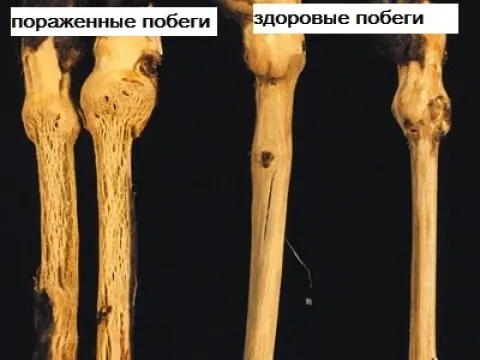
Shoot growth is characterized by shortened internodes and double nodes, resulting in a bushy, deformed appearance. Shoots may show fasciated (flattened) growth, which is a classic diagnostic sign of severe GFLV infection in many commercial cultivars.
Management of Grapevine fanleaf degeneration relies on preventive practices since there is no curative treatment. The use of certified, virus-tested planting material is the most important measure to prevent the introduction of the virus into new vineyard sites.
If the virus is detected, the standard practice is the removal of infected vines, including roots, followed by a fallow period for several years. Soil treatments, including the application of nematicides or the use of specific cover crops, can help reduce the population of the nematode vector before replanting.