
Grapevine leafroll-associated virus
Palatinate grapevine
Grapevine leafroll disease is caused by a complex of viruses within the family Closteroviridae, primarily the genus Ampelovirus (including GLRaV-1 and GLRaV-3). It is a systemic phloem-limited disease.
What the section contains
Grapevine leafroll-associated virus
The virus is an obligate parasite and cannot survive in the environment without a living host. Precise identification requires molecular testing, such as ELISA (Enzyme-Linked Immunosorbent Assay) or RT-PCR (Reverse Transcription Polymerase Chain Reaction).
Transmission primarily occurs through the propagation of infected nursery stock (grafting and cuttings) and by insect vectors such as mealybugs and scale insects.
Once inside the vine, the virus particles move through the phloem, disrupting the plant's transport system for sugars and essential nutrients.
The virus is widely distributed across global viticulture regions, representing one of the most economically significant viral threats to the grapevine industry.
The virus exclusively infects vines of the genus Vitis. It is a chronic, incurable disease that progressively weakens the host plant over several years.
Infected vines exhibit reduced photosynthetic efficiency, leading to significant delays in fruit maturity and a substantial reduction in sugar accumulation in the grapes.
The overall vigor of the vine declines, making it more susceptible to environmental stressors, particularly cold damage during dormant winter months.
Yield losses can be severe, often ranging from 30% to 50% depending on the cultivar and the viral strain, significantly impacting commercial profitability.
Wine quality is adversely affected due to the imbalanced chemical composition of the grapes, characterized by low sugar levels and high acidity.
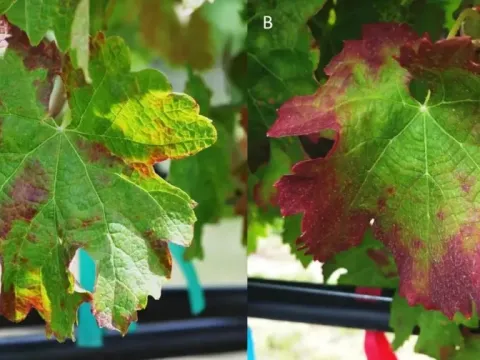
The most distinctive symptom is the downward curling of leaf margins, which typically becomes evident during the mid-to-late summer period.
In red-fruited cultivars, leaves develop a deep red or purple coloration, while the veins remain distinctly green during the early stages of symptom progression.
In white-fruited cultivars, the interveinal areas of the leaves become chlorotic (yellowish) as the season progresses, accompanied by the characteristic leaf rolling.
Symptomatic leaves typically appear on the lower part of the shoots first, gradually progressing upwards towards the shoot tips as the season advances.
Clusters on infected vines may show uneven ripening, smaller berries, and general signs of stunted growth compared to healthy, vigorous grapevines.
The primary control strategy is the exclusive use of clean, certified virus-free nursery material to prevent the introduction of the pathogen into new vineyards.
Ongoing vineyard monitoring is essential to identify and promptly rogue (remove and destroy) any symptomatic vines to prevent the spread of the virus.
Integrated Pest Management (IPM) practices focusing on controlling insect vectors, such as mealybugs, are critical to limiting the secondary spread of the disease.
Strict sanitation protocols must be followed during pruning operations, ensuring that all tools are thoroughly disinfected to prevent mechanical transmission of the virus.
Maintaining spatial isolation between young, healthy plantings and older, potentially infected blocks is a highly effective way to minimize the risk of vector-mediated infection.