
Grapevine leafroll disease
Grapevine red
Description
How to identify
Grapevine leafroll disease (GLRD) is caused by a group of viruses known as Grapevine leafroll-associated viruses (GLRaVs), primarily from the genus Ampelovirus in the Closteroviridae family.
The virus is a phloem-limited pathogen, meaning it exclusively infects the sugar-conducting tissues of the vine, which prevents proper nutrient transport throughout the plant.
Transmission occurs through vegetative propagation (infected cuttings or grafts) and by sap-sucking insects like mealybugs (Pseudococcidae) and soft scales (Coccidae).
This pathogen is considered one of the most economically damaging virus diseases of grapevines worldwide, requiring strict nursery protocols for prevention.
Laboratory diagnosis via ELISA or PCR is essential, as environmental stresses can sometimes mimic the symptoms of the viral infection.
What it damages
The disease significantly reduces the vine's photosynthetic capacity, leading to a substantial decrease in yield, often ranging from 30% to 50% in heavily infected blocks.
Grape quality is severely compromised, characterized by lower sugar accumulation, higher acidity, and poor color development in red varieties, which ruins the wine potential.
Infected vines exhibit reduced vigor and cold hardiness, making them highly susceptible to winter injury and leading to increased vine mortality during harsh weather.
The root system of infected plants is typically underdeveloped, which prevents the vine from effectively absorbing water and essential soil nutrients.
Over time, the cumulative effect of the disease leads to a premature decline of the vineyard, requiring costly replanting efforts to restore profitability.
Signs of infestation
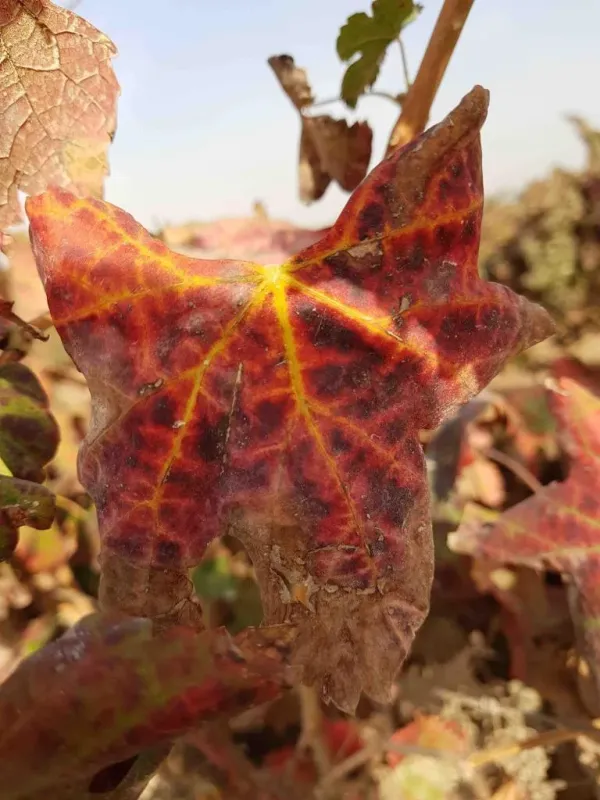
The most recognizable symptom is the downward rolling of leaf margins, which typically begins on the basal (oldest) leaves and progresses towards the shoot tips.
Foliage undergoes distinct color changes; red varieties show deep red or purple discoloration, while white varieties show chlorotic yellowing, keeping the areas around major veins green.
Fruit maturation is significantly delayed and uneven, resulting in poor flavor, low sugar content, and overall poor-quality clusters that fail to reach harvest standards.
Stunted shoot growth and shortened internodes are common structural changes observed in severely infected vines compared to healthy plants.
- Leaves become brittle and thick as the season progresses.
- Delayed leaf drop in autumn as the plant fails to enter dormancy correctly.
- Inconsistency in berry size and maturation within the same bunch.
Control measures
The primary control strategy is the use of certified, virus-free nursery stock to prevent the introduction of the pathogen into new plantings.
Effective management of vector populations, specifically mealybugs and scale insects, is critical through the application of selective insecticides or integrated pest management techniques.
Rogueing, the practice of identifying and removing infected vines, must be implemented strictly, as there is no chemical cure for the virus once a plant is infected.
Sanitation of viticultural equipment is mandatory; pruning tools must be disinfected between vines to stop the mechanical spread of the virus via sap.
Ongoing monitoring and regular testing of vineyard blocks are necessary to detect the presence of the virus early and contain its spread to adjacent healthy vines.
Causes diseases · 1
Discussion
No discussions yet — be the first.