
Grapevine leafroll disease
Grapevine leafroll-associated
Description
How to identify
Grapevine leafroll disease is caused by a group of viruses known as Grapevine leafroll-associated viruses (GLRaV), primarily belonging to the Ampelovirus genus within the Closteroviridae family.
These pathogens are phloem-limited viruses that colonize the vascular tissues of grapevines, interfering with the transport of sugars and nutrients from the leaves to the fruit and roots.
GLRaV is primarily transmitted through the use of infected propagation material (grafts, rootstocks) and by insect vectors, specifically mealybugs (Pseudococcidae) and soft scales (Coccidae).
The virus particles are flexuous, filamentous virions. Because the virus is persistent in its vectors, even a brief feeding period on an infected vine allows a mealybug to transmit the virus to a healthy plant.
Diagnostic identification typically requires molecular methods like PCR or serological tests like ELISA, as leaf symptoms alone can sometimes mimic nutrient deficiencies, such as magnesium or potassium deficiency.
What it damages
The disease affects almost all Vitis vinifera cultivars. While some rootstocks are tolerant, they often serve as reservoirs for the virus, remaining asymptomatic carriers.
The primary impact is a significant reduction in photosynthesis, leading to lower sugar accumulation in berries, delayed ripening, and uneven color development, which ruins the fruit quality.
Infected vines suffer from stunted growth, reduced vigor, and poor wood maturation, making them highly susceptible to winter damage and decreasing the overall lifespan of the vineyard.
Yield losses can be substantial, often reaching 30–50% in heavily infected blocks, which forces growers to initiate premature replanting of the vineyard.
Over time, the cumulative effect of the virus weakens the vines, making them more prone to other diseases and environmental stresses, severely compromising vineyard productivity.
When it appears
Symptoms of leafroll disease usually manifest in the second half of the growing season, typically becoming highly visible in late summer and autumn as the vine shifts its energy to ripening.
During the spring and early summer, the virus is active within the phloem but rarely shows obvious external signs, making early detection a significant challenge for vineyard managers.
Insect vectors (mealybugs) are active throughout the growing season. Their populations often peak in mid-summer, increasing the risk of virus transmission across the vineyard block.
The virus overwinters in the woody parts of the vine, including the trunk and perennial branches, where it remains systemic and active once the sap begins to flow in the spring.
Weather conditions, particularly warm and dry autumns, can sometimes influence the visibility of the reddening or yellowing symptoms, but the viral cycle remains constant regardless of the climate.
Signs of infestation
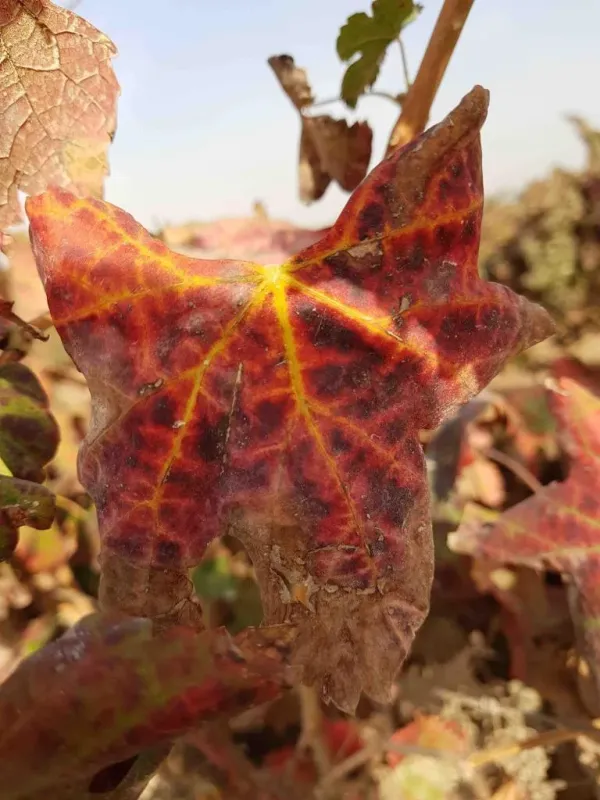
The most characteristic sign is the downward rolling of leaf margins, which creates a cup-like or tubular appearance, often accompanied by a thickening of the leaf tissue.
Color changes are cultivar-dependent: red-berried varieties show distinct interveinal reddening, while white-berried varieties show prominent yellowing of the leaf blade.
A key diagnostic feature is that the primary leaf veins usually remain green, creating a sharp contrast against the discolored (red or yellow) interveinal areas.
Growth is visibly affected, with shortened internodes and a stunted, bushy appearance of the shoots, especially in highly susceptible or sensitive cultivars.
- Downward rolling of leaf margins.
- Interveinal reddening or yellowing with green veins.
- Significant delay in berry maturation.
- Poor wood lignification in autumn.
Control measures
The foundation of effective control is the exclusive use of certified virus-free nursery stock. Sourcing vines from reputable, tested programs is the most important preventive measure.
Aggressive management of insect vectors is crucial. This involves using systemic insecticides and biological control agents to keep populations of mealybugs and scale insects below the economic threshold.
Rogueing, or the immediate removal and destruction of symptomatic vines, is essential to prevent the spread of the virus to healthy plants in the same or adjacent blocks.
Sanitation practices during pruning are vital; tools should be disinfected regularly, and care must be taken to remove any vine debris that might harbor insect vectors or viral remnants.
Establishing buffer zones and avoiding the introduction of new vines near old, infected vineyard blocks can significantly reduce the pressure of secondary viral infections.
Causes diseases · 1
Discussion
No discussions yet — be the first.