
Grape powdery mildew
Uncinula necator
Description
How to identify
Grape powdery mildew is caused by the obligate biotrophic fungus Uncinula necator. It belongs to the Erysiphaceae family and primarily targets the green tissues of the grapevine, including leaves, stems, and fruits.
The fungus exists as mycelium on the surface of plant tissues, forming specialized structures called haustoria that penetrate the epidermal cells to extract nutrients from the host plant.
Overwintering occurs either as mycelium within dormant buds or as chasmothecia (formerly cleistothecia) lodged in the bark crevices of the vine, ensuring the survival of the pathogen until the next spring.
Unlike many other fungal pathogens, Uncinula necator does not require free water for infection; instead, it thrives in high humidity and warm temperatures, making it a persistent threat in many wine-growing regions.
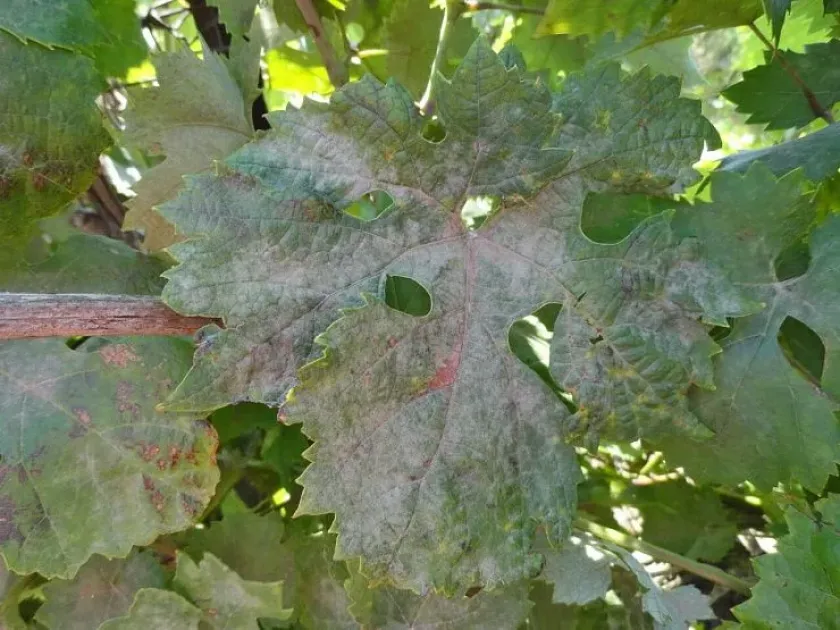
The disease is characterized by a dusty, white-to-gray fungal growth on the foliage and berries. This surface mycelium produces millions of conidia that are easily dispersed by wind throughout the canopy.
What it damages
The economic impact of powdery mildew is severe as it affects both the quantity and quality of the harvest. Infected inflorescences often wither and fail to set fruit, leading to significant yield losses.
When the pathogen attacks the berries, they stop growing, and the skin often splits, exposing the pulp. This physical damage creates entry points for secondary infections like Botrytis cinerea (gray mold).
Foliar infection inhibits the photosynthesis of the vine, which reduces the plant's ability to store sugars and energy. This negatively impacts the winter hardiness of the vines and future fruit production.
Infected shoots may show stunted growth and necrosis. If left uncontrolled, the entire plant can suffer from severe physiological stress, leading to poor wood maturation and weakened vines.
Wine quality is also heavily impacted. Even if the harvest is partially salvaged, the presence of powdery mildew leads to off-flavors in the wine and reduces the overall quality of the vintage.
When it appears
The cycle begins in spring when overwintering spores are released. The optimal temperature range for the pathogen's growth is between 20°C and 28°C, with high humidity favoring rapid development.
Infection cycles occur rapidly, with the latent period being as short as 7 to 10 days under favorable conditions. This allows the disease to spread across an entire vineyard in a very short timeframe.
During the summer, the disease continues to propagate as long as temperatures remain moderate and canopy density provides a microclimate with high humidity and stagnant air.
As the season progresses towards autumn, the fungus shifts from producing asexual conidia to forming overwintering chasmothecia, which prepare the pathogen for dormancy during the winter months.
Monitoring weather data such as temperature and dew point helps vineyard managers predict infection windows, allowing for more precise and effective fungicide applications.
Signs of infestation
The first signs of infection are small, white, powdery spots on the leaves. These patches grow and eventually cover the entire surface, giving the vine a dusted appearance.
Berries can show a gray, powdery coating. As the berries expand, the hardening of the infected skin leads to star-shaped cracking or longitudinal splitting, which is a hallmark of severe powdery mildew.
A distinctive smell, often described as musty or like decaying fish, is frequently associated with heavy infestations, serving as a warning sign for field scouting.
Shoot tips and young leaves may appear curled, twisted, or distorted. In extreme cases, the growth tips can become completely covered in white mycelium and turn necrotic.
Dark brown or black necrotic markings on green shoots are indicative of older, established infections where the fungus has caused damage to the epidermal tissue.
Control measures
Cultural practices are the first line of defense: canopy management, such as leaf removal and shoot thinning, is essential to improve airflow, increase light penetration, and reduce local humidity.
Chemical control involves the strategic application of fungicides. It is crucial to start preventative spraying before the first symptoms appear, typically from the time shoots are 10–15 cm long.
- Elemental sulfur (effective contact fungicide).
- Triazoles (systemic action).
- Strobilurins (preventative and curative properties).
- Biological controls like Bacillus subtilis preparations.
Resistance management is key. Growers must rotate fungicide groups with different modes of action to prevent the pathogen from developing resistance to commonly used active ingredients.
Regular scouting of the vineyard is necessary to ensure early detection. If hot spots are found, localized treatment or aggressive overall management must be implemented immediately to halt the spread.
Causes diseases · 1
Discussion
No discussions yet — be the first.