
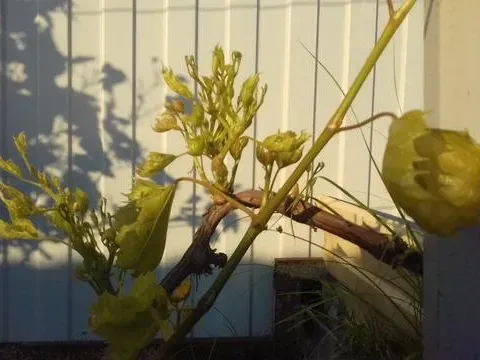
Grapevine fanleaf virus
Grapevine fanleaf
Grapevine fanleaf virus (GFLV) is a nepovirus belonging to the Secoviridae family. It is a highly significant plant pathogen known to cause severe degeneration of grapevine plantations worldwide.
What the section contains
Grapevine fanleaf virus
The virus is an obligate parasite consisting of a single-stranded RNA genome. It relies entirely on its host or vector to maintain its biological cycle.
Transmission occurs primarily through the soil-inhabiting nematode Xiphinema index. These nematodes acquire the virus by feeding on infected roots and subsequently transmit it to healthy vines.
Human activity is a major secondary vector, as the virus is easily spread through the use of infected cuttings and grafting materials in nurseries.
Laboratory diagnosis is essential, using techniques such as ELISA or RT-PCR, as visual symptoms can sometimes be confused with nutritional deficiencies.
The pathogen targets members of the Vitis genus, leading to systemic infection that spreads throughout the entire vascular system of the grapevine.
GFLV causes physiological disruption, preventing normal hormonal regulation and development of the vine, which eventually renders the plant commercially unproductive.
The damage is cumulative; once a vine is infected, the virus persists indefinitely, and there is no known method to "cure" an infected field plant.
Fruit set is severely impaired due to the virus, leading to low yields and poor quality grapes that do not meet agricultural standards.
The overall longevity of the vineyard is drastically reduced, necessitating early replanting and causing significant financial losses to growers.
Leaf malformation is the most distinct symptom, characterized by a fan-shaped appearance with elongated petiolar sinuses.
Severe shortening of internodes causes a zig-zag growth pattern in shoots, leading to stunted and bushy development of the canopy.
Yellowing of leaves, often manifesting as mosaic patterns or bright yellow bands along the leaf veins, is a common indicator of the disease.
Clusters show poor set, with significant flower abortion and a high proportion of "hen-and-chick" (uneven berry size) symptoms.
Canes fail to lignify properly, remaining green and fragile, which significantly increases the risk of cold damage during winter dormancy.
The primary control strategy involves the exclusive use of certified virus-free propagation material sourced from reputable nurseries.
Before establishing a new vineyard, testing the soil for the presence of the Xiphinema index nematode vector is critical for long-term site viability.
If an infection is detected, affected vines must be completely removed, including all roots, to prevent the persistence of the virus in the soil.
Soil fumigation prior to planting can reduce nematode populations, although it is often expensive and subject to environmental regulations.
- Implementing strict quarantine protocols for imported plant material.
- Fallowing fields for several years after removing an old vineyard to deplete nematode populations.
- Monitoring vine health to detect and remove individual infected plants before the virus spreads to neighbors.