
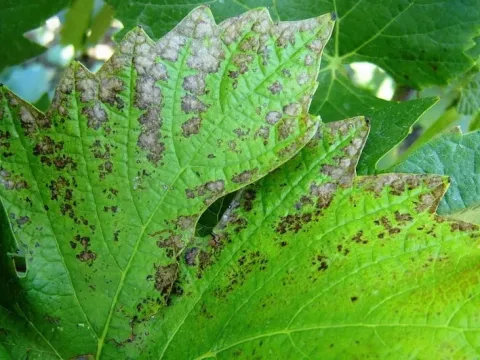
Grape phyllosticta leaf spot
Phyllosticta ampelicida
The causal agent of this disease is the fungus Phyllosticta ampelicida, classified within the division Ascomycota. This phytopathogen specifically targets grapevines, surviving the winter period by forming pycnidia — small, black, flask-shaped structures — on fallen leaves and infected woody tissues.
What the section contains
Grape phyllosticta leaf spot
To identify the pathogen, one must look for the pycnidia, which appear as minute black specks clustered within the necrotic lesions on the leaves. These structures serve as the primary source of inoculum when temperatures rise and humidity increases during the spring months.
The life cycle of the pathogen is driven by moisture. During rainy periods, the pycnidia release masses of conidia, which are splashed onto healthy green tissues by raindrops or irrigation water. This initiates the primary infection that can spread rapidly throughout the vineyard.
The fungus develops optimally in moderate to warm temperatures, typically between 15°C and 25°C. Once the conidia germinate, the germ tube penetrates the plant cuticle or natural openings, leading to the rapid colonization of host tissues.
As an Ascomycete fungus, Phyllosticta ampelicida exhibits a high level of host specificity to Vitis species. Its ability to persist in plant debris makes it a perennial challenge for viticulturists, requiring consistent sanitation efforts to manage its population.
The primary damage caused by Phyllosticta leaf spot is the degradation of the vine's photosynthetic capacity. Infection leads to the development of necrotic spots on the leaves, which eventually merge, causing premature leaf senescence and shedding.
The pathogen also attacks the fruit, where it manifests as sunken, dark lesions on the grape berries. As these spots grow, the berries lose moisture, become shriveled, and are often rendered unsalable, directly reducing the total harvest yield.
Infection of the rachis (the main stem of the grape cluster) is particularly damaging. This condition restricts the flow of water and nutrients to the berries, leading to fruit drop, uneven ripening, and structural failure of the cluster during harvesting.
Chronic infection weakens the entire grapevine. Because the plant must invest significant resources into healing or compartmentalizing the damage, its overall vigor is reduced, which negatively impacts the maturation of the current season's wood.
Weakened vines show poor cold tolerance, leading to winter injury in the buds and trunks. Over several years, untreated infections can severely decrease the lifespan and productivity of the vineyard, making it a significant economic concern.
Symptoms typically begin to appear in early summer, shortly after the flowering phase. During this time, the young foliage is highly susceptible, and if the weather is rainy, the pathogen begins its initial colonization phase.
The disease is most prevalent in environments characterized by high humidity and frequent summer rainfall. These conditions facilitate the splash dispersal of spores and ensure that the foliage remains moist long enough for the fungus to germinate.
Secondary infections occur throughout the summer whenever environmental conditions favor fungal growth. In regions where summers are dry, the disease is less common, but irrigation practices can inadvertently create the microclimate required by the pathogen.
As the autumn approaches and temperatures drop, the fungus transitions from its active colonization phase to its survival phase. It produces overwintering structures on debris that will serve as the reservoir for the following growing season.
Monitoring the vineyard during the early to mid-summer period is crucial for detection. Assessing the weather forecast and taking preventative actions before predicted rain events is a fundamental aspect of successful disease management.
The most distinctive sign of the disease is the presence of small, dark brown spots on the leaves. As these lesions expand, they reach a diameter of 5–10 mm and often exhibit a lighter necrotic center with a dark, prominent border.
- Dark, angular or circular spots on the leaf surface.
- Presence of black pycnidia (dots) within the lesions.
- Curling or yellowing of leaves followed by premature defoliation.
- Sunken, dark lesions on the surface of developing berries.
- Necrosis and brittleness of the grape cluster stems.
On the shoots, the infection causes elongated, dark streaks or cankers. These lesions can interfere with the vascular system of the vine, leading to stunted growth of the affected shoots or total wilting of distal clusters.
Identifying the disease relies heavily on visual inspection. The presence of the characteristic black pycnidia within the lesion serves as the key diagnostic feature that distinguishes Phyllosticta leaf spot from physiological disorders or other fungal diseases.
In advanced stages, the necrotic tissue within the spots may tear or drop out, creating a shot-hole appearance. This look can be mistaken for insect damage, so close examination for the fruiting bodies is necessary for accurate diagnosis.
Sanitation is the cornerstone of control. Removing and destroying infected vine debris (leaves, stems, and mummified berries) significantly reduces the primary inoculum load and helps prevent the carry-over of the fungus to the next season.
Improving canopy airflow through proper pruning, leaf thinning, and shoot positioning is highly effective. A well-ventilated canopy dries faster after rainfall, which inhibits the conditions necessary for spore germination and infection.
Chemical control involves the use of protective fungicides, particularly those containing copper or sulfur. These should be applied preventatively before predicted rainy periods to shield the green tissue from infection.
Systemic fungicides may be used if the disease is detected early, as they can provide curative effects. It is essential to rotate fungicides with different modes of action to prevent the development of resistant fungal strains within the vineyard.
An integrated approach, combining strict sanitation, canopy management, and targeted fungicide applications, is the most reliable strategy. This multi-layered defense maintains vine health, ensures high yield, and reduces the long-term impact of the disease.