
Grapevine angular leaf spot
Grapevine angular
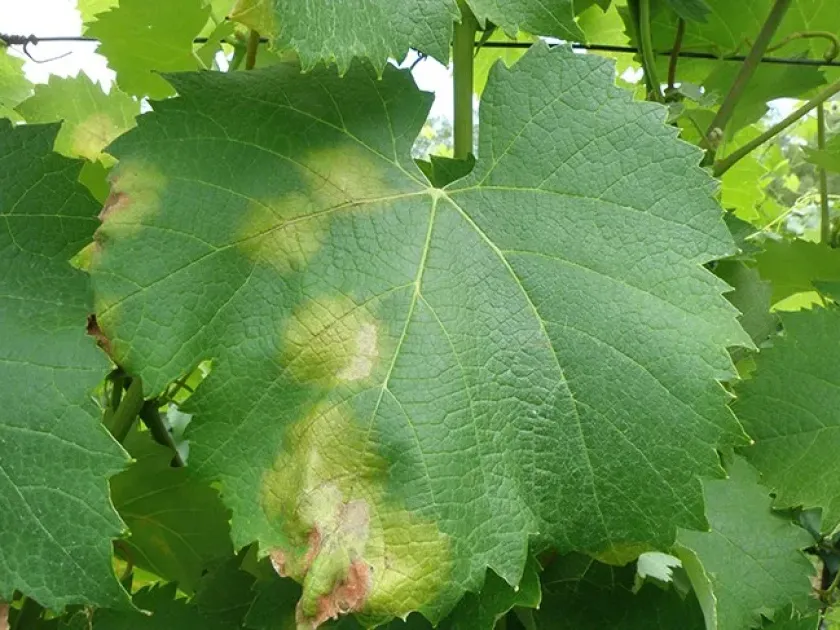
Description
How to identify
The causal agent of grapevine angular leaf spot is the fungus Cercospora vitis (also known as Pseudocercospora vitis), a deuteromycete. This pathogen specifically targets the foliage of grapevines, often appearing during the mid-to-late growing season when conditions become humid.
The fungus develops its mycelium within the leaf tissues, eventually emerging through the stomata to produce conidiophores. These structures produce the characteristic olive-black fungal growth that can be observed on the underside of infected leaves under high humidity.
The pathogen overwinters primarily as mycelia and conidia on fallen, infected leaves left in the vineyard. Spring moisture triggers the release of these spores, which then spread to young, emerging foliage, initiating the infection cycle for the new season.
Spores are disseminated by splashing water, such as rain or overhead irrigation, as well as by wind currents. This movement allows the fungus to spread rapidly across a vineyard, especially in areas with poor drainage or stagnant air.
Diagnostic identification typically involves microscopic examination of the fungal structures. The morphology of the conidia, which are usually elongated and multicellular, is the primary feature used to distinguish Cercospora vitis from other leaf-spotting fungi affecting viticulture.
What it damages
The primary damage caused by angular leaf spot is the reduction of the functional leaf area. As the disease progresses, leaves dry out and abscise prematurely, which disrupts the vine's ability to photosynthesize effectively during critical ripening stages.
A loss of leaf surface area negatively impacts the accumulation of sugars in the berries. This results in reduced grape quality and potentially lower yields, as the plant lacks the energy reserves needed to fully develop the crop to its potential.
The disease also hinders the proper maturation of the vine wood. If the vine cannot accumulate sufficient carbohydrate reserves due to premature defoliation, the shoots fail to harden properly, leaving the plant highly susceptible to winter cold injury.
In nursery settings, angular leaf spot is particularly detrimental. Young vines lack the vigor to overcome significant foliage loss, which can result in stunted growth, poor root development, and a higher mortality rate among young grape plants during their first winter.
Weakened vines are more susceptible to secondary infections and environmental stressors. The overall physiological decline caused by this disease increases the need for intensive management, which raises production costs for vineyard operators.
When it appears
Symptoms of angular leaf spot typically begin to appear in mid-summer, coinciding with warmer temperatures and intermittent rainfall. The disease is most prevalent in late summer and early autumn as the environmental conditions become ideal for fungal propagation.
High humidity and moisture on the leaf surface are essential for the germination of fungal spores. Rain, dew, and foggy mornings provide the perfect environment for the fungus to establish itself and spread across the canopy.
The optimal temperature range for the development of Cercospora vitis is between +22°C and +28°C. Outside of this range, the development of the pathogen slows significantly, though it remains viable in plant debris until conditions improve.
Poor vineyard management, specifically excessive canopy density, promotes high localized humidity. Such conditions allow the fungus to thrive even in years with average rainfall, making canopy management a critical factor in seasonal disease control.
As autumn approaches, the mass infection of leaves leads to widespread defoliation. This period marks the end of the primary disease cycle, as the leaves fall to the ground and become the reservoir for the following year's inoculum.
Signs of infestation
The most recognizable symptom is the appearance of angular spots, often bounded by the leaf veins, which prevents the lesions from expanding into circular patterns. These spots usually start as light brown or reddish-brown discolorations.
As the infection progresses, the centers of these angular spots turn dark brown or black. A lighter halo may appear around the lesion, marking the boundary between the necrotic tissue and the still-living portion of the leaf.
On the lower leaf surface, a distinctive olive-to-grey velvety growth forms within the affected areas. This is the sporulation of the fungus and is a diagnostic marker that helps differentiate this disease from other leaf spot ailments.
In severe cases, the lesions coalesce, covering a significant portion of the leaf surface. This causes the leaf to become brittle, lose its green color, and eventually drop from the vine well before the natural dormant season begins.
- Angular-shaped spots restricted by leaf veins.
- Velvety olive-colored fungal growth on the underside.
- Leaf curling and necrosis starting from the margins.
- Premature leaf drop leading to exposed fruit clusters.
Control measures
Sanitation is the most effective cultural practice for managing angular leaf spot. Removing and destroying fallen leaves during late autumn and winter is essential to eliminate the overwintering inoculum and break the disease cycle.
Improved canopy management, including regular shoot thinning, suckering, and proper trellising, is vital. These practices enhance airflow, reduce humidity within the vine canopy, and create an environment less favorable for fungal development.
Chemical control often involves the use of copper-based fungicides as a preventative measure. Applications should be timed before the appearance of symptoms, particularly during wet seasons, to protect the developing leaf tissue.
If the disease becomes established, systemic fungicides such as triazoles or strobilurins may be necessary. It is crucial to rotate chemical classes to prevent the development of resistant strains of the fungus within the vineyard population.
Maintaining vine health through balanced fertilization, especially ensuring adequate potassium levels, helps the plant resist the pathogen. A vigorous, healthy vine with a robust immune system is much better equipped to tolerate low-level infections.
Causes diseases · 1
Discussion
No discussions yet — be the first.