
Gloeocercospora sorghi
Gloeocercospora sorghi
Gloeocercospora sorghi is a fungal pathogen that causes the disease commonly known as zonate leaf spot in sorghum. It is classified as an anamorphic fungus that thrives in warm, humid tropical and subtropical environments.
What the section contains
Gloeocercospora sorghi
The pathogen produces sclerotia, which are small, hardened structures allowing it to survive on crop debris in the soil for several years. This makes the fungus a persistent threat in agricultural fields.
The biological cycle relies on the production of conidia that are disseminated through rain splashes and wind. Once contact is made with the host tissue, the fungus penetrates the epidermis and begins colonization.
Taxonomically, it belongs to the Fungi kingdom. It is distinguished from other leaf spot pathogens by the unique appearance of its fruiting bodies and the specific zonate pattern of the resulting necrotic lesions.
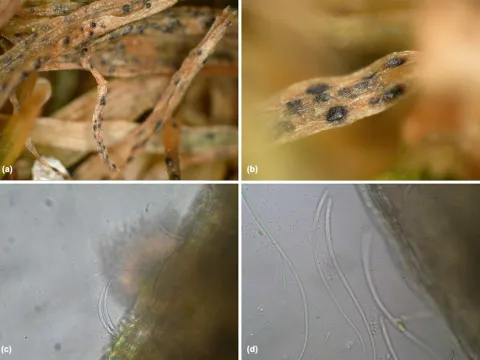
Laboratory diagnosis involves isolating the fungus on potato dextrose agar, where it forms characteristic colonies, and observing the distinct crescent-shaped conidia under a microscope.
This pathogen mainly affects sorghum (Sorghum bicolor), including grain sorghum, forage sorghum, and sudangrass. Its impact is most significant in areas with frequent rainfall during the crop's development phase.
The damage caused by the fungus reduces the photosynthetic area of the leaves. This leads to diminished grain filling, lower overall crop biomass, and reduced quality of silage or forage material.
Severe infections result in premature defoliation, which causes the plant to become stressed and more susceptible to drought, lodging, or other opportunistic secondary pathogens during the final stages of maturity.
Economic losses are often underestimated but can be substantial in highly susceptible varieties, leading to significant yield gaps compared to healthy, well-managed crops under similar conditions.
The pathogen can also affect seed quality if the infection reaches the panicle, potentially causing seed discoloration and reducing the percentage of germination in the following season.
The hallmark of the disease is the development of zonate lesions on leaves. These spots start as small, water-soaked areas that rapidly expand into large, circular, or irregular blotches.
The lesions feature distinct, alternating bands of tan, red, or purple colors, which create the characteristic "zonate" appearance. This pattern helps agronomists distinguish it from other leaf spots.
During humid conditions, the surface of these lesions may develop a pinkish mass of conidia. This sporulation is a key diagnostic feature indicating active spread of the fungal infection within the canopy.
In advanced stages, lesions may coalesce to cover entire leaves, leading to necrosis. While the leaves are the primary site of infection, the pathogen can also progress to leaf sheaths in favorable conditions.
The disease typically progresses from the bottom of the plant upwards as the canopy creates a humid microclimate that favors the growth and reproduction of the Gloeocercospora sorghi fungus.
The primary control measure is the use of crop rotation, rotating sorghum with non-host crops like corn, soybean, or cotton for at least 2 to 3 years to deplete the soil inoculum levels.
Tillage practices that bury crop debris are highly effective. Since the fungus persists in stubble, deep plowing helps accelerate the decomposition of infected plant material and reduces carryover.
Selection of resistant or tolerant sorghum hybrids is the most sustainable management strategy. Breeding programs focus on identifying genetic resistance to minimize reliance on chemical inputs.
Seed treatment with broad-spectrum fungicides can protect seedlings from early-season infection, ensuring better establishment and vigor in the critical early stages of the crop cycle.
- Removing volunteer sorghum plants
- Optimizing planting density to improve airflow
- Applying foliar fungicides if disease pressure is high
- Monitoring moisture levels in the field