
Globisporangium spinosum
Globisporangium spinosum
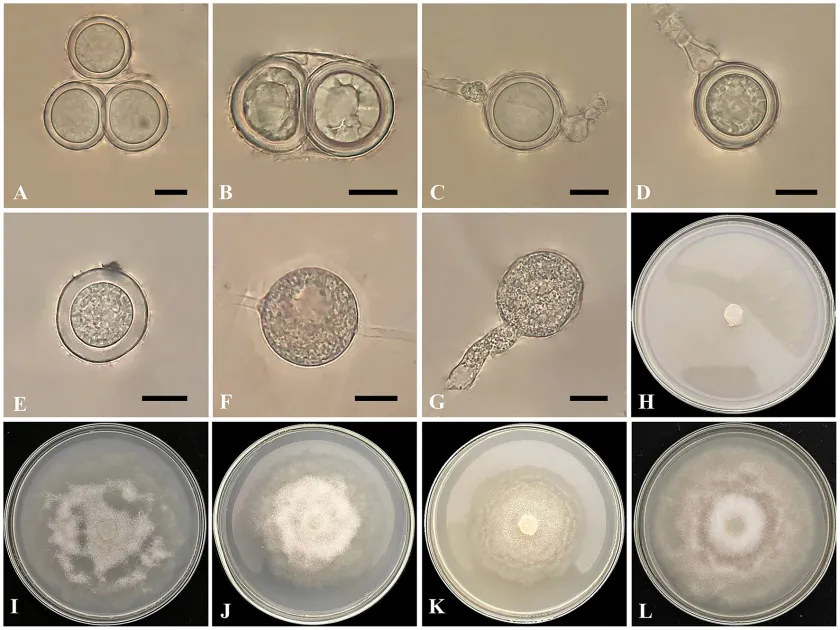
Description
How to identify
Globisporangium spinosum, formerly classified as Pythium spinosum, is a notorious soil-borne pathogen belonging to the oomycetes (water molds). These organisms are not true fungi but are closely related to algae, possessing specific physiological traits that make them resilient in wet environments.
The species name spinosum refers to the distinct spiny appendages found on its oogonia. Under microscopic observation, these structures are diagnostic features used by plant pathologists to differentiate this organism from other closely related species within the genus.
This pathogen acts as a facultative parasite, surviving in the soil as oospores—thick-walled, dormant structures that can persist for years even in the absence of a host. When moisture increases, these spores germinate to form sporangia and motile zoospores.
The taxonomic reclassification into the Globisporangium genus is based on molecular phylogenetic studies, which highlight significant differences in their life cycle and genetics compared to traditional Pythium species, impacting diagnostic accuracy.
As an oomycete, its life cycle is driven by water. Zoospores utilize flagella to swim through the water film in soil pores toward the chemotactic signals released by plant roots, initiating a rapid infection process upon contact with host tissues.
What it damages
Globisporangium spinosum affects a wide range of botanical hosts, including various vegetables, ornamental flowers, and nursery-grown plants. It is particularly devastating in high-moisture environments like greenhouses and nurseries.
The primary damage occurs on the root system, specifically attacking root hairs and the cortical tissues. This damage disrupts the plant's ability to uptake water and nutrients, resulting in stunted growth and severe yield losses.
In seedlings, the infection often causes pre-emergence or post-emergence damping-off. The pathogen destroys the hypocotyl area, leading to the collapse of the plant stem near the soil line, which is an economically critical stage for many commercial crops.
Even if the plant survives the initial infection, it remains chronically weakened. The damaged root system becomes prone to secondary infections by bacteria and other fungi, leading to rot and eventual decline of the plant over the growing season.
The economic impact of this pathogen is significant due to the costs associated with soil pasteurization, chemical treatments, and the replacement of lost plant stock, as well as the loss of plant uniformity in greenhouse production.
When it appears
Development of this pathogen is highly favored by cool to moderate temperatures, typically ranging from 15 to 25 degrees Celsius, combined with high soil moisture levels. These conditions are common during the early spring or autumn seasons.
The pathogen thrives in poorly drained soils where water stagnation provides the necessary aquatic medium for zoospore movement. Once the soil becomes saturated, the pathogen spreads rapidly from the initial infection site to healthy neighboring plants.
In controlled environment agriculture, the disease can be prevalent throughout the year if ventilation is inadequate and soil compaction occurs. High humidity combined with excessive irrigation schedules creates a perfect habitat for the pathogen to flourish.
During dry spells, the pathogen may go dormant by forming oospores, which allow it to survive periods of drought. Once irrigation or natural rainfall returns, these oospores break dormancy and restart the infection cycle.
Field-grown crops are most vulnerable after heavy rainfalls, especially in clay-heavy soils that impede water percolation. The lack of soil aeration during these periods is the key environmental trigger for outbreaks.
Signs of infestation
Symptoms often start below the soil surface, making early detection difficult. The first visible sign is often the lack of plant vigor or yellowing of the foliage, which can easily be misidentified as nutrient deficiency or drought stress.
A closer inspection of the root system reveals a distinct brownish discoloration. The roots become soft, mushy, and water-soaked. In advanced cases, the outer cortex of the root sloughs off, leaving behind a brown, frayed central vascular core.
Plants affected by the pathogen may show wilting even if the soil is adequately moist, as the degraded root system is unable to sustain the transpiration demands of the plant during the day.
- Yellowing and wilting of leaves.
- Darkening and necrosis of the root tips.
- Soft, water-soaked tissue in the root system.
- Collapse of young seedlings at the soil line.
- Stunted plant growth compared to healthy specimens.
Definitive identification of Globisporangium spinosum requires professional laboratory analysis, including the microscopic examination of the characteristic spiny oogonia extracted from the infected plant roots or soil samples.
Control measures
Management must focus on a multi-pronged approach, starting with sanitation. Using sterilized, high-quality soil media and pathogen-free seeds is the most effective preventative measure to ensure a healthy start for seedlings.
Water management is critical. Implementing proper drainage systems, avoiding over-irrigation, and using drip irrigation rather than overhead sprinkling helps to minimize the water films that zoospores require for motility.
Chemical control options include the targeted application of fungicides labeled for oomycete pathogens, such as those containing mefenoxam or fosetyl-aluminum, which can effectively suppress the pathogen population in the rhizosphere.
Biological control agents, particularly beneficial fungi like Trichoderma species or specific strains of Bacillus subtilis, can be used to colonize the root zone and protect plants through competition and antibiosis against the pathogen.
Finally, crop hygiene is essential. Removing infected plants, disposing of infested debris, and sanitizing tools and trays after every crop cycle are vital steps in breaking the disease cycle and preventing its establishment in the production area.
Causes diseases · 2
Discussion
No discussions yet — be the first.