
Gloeodes
Gloeodes
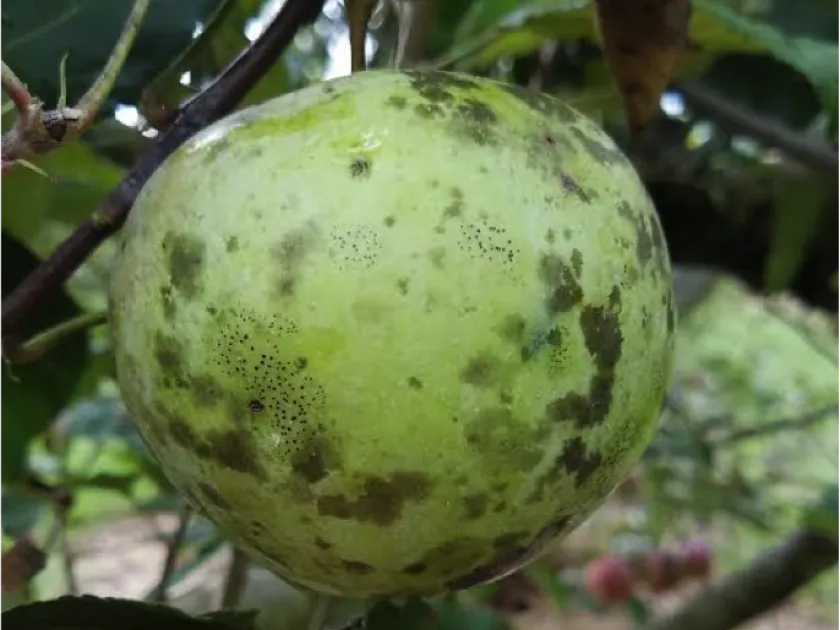
Description
How to identify
Gloeodes (scientific name Gloeodes pomigena) is a fungus responsible for a condition known as sooty blotch on apples, pears, and other pome fruits. It is an anamorphic fungus that thrives on the fruit surface.
This pathogen is strictly superficial, living within the waxy cuticle layer of the fruit skin. It does not penetrate the flesh, which is a crucial aspect of its biological classification as an epiphytic parasite.
The fungus is widespread in temperate regions with high humidity. It is frequently found in complexes with other fungi, such as Schizothyrium pomi, which cause similar surface staining.
Gloeodes produces sclerotial bodies and conidia that allow it to overwinter on twigs and branches, serving as the inoculum source for the following season's fruit infection.
In a diagnostic context, the fungus is characterized by its ability to grow slowly across the fruit surface, forming distinct, dark, colony-like structures under favorable weather conditions.
What it damages
The primary hosts of this pathogen are apple and pear trees. While the fungus does not cause rot or tissue decay, the damage to commercial quality is significant.
The dark blotches on the fruit surface drastically reduce their market value. Apples affected by sooty blotch are often rejected for fresh market sale and must be downgraded to processing or waste.
Because the protective cuticle is modified by the fungal growth, affected fruits are more prone to shriveling during storage, leading to increased weight loss and reduced shelf life.
Although the internal fruit quality remains intact, the visual appearance renders the crop unsightly, making it a major economic concern for organic and intensive orchard managers alike.
In severe cases, entire harvests can be rendered unfit for consumer sale, causing financial losses that can reach up to 90% of the harvest value in untreated orchards.
When it appears
The disease development is heavily dependent on moisture. Infection typically occurs mid-to-late summer when humidity levels remain high and rainfall is frequent.
Cooler night temperatures combined with high relative humidity (above 90%) create the ideal environment for the fungus to colonize the maturing fruit surface.
Primary infection starts from spores washed by rain from the canopy or surrounding vegetation onto the developing fruit. Once established, the fungus spreads via further cycles of wet weather.
The period between mid-August and harvest is critical. Frequent dew and fog in the orchard can significantly accelerate the colonization of the fruit skin by the fungus.
As harvest approaches, the fungus remains visible on the skin, but its active growth may slow down if the autumn weather becomes dry, although it will remain present on the harvested fruits.
Signs of infestation
The main symptom of infection is the appearance of olive-green to black, smudgy blotches on the skin of the fruit. These blotches often have fuzzy or ill-defined margins.
- Dark, cloudy, or blotchy patches on the fruit surface.
- The growth is superficial and can often be rubbed off with physical pressure.
- The underlying fruit tissue shows no evidence of necrosis or softening.
- Heavy infestations may cause the entire fruit surface to look as if it is covered in soot or dust.
- Symptoms are often more severe on the upper side of the fruit or near the stem where water collects.
These signs distinguish it from other apple diseases like scab, which causes corky lesions and cracks in the skin, whereas Gloeodes keeps the skin intact but dirty in appearance.
Orchardists should look for these symptoms during late-season scouting to evaluate the effectiveness of their current fungicide program.
Control measures
Control of Gloeodes is focused on reducing the humidity levels within the tree canopy and implementing a proactive fungicide spray schedule.
Pruning is the most essential cultural practice. An open canopy allows for better air circulation and rapid drying of fruit and foliage after rain, inhibiting fungal development.
Effective sanitation, including the removal of debris and maintaining weed-free orchard floors, helps reduce the local humidity and the overall inoculum pressure.
During the critical period of fruit maturation, fungicide applications targeted at the sooty blotch complex are highly effective if timed correctly with rainy events.
Choosing resistant cultivars or those with a naturally thick, waxy cuticle can provide long-term benefits in reducing the severity of infection in high-pressure environments.
Causes diseases · 1
Discussion
No discussions yet — be the first.