
Glomerella cingulata
Glomerella cingulate
Glomerella cingulata is an ascomycete fungus that serves as the teleomorphic stage of the widespread pathogen Colletotrichum gloeosporioides. This fungus is a highly destructive and polyphagous plant pathogen.
What the section contains
Glomerella cingulata
It belongs to the kingdom Fungi and the phylum Ascomycota. The fungus can reproduce both sexually through the formation of perithecia and asexually via conidia produced in structures called acervuli.
This organism has an extensive host range, affecting various fruit trees, vegetable crops, and ornamental plants. It is capable of infecting all parts of the host plant, causing significant physiological distress.
Microscopic examination of the conidia and colony characteristics is usually required for accurate identification, as the macroscopic symptoms can often be confused with other fungal diseases.
The fungus persists in the environment as mycelium or spores on crop debris, within infected fruit, or in soil, providing a continuous source of inoculum for subsequent growing seasons.
The most economically significant disease caused by this fungus is bitter rot, which affects apples, grapes, and various other fruits. It can also cause severe anthracnose on stems and leaves.
The pathogen secretes enzymes that degrade cell walls, leading to tissue softening and necrosis. This process results in the rapid decay of fruit, often rendering the harvest entirely unmarketable.
Lesions on woody branches can lead to dieback of twigs and stems. This damage reduces the overall vigor of the host plant and makes it more susceptible to other biotic and abiotic stresses.
The impact of the disease is profound, with potential yield losses reaching up to 80% in years favorable for the pathogen, particularly in orchards without adequate disease management.
Post-harvest damage is also a critical issue, as latent infections present at the time of picking can rapidly develop into massive fruit rot during transportation and storage.
The infection cycle begins in the spring when temperatures rise above 15-20°C. High humidity and persistent surface moisture are essential for the germination of fungal spores.
During the summer, frequent rainfall and high humidity facilitate the spread of spores via wind and water splashing. Temperatures between 22°C and 28°C provide the optimal range for rapid mycelial colonization.
The pathogen can produce multiple generations of spores within a single growing season, leading to secondary infections that rapidly increase the severity of the disease in the orchard.
Autumn conditions often slow down the active growth of the fungus, which then transitions into a survival state. It overwinters in plant remains, preparing for renewed activity in the following spring.
Monitoring weather conditions is vital, as heavy rain events during critical growth stages are reliable indicators of high risk for infection outbreaks.
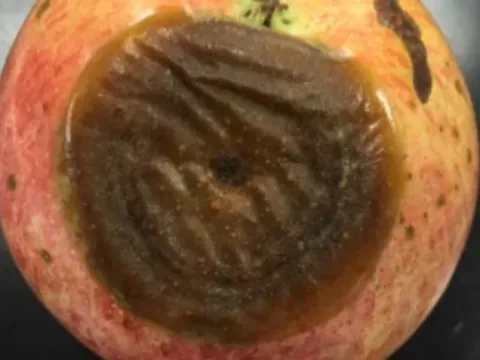
Initial signs of the disease on fruit manifest as small brown spots, which expand rapidly. The affected areas become sunken and soft as the infection progresses inward.
Concentric rings of fungal fruiting bodies often appear in the center of the lesion. These structures typically exude masses of spores that look pink, cream, or black.
Infected fruit often develops a distinct bitter taste due to the metabolic byproducts of the fungus. Foliar symptoms include dark necrosis and premature leaf drop in severe cases.
- Sunken lesions on fruit surfaces.
- Pinkish spore masses on infected tissue.
- Bitter taste in infected fruit flesh.
- Cankers on branches and twigs.
In high humidity, a slimy layer of conidia may be visible on the surface of the lesions, which is easily dispersed by rain to infect healthy tissues nearby.
The primary management strategy is integrated pest management, starting with rigorous sanitation: removal and destruction of infected twigs, mummies, and leaf litter.
Fungicide application is essential, particularly during the fruit development stage. It is important to rotate products with different modes of action to prevent the development of resistant strains.
Cultural practices such as proper pruning and thinning help improve air circulation, allowing foliage and fruit to dry out faster and reducing the time available for spores to germinate.
Balanced fertilization is necessary to maintain plant health. Excessive nitrogen should be avoided as it promotes succulent growth that is more vulnerable to fungal penetration.
Post-harvest handling is critical; ensuring fruit is cooled quickly and kept dry during storage can significantly inhibit the development of bitter rot lesions.