
Gibellina cerealis
Gibellina cerealis
Gibellina cerealis is a specialized fungal pathogen categorized within the Ascomycota phylum. It is primarily known for causing "white rot" or gibellinosis in various cereal crops, significantly impacting grain production in specific regions.
What the section contains
Gibellina cerealis
This fungus exhibits a complex reproductive cycle, utilizing ascospores as the primary inoculum source that allows it to infect healthy plants after surviving periods of dormancy in the soil.
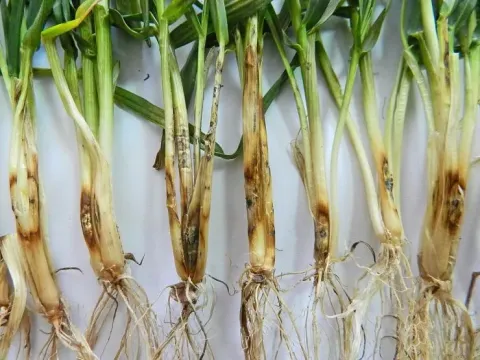
The fungus predominantly attacks wheat, but other small grains can also be susceptible. It infects the lower stalk and base of the plant, directly interfering with the plant's vascular system.
Damage results in reduced nutrient uptake, stunted grain development, and structural weakness of the stem, often leading to lodging and substantial yield losses across large agricultural areas.
The most characteristic sign is the development of a dense, white mycelial mat on the stems, particularly near the soil surface. This white cover is a clear indicator of the fungal colonization.
As the disease progresses, the plant tissue loses its structural integrity. Tiny, dark perithecia (fruiting bodies) appear on the affected stalks, which are essential for the fungus to complete its life cycle and spread to new hosts.
Outbreaks are heavily dependent on environmental conditions, particularly moisture levels during the early growth stages of the crop. Cool, damp spring weather provides the optimal environment for spore germination.
The fungus is primarily soil-borne, relying on crop debris to survive the winter. When temperatures rise during the spring thaw, the spores are released and start the cycle of primary infection on newly growing stems.
Management strategies focus on cultural practices that disrupt the life cycle of the pathogen. Crop rotation is the most effective approach, preventing the build-up of the fungal population in the soil.
In addition to rotation, farmers should focus on burial of crop residues through deep plowing and the application of appropriate fungicides when weather conditions favor disease development.