
Gibberella pulicaris
Giberella pulicaris
Description
How to identify
Gibberella pulicaris (anamorph Fusarium sambucinum) is an ascomycete fungus belonging to the Nectriaceae family. It is a significant phytopathogen known for producing abundant micro- and macroconidia during its asexual stage, which facilitates rapid infection spread.
In nature, the fungus develops dark perithecia, which are the sexual fruiting bodies where ascospores are produced. This sexual cycle is crucial for the pathogen's long-term survival in the soil and on crop debris.
This species displays high genetic plasticity, allowing it to adapt to diverse environmental conditions and develop resistance to certain fungicide classes, making it a challenging target for control.
The fungus is capable of synthesizing various mycotoxins, such as deoxynivalenol and zearalenone, which pose serious health risks if contaminated products enter the food or feed chain.
Laboratory identification involves isolating the pathogen on specialized growth media like potato dextrose agar, where it exhibits specific colonial morphology and pigmentation patterns.
What it damages
The primary economic impact of Gibberella pulicaris is the dry rot disease in potato tubers, which causes severe storage losses worldwide if not properly managed.
Besides potatoes, the pathogen affects a broad range of agricultural crops, including cereals, where it contributes to Fusarium head blight, seedling blight, and root rot complexes.
It can also infect various horticultural and technical crops, such as sugar beets and flax, particularly when environmental conditions are conducive to fungal growth and plant stress.
The damage is characterized by a significant reduction in produce quality, germination rates of seed material, and overall marketability of the harvested crops.
Infected tissues lose structural integrity and biochemical value, often leading to total loss of the affected produce when storage conditions are not strictly controlled.
When it appears
Infection risk peaks during the harvesting phase, as mechanical wounds on tubers provide ideal entry points for the fungus to colonize the healthy tissue.
During storage, the pathogen remains active throughout the winter, especially if temperatures rise above the recommended cool storage range, causing the decay to progress rapidly.
In the spring, the fungus spreads to the field via contaminated seed tubers, where it causes damping-off and root rot, leading to poor plant stand establishment.
Summer conditions can lead to secondary infections if the plants are stressed by environmental factors like drought, making them more susceptible to the pathogen's attack.
Conidia are spread through rain splashes, wind, soil-borne insects, and contaminated farming equipment, ensuring the pathogen persists across different cropping seasons.
Signs of infestation
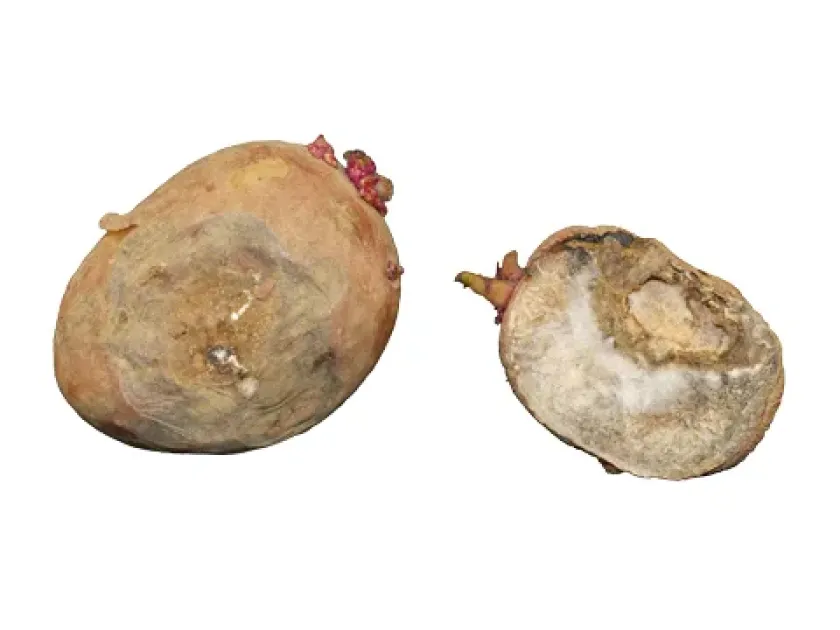
Initial symptoms on potatoes appear as small, dark, sunken lesions on the tuber surface, which eventually expand and cause the underlying tissue to become dry, brittle, and shriveled.
Internally, the decayed tissue develops cavities filled with loose mycelium that can be white, pink, or yellowish, which is a classic diagnostic feature of this dry rot infection.
Pustules or spore-bearing structures often break through the skin of the tuber, appearing as small pads that contribute to the inoculum density within the storage environment.
A distinct boundary is usually visible between the healthy tuber tissue and the brown, necrotic zone, showing the clear progression of the fungal colonization.
- Dark, sunken, and wrinkled spots on the tuber skin.
- Internal tissue decay with crumbly texture and cavities.
- Presence of fluffy mycelium or fungal spore pads.
- Loss of tuber moisture and structural firmness.
- Reduced vigor or failure of emergence in infected seed potatoes.
Control measures
Primary control strategies focus on good agricultural practices, such as gentle harvesting to prevent wounds and thorough drying of tubers before moving them into storage.
Implementing a strict crop rotation cycle of at least 3-4 years is essential to reduce the resident inoculum levels of the fungus in the field soil.
Using certified, disease-free seed potatoes is a fundamental step in minimizing the spread of the pathogen, combined with appropriate fungicidal seed treatments.
Maintaining optimal temperature and ventilation in storage facilities is critical to suppress fungal growth and prevent the spread of decay from infected tubers to healthy ones.
Effective management also involves controlling soil-borne pests that create wounds on tubers and performing regular sanitation of storage units, equipment, and storage containers.
Causes diseases · 1
Discussion
No discussions yet — be the first.