
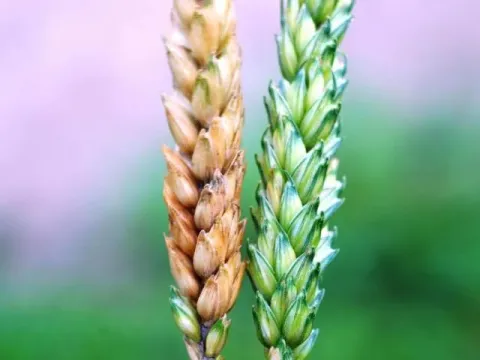
Gibberella saubinettii
Gibberella saubinett
Gibberella saubinettii (the teleomorph of Fusarium graminearum) is a significant fungal plant pathogen belonging to the Ascomycota division. It is the primary cause of Fusarium head blight (FHB) in cereal crops.
What the section contains
Gibberella saubinettii
The fungus develops mycelium that is initially white but turns pinkish or reddish as the infection progresses. It produces perithecia, which are small black fruiting bodies, releasing ascospores that initiate primary infections.
This pathogen is highly adaptable and can survive for extended periods on crop debris and in the soil. It is notorious for producing mycotoxins like deoxynivalenol (DON), which pose severe health risks to humans and animals.
Taxonomically, it is often referred to as part of the Fusarium graminearum species complex, reflecting the high genetic diversity and complexity of the organism across different geographic regions.
The fungus is a versatile invader, capable of infecting plants via roots, crowns, or floral tissues, making it a difficult pathogen to manage in conventional agriculture.
Major hosts include cereal crops such as wheat, barley, rye, oats, and maize. In maize, the fungus is known to cause ear rot and stalk rot, leading to substantial yield losses.
In wheat and other small grains, the infection results in Fusarium head blight, causing bleached spikes, shriveled kernels, and significantly reduced grain weight and quality.
Infected plants suffer from stunted growth, stalk breakage, and reduced nutrient uptake, which prevents proper grain filling and leads to crop lodging.
The accumulation of mycotoxins in the grain makes the harvest unfit for human or animal consumption, resulting in severe economic losses for agricultural producers.
Seed-borne infection is another major issue, as contaminated seeds serve as primary inoculum for the next crop season if not treated with systemic fungicides.
The development of the pathogen is highly dependent on environmental conditions, particularly high humidity and moderate temperatures (between 20°C and 28°C) during flowering.
Ascospores are dispersed by wind and rain splashes, landing on open florets and initiating infection. Flowering represents the most susceptible stage for cereal crops.
Secondary outbreaks can occur during the maturation phase if rainy weather persists, providing the moisture required for the fungus to sporulate on the heads.
The fungus overwinters as mycelium or perithecia on infested crop residues left on the soil surface, acting as a reservoir for infection in the following spring.
Periods of drought during the flowering stage can significantly inhibit the spread of the disease, demonstrating the critical role of climatic factors in the disease cycle.
The first signs of infection are premature bleaching of the spikelets, which contrasts sharply with the healthy green parts of the wheat head.
Under humid conditions, a characteristic salmon-pink or reddish fungal growth (mycelium) emerges at the base of the infected spikelets or on the glumes.
In maize, the signs include a dense pink or reddish mold covering the ears, which often begins at the tip and spreads towards the base of the cob.
Affected kernels appear shriveled, discolored, and covered in fungal biomass, which may also result in a reduced test weight and poor germination rates.
Root and stalk infections manifest as dark, necrotic lesions near the soil level, often leading to internal rotting and weakened structural integrity of the plant.
Effective management relies heavily on crop rotation, avoiding susceptible crops like wheat following maize or other grains that harbor the pathogen.
Tillage practices that incorporate crop residues into the soil are essential to accelerate decomposition and reduce the amount of primary inoculum available for infection.
Selecting resistant cultivars and hybrids is a primary line of defense, as genetic resistance helps mitigate the impact of the pathogen during favorable infection conditions.
Fungicide application at the onset of flowering (anthesis) is a crucial strategy to suppress head blight and prevent the accumulation of hazardous mycotoxins.
- Using certified, disease-free, and treated seeds for planting.
- Optimizing nutrient management to ensure healthy and robust plant growth.
- Prompt harvesting to minimize the time crops are exposed to moisture.
- Using drying equipment to reduce grain moisture immediately after harvest.