
Globisporangium abappressorium
Globisporangium abappressorium
Description
How to identify
Globisporangium abappressorium is a member of the Oomycota class, belonging to the Pythiaceae family. These organisms were traditionally classified under the genus Pythium, but modern taxonomy now places them in the Globisporangium group. It is a soil-borne pathogen that primarily affects the root systems of various crops.
The specific name abappressorium highlights a key biological characteristic: the lack of typical appressoria (attachment structures) used by many fungi to penetrate plant tissues. Despite this, the pathogen is highly efficient at invading root cortex cells and establishing systemic infection.
The pathogen produces zoospores that swim through water films in the soil to locate host roots. Once a root is reached, the pathogen encysts and begins the colonization process, which leads to the destruction of root tissue.
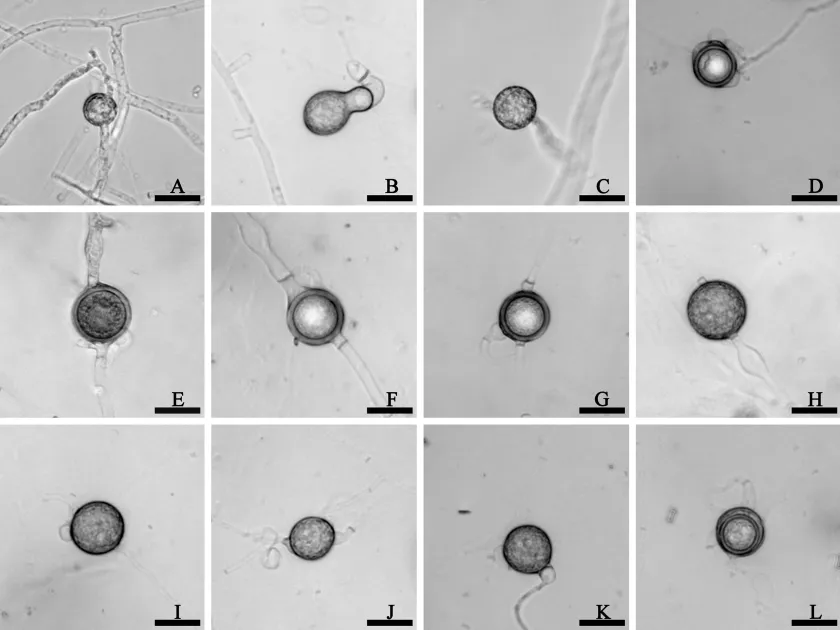
The persistence of this pathogen is attributed to oospores, which are thick-walled resting structures capable of surviving in the soil for extended periods even in the absence of a suitable host plant.
Diagnosis usually requires laboratory analysis, involving morphological observation of reproductive structures such as oogonia and sporangia, or molecular techniques like PCR to distinguish it from closely related Pythium species.
What it damages
This pathogen causes severe damage to seedlings and young plants, particularly in vegetable and ornamental crops grown in greenhouse conditions or hydroponic systems.
Infection primarily results in root rot and damping-off, which disrupts the plant's ability to take up water and nutrients from the soil.
The economic impact is significant for professional nurseries, as infected batches of seedlings often need to be destroyed to prevent the spread of the pathogen to the rest of the crop.
Plants that do survive the initial infection stage typically show severe stunting, reduced biomass, and poor overall health, leading to decreased yields and inferior produce quality.
In advanced stages, the decay of the root system can cause total plant death, especially in environments where humidity is high and the root zone remains consistently waterlogged.
When it appears
The disease is highly dependent on environmental conditions, particularly moisture levels. It thrives in soils or substrates with poor drainage and excessive water content.
The pathogen is active within a moderate temperature range, which often coincides with the periods when seedlings are most sensitive to environmental stressors.
In indoor agricultural settings, the pathogen can be a year-round threat if sanitation protocols are neglected and the humidity in the growing medium is not strictly managed.
Spring and autumn periods are particularly critical for field crops, as higher soil moisture content facilitates the movement of motile zoospores.
Long-term survival in soil as oospores means the pathogen can emerge at any point during the season when temperatures and moisture conditions become optimal for its growth.
Signs of infestation
Initial symptoms are often subtle, appearing as a loss of vigor, slow development, and wilting during the brightest parts of the day, even if the soil is damp.
A closer look at the roots will reveal discoloration, typically turning brown or light tan, and a soft, mushy texture. In many cases, the outer cortex of the root sloughs off, leaving only the central vascular cylinder.
Seedlings may exhibit a "black leg" symptom, where the stem base turns black and shrivels, causing the plant to collapse and fall over.
- Stunted growth;
- Yellowing of lower leaves;
- Root discoloration and rotting;
- Sloughing of root cortex;
- Damping-off of young seedlings.
Under humid conditions, a sparse, white mycelial growth may sometimes be visible on the surface of the soil or the base of the infected plant stems.
Control measures
Effective management begins with strict sanitation: using only sterilized soil or growing media and ensuring all pots, trays, and tools are thoroughly disinfected before reuse.
Water management is crucial. Improving drainage and avoiding over-irrigation prevents the formation of the water films required for the pathogen's zoospores to swim and locate hosts.
Biological control agents, such as beneficial fungi (Trichoderma species) or specific strains of Bacillus subtilis, have proven effective in creating a protective biological barrier around plant roots.
Crop rotation and the removal of infected plant material are essential practices for limiting the buildup of inoculum in the soil over time.
Chemical control can be utilized as a last resort, using approved fungicides, but caution must be exercised to prevent the development of resistance within the pathogen population.
Discussion
No discussions yet — be the first.