
Gladiolus Septoria leaf spot
Septoria birgitae
Description
How to identify
Septoria leaf spot of gladiolus is caused by the fungus Septoria birgitae (also known as Septoria gladioli), a pathogen belonging to the class of Coelomycetes. This fungus specifically targets gladiolus plants, causing significant cosmetic and health decline.
The life cycle of the pathogen involves the production of conidia within fruiting bodies called pycnidia. These structures are essential for the survival and spread of the fungus during the growing season.
Septoria birgitae is an soil-borne and residue-borne pathogen, meaning it can survive in plant debris or soil for multiple seasons until a suitable host plant is available.
The fungus thrives in cool to moderate temperatures and high humidity levels. Frequent overhead irrigation or heavy rainfall during the season accelerates the release of spores and their spread to healthy foliage.
From an agronomical perspective, accurate diagnosis is the first step in management, as Septoria can easily be confused with other fungal leaf spots without proper microscopic examination.
What it damages
The primary damage caused by Septoria birgitae includes the destruction of leaf tissue, which inhibits photosynthesis and weakens the overall vigor of the gladiolus plant.
Affected plants often display chlorosis and premature browning of the leaves. As the disease progresses, the foliage collapses, leading to a reduction in the plant's ability to store energy for the next growth cycle.
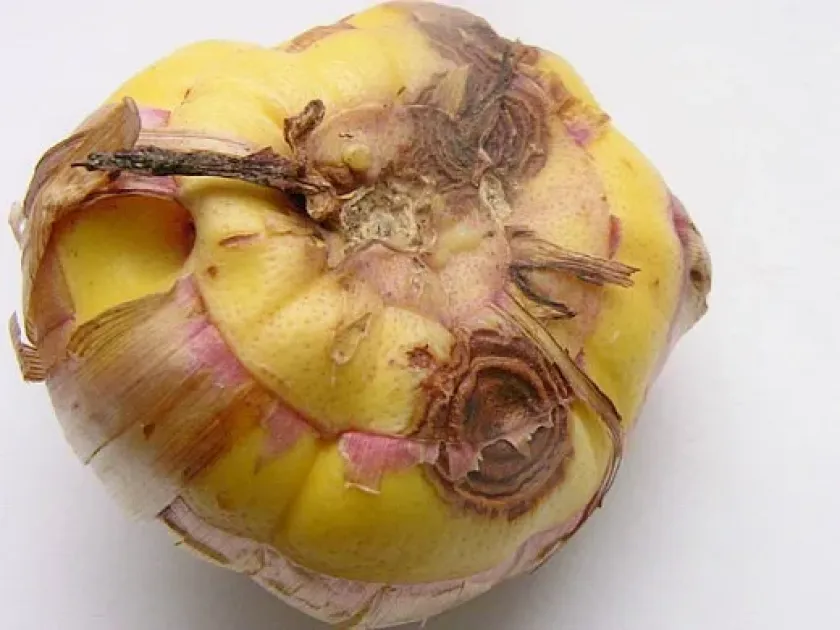
Gladiolus bulbs (corms) are also highly susceptible to the pathogen. Infections on the corm result in unsightly spots that can develop into dry rots, significantly lowering the market value of the corms.
Severe infestations can cause stunting or even death of the plant, especially if the fungus reaches the base of the stem or the crown area, compromising the plant's structural integrity.
Economic damage is substantial for growers, as infected corms exhibit poor germination rates, leading to uneven stands and decreased flower production in subsequent years.
Signs of infestation
Initial symptoms are characterized by small, reddish-brown circular spots on the leaves, which gradually enlarge and may develop a pale, ash-colored center.
The presence of tiny black dots, which are the pycnidia, within the centers of the necrotic spots is the most diagnostic feature of this fungal infection.
On the corms, the disease manifests as sunken, dark brown, or black lesions with a hardened surface texture that does not feel soft or mushy like bacterial rot.
Under conditions of high humidity, a thin, grayish spore mass may be visible on the surface of the lesions, especially on the underside of the leaves.
As the infection advances, multiple lesions on the leaves may merge, causing extensive blighting that makes the entire foliage appear scorched or dead.
Control measures
Effective management begins with the use of pathogen-free corms. Before planting, all corms should be inspected, and any showing signs of lesions or discoloration must be discarded.
Crop rotation is crucial in preventing Septoria outbreaks. Gladiolus should not be planted in the same soil for at least three to four years to break the pathogen's life cycle.
Improvement of cultural practices is vital: ensuring proper spacing between plants promotes airflow and prevents moisture buildup on the foliage, which reduces the chance of spore germination.
Fungicidal treatments, including copper-based products or systemic fungicides like mancozeb, are recommended during the early stages of disease development to protect healthy leaves.
- Removal and destruction of all infected plant materials to reduce the fungal inoculum in the garden.
- Watering the plants at the soil level rather than over the foliage to keep the leaf surface dry.
- Ensuring proper storage conditions, including cool temperatures and good ventilation, for harvested corms.
Causes diseases · 1
Discussion
No discussions yet — be the first.