
Gibberella xylarioides
Gibberella xylarioides
Gibberella xylarioides is an ascomycete fungus that serves as the teleomorph (sexual stage) of the pathogen Fusarium xylarioides. It is a highly specialized plant pathogen known to cause severe vascular wilt in coffee plants, particularly in African coffee-growing regions.
What the section contains
Gibberella xylarioides
The fungus produces perithecia, which are small black fruiting bodies found on the bark of infected coffee trees. These structures allow the fungus to produce ascospores, ensuring its survival and dispersal across coffee plantations.
The pathogen colonizes the xylem (vascular system) of the coffee tree, producing toxins that clog the vessels and prevent the upward transport of water and nutrients. This physiological disruption leads to the characteristic wilting symptoms observed in infected plants.
Transmission occurs through airborne spores and, most critically, through human activity. Pruning tools used on infected trees become contaminated and, if not disinfected, transfer the fungus to healthy trees during routine maintenance.
Being a specialized pathogen, it has developed mechanisms to persist in woody debris and soil, making it a persistent threat that requires rigorous field management to keep under control.
The primary host for Gibberella xylarioides is Coffea arabica (Arabica coffee). The disease it causes, often referred to as tracheomycosis or coffee wilt disease, is one of the most destructive diseases affecting the crop worldwide.
The pathogen causes systemic infection leading to the rapid death of mature trees. Yield losses can be absolute, as once a tree is infected, its productive capacity is destroyed, and the tree eventually dries out and dies completely.
In addition to direct losses, the disease forces farmers to abandon severely infected plots. Replanting these areas is risky due to the long-term survival of the fungus in the soil and remaining plant tissue.
The widespread nature of this pathogen significantly limits the economic viability of coffee production in infested areas. It creates a major barrier to international trade and movement of plant genetic material.
Infection levels are particularly high in older plantations where improper pruning practices have allowed the disease to establish and spread unchecked over several years.
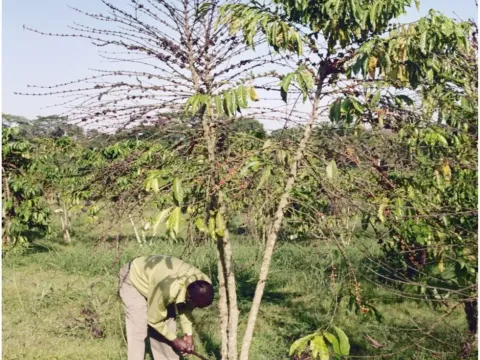
The first external signs of infection include leaf chlorosis and premature yellowing on individual branches. As the pathogen advances, the leaves lose turgor, curl, and fall, causing the canopy to thin significantly.
Close inspection of the tree trunk often reveals cracking bark. The presence of tiny, black, pimple-like structures (perithecia) on the bark surface is a definitive sign of the fungus and confirms an active infection.
A cross-section of an infected branch or trunk will reveal a distinctive brown or dark discoloration of the vascular ring (the xylem). This internal necrosis is where the fungus is actively interfering with water transport.
Trees often die in a sequence, starting from specific branches or sides of the tree and eventually causing complete plant collapse. The tree may appear desiccated despite sufficient irrigation.
- Yellowing and premature leaf fall.
- Black fungal fruiting bodies on the stem bark.
- Brown vascular discoloration visible in wood cross-sections.
- Rapid wilting and death of the entire tree.
Sanitary eradication is the primary method of control. Infected trees must be cut down, uprooted (including the root system), and burned on-site to destroy the inoculum source completely.
Rigorous hygiene protocols for agricultural tools are essential. Pruning shears and saws must be disinfected with alcohol or bleach after contact with every single plant to prevent mechanical spread.
Breeding for resistance remains the most sustainable long-term solution. Research programs focus on identifying coffee cultivars that can withstand G. xylarioides infection without succumbing to wilt.
Quarantine measures are vital to prevent the movement of contaminated coffee plants between regions. Inspections and strict import regulations help keep disease-free zones secure from the introduction of the pathogen.
Since chemical control using systemic fungicides is often ineffective and economically unfeasible for large-scale coffee wilt management, the emphasis is heavily placed on preventative maintenance and early detection.