
Globisporangium debaryanum
Globisporangium debaryanum
Description
How to identify
Globisporangium debaryanum, formerly classified within the genus Pythium, is a soil-borne oomycete pathogen. It is a fungus-like organism belonging to the kingdom Chromista, notorious for causing significant losses in agricultural and ornamental sectors.
The organism exists as a non-septate, branched mycelium that actively colonizes roots. Its lifecycle involves the production of motile zoospores, which utilize water films in the soil to navigate towards host roots, triggered by root exudates.
In adverse environmental conditions, the pathogen produces oospores. These thick-walled resting spores are highly resistant to desiccation and can persist in the soil for several years, acting as the primary source of inoculum.
The pathogen thrives in high-moisture environments, particularly where soil drainage is poor. Temperatures ranging from 15°C to 25°C are ideal for rapid colonization and the discharge of zoospores.
Once in contact with a host, the pathogen secretes enzymes, specifically cellulases and pectinases, which degrade the integrity of the root cells. This leads to the characteristic tissue decay associated with this type of infection.
What it damages
Globisporangium debaryanum targets a broad host range, primarily affecting the seedlings of vegetables and floriculture crops. Tomatoes, cucumbers, peppers, and various leafy greens are particularly susceptible during early development.
The damage is most severe during the pre-emergence and post-emergence stages of plant growth. It attacks the hypocotyls and the root cortex, causing systemic collapse of the plant's vascular integrity.
In professional greenhouse settings, this pathogen can cause rapid and widespread destruction of entire trays of seedlings. Contaminated irrigation water or poorly sanitized substrate are frequent vectors for transmission.
While the most visible impact is seedling death, the pathogen also stunts the growth of older plants by reducing the functional root mass. This lowers the nutrient and water uptake capacity of the host, leading to lower yields.
The economic damage is exacerbated by the fact that the pathogen is difficult to eradicate once it becomes established in a greenhouse or field, necessitating long-term management strategies.
Signs of infestation
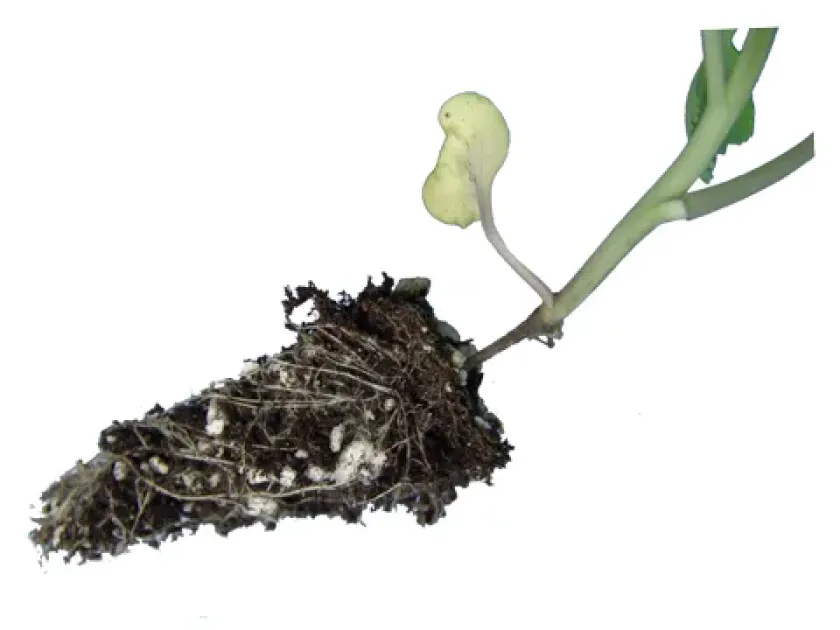
The most recognizable symptom is known as "damping-off." This involves the rapid decay of the stem base, making the plant appear as though it has been pinched at the soil level, leading to sudden collapse.
Root systems of infected plants appear discolored, ranging from light brown to black. In severe cases, the outer cortex of the roots sloughs off, leaving only the inner vascular core, which makes the roots look thin and stringy.
Above-ground signs include sudden wilting, often occurring rapidly even if the soil remains moist. This is a direct consequence of the damaged roots being unable to transport water to the leaves.
A fine, white, web-like mycelium may be visible on the surface of the soil around the base of the stems under conditions of very high humidity, often indicating an advanced stage of colonization.
If germination failure occurs, seeds may rot in the soil before emerging, resulting in patchy, uneven seedling stands within nursery flats or field rows.
Control measures
Sanitation is the cornerstone of management for this pathogen. Utilizing pasteurized or sterilized soil, as well as keeping tools and growing benches clean, is essential for preventing outbreaks.
Managing soil moisture is critical; overwatering must be avoided. Proper irrigation management, along with maintaining excellent air circulation and soil drainage, significantly suppresses the pathogen's activity.
Biological control agents, particularly beneficial fungi like Trichoderma species or Bacillus bacteria, can be incorporated into the substrate to create a suppressive environment against the pathogen.
In cases of confirmed heavy infection, chemical fungicides targeting oomycetes (such as metalaxyl or fosetyl-aluminum) may be used. These treatments are typically applied as a soil drench to provide localized protection.
Implementing a strict hygiene protocol, including treating seeds with fungicides before planting and ensuring that irrigation water is pathogen-free, is highly effective in preventing disease establishment.
Causes diseases · 1
Discussion
No discussions yet — be the first.