
Fabraea leaf spot
Fabraea maculata
Fabraea maculata is a pathogenic fungus belonging to the kingdom Fungi, phylum Ascomycota. It is recognized as the cause of leaf spot diseases in several members of the Rosaceae family.
What the section contains
Fabraea leaf spot
The fungus is also known in its sexual stage as Diplocarpon mespili. It is a well-studied plant pathogen that impacts the growth and fruit production of various pome fruits globally.
The pathogen completes its life cycle by producing spores in apothecia on overwintered leaves and conidia on infected host tissues during the growing season.
Microscopic identification of the fungus involves detecting its characteristic two-celled, slightly curved or pear-shaped conidia, which are diagnostic for this species.
Understanding the taxonomic position and biological traits of this fungus is essential for developing effective strategies to prevent its spread in orchards.
The primary hosts for Fabraea maculata include pear, quince, medlar, and hawthorn trees. The disease can cause severe damage in both commercial orchards and nurseries.
Infection affects leaves, petioles, fruits, and young shoots. Severe outbreaks lead to premature defoliation, which severely stresses the tree and reduces vigor for the following year.
Fruit damage manifests as dark, sunken spots that may crack, making the fruit unmarketable and susceptible to secondary decay pathogens.
In nurseries, this fungus can be devastating, causing total leaf loss in young trees and significantly stunting their development if not treated with fungicides.
The economic impact of this pathogen is high, as it directly affects yield quantity and quality, leading to financial losses for fruit producers.
Infection begins in the spring when moisture and moderate temperatures trigger the release of spores from overwintered plant debris in the orchard.
Rain splash and wind are the primary vectors for transporting the fungal spores to the new growth, starting the cycle of infection early in the season.
Throughout the summer, the fungus continues to produce secondary inoculum, spreading rapidly whenever wet weather conditions occur, such as heavy rain or dense morning fog.
The disease reaches its peak during humid periods, which favor the proliferation of the pathogen and the rapid spread of the lesions on host plants.
By autumn, the fungus prepares for the dormant season by surviving in fallen leaves, making sanitation a critical step in breaking the infection cycle.
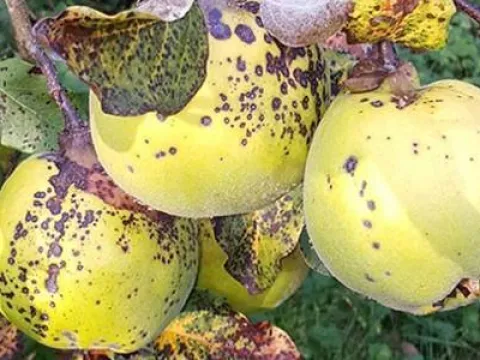
Early symptoms appear as small, purple to reddish-brown spots on the upper leaf surface, which gradually enlarge and darken to become black or dark brown.
Small, raised, black fungal structures (acervuli) often form in the center of these spots, which can be observed with a hand lens as evidence of sporulation.
Infection of the petioles leads to rapid chlorosis and subsequent abscission of the leaves, resulting in partial or total defoliation of the tree.
On fruits, the spots are deep and necrotic, often leading to fruit deformation and early fruit drop, which significantly reduces the harvestable yield.
- Dark spots on leaves followed by yellowing and premature leaf fall.
- Sunken necrotic lesions on fruit skin.
- Lesions and cankers on young, succulent shoots.
Effective sanitation is the first line of defense; removing and destroying fallen leaves during autumn significantly reduces the inoculum potential for the next season.
Pruning trees to improve air circulation within the canopy helps keep the foliage dry, which suppresses the germination and spread of fungal spores.
Chemical control involves the application of fungicides during critical growth stages, particularly from the green cluster stage through the early fruit development phase.
Copper-based fungicides and modern systemic compounds (such as triazoles or strobilurins) are highly effective in managing the disease when applied preventatively.
Integrated pest management (IPM) practices, including proper tree nutrition and monitoring, are essential for maintaining a healthy orchard and minimizing the impact of Fabraea maculata.