
Eyespot of maize
Kabatiella zeae
Description
How to identify
Kabatiella zeae is a fungal pathogen belonging to the kingdom Fungi and the division Ascomycota. It is the causal agent of eyespot, a disease specifically targeting maize crops, particularly in regions characterized by temperate climates and high humidity levels.
This microscopic fungus colonizes leaf tissues and produces conidia in sporodochia. Kabatiella zeae is known for its ability to persist on crop debris, making it a persistent and challenging pathogen within maize-based agricultural systems.
As a specialized pathogen, it has evolved to infect maize efficiently. The fungus requires specific environmental conditions to germinate and colonize host tissue, primarily relying on wind and rain splash for dissemination.
The taxonomic classification identifies it as an imperfect fungus. Its limited host range makes it distinct from generalist pathogens, allowing for focused crop management strategies designed to interrupt its specific life cycle.
Research confirms that the pathogen's survival strategy is heavily reliant on overwintering in maize residue. Understanding its developmental biology is crucial for integrated pest management in high-yield corn production.
What it damages
The primary host for this fungus is corn. Infection results in premature leaf senescence and necrosis, which significantly inhibits the plant's ability to photosynthesize, directly impacting grain filling and overall yield potential.
Significant economic losses occur when the disease progresses rapidly across the upper leaf canopy. The reduction in green leaf area limits the energy available for kernel development, leading to decreased grain weight and quality.
Damage is not limited to leaves; the pathogen can also infect husks. This weakened state makes the entire plant more susceptible to secondary pathogens, including those causing stalk rots and ear infections, further reducing the harvest value.
In severe cases, yield reductions can reach 20% or more, depending on the susceptibility of the hybrid and the timing of the infection. Effective management is essential to protect the economic viability of the crop.
The physical destruction of leaf tissue also serves as a portal for opportunistic microorganisms. This complex of infections exacerbates the loss, potentially impacting not just yield, but also the nutritional quality of the maize grain.
When it appears
The disease typically emerges during the mid-to-late vegetative stages. Development is favored by prolonged periods of cool, wet weather, which provide the necessary surface moisture for conidia to germinate.
Optimal temperatures for the fungus range between 15°C and 22°C (59°F - 72°F). Hot and dry weather conditions significantly impede the progression of the mycelium and the production of new conidia.
The pathogen overwinters as mycelium or spores on corn debris. In the spring, when temperatures rise and moisture is available, the pathogen resumes development, producing spores that initiate primary infections on emerging plants.
Secondary infection cycles occur repeatedly throughout the growing season, provided that moisture levels remain favorable. These cycles allow the disease to move from lower, older leaves up to the ear leaves.
At the end of the season, as the plant matures, the fungus shifts toward the production of survival structures. These allow the pathogen to remain viable through the winter, ensuring a steady inoculum load for the next planting season.
Signs of infestation
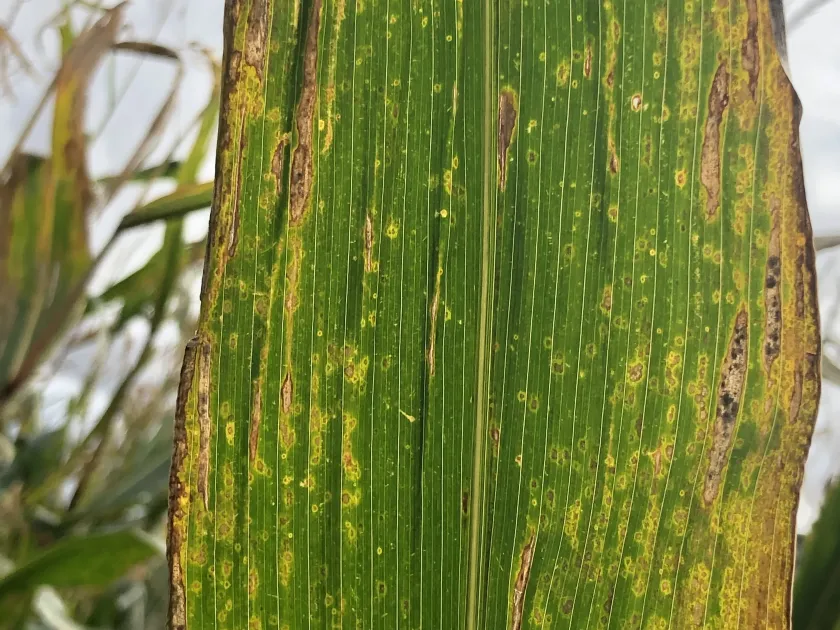
The signature symptom is the appearance of small, circular spots, typically 1–5 mm in diameter. These spots feature a pale, light-colored center surrounded by a distinct dark-brown or purple ring, resembling an eye.
Chlorotic halos often develop around these spots due to the secretion of fungal metabolites. In field conditions, the progression of symptoms generally starts at the bottom of the plant and moves upwards as the season advances.
- Small, translucent spots on the lower leaf canopy
- Characteristic dark, ring-like borders around lesions
- Coalescence of lesions leading to large, blighted leaf areas
- General yellowing (chlorosis) of the leaf tissue
- Presence of microscopic fungal sporulation in high humidity
Husk infection may manifest as similar small, circular lesions. While these may seem minor, they can allow the fungus to colonize the ear, especially if cool and wet conditions persist during the grain maturation phase.
Early identification is key. Scouting efforts should focus on the lower leaves, particularly after silking, to determine the prevalence of the disease and the necessity for protective fungicide applications.
Control measures
Cultural control practices are the first line of defense. Burying infested maize debris through deep plowing helps accelerate the decomposition process, effectively reducing the amount of overwintering inoculum available for the next season.
Crop rotation remains a highly effective strategy. By alternating corn with non-host crops for at least two years, farmers can significantly lower the pressure of Kabatiella zeae in the field environment.
The use of resistant or tolerant hybrids is a cornerstone of modern disease management. Plant breeders continue to prioritize resistance to eyespot to minimize the reliance on chemical inputs.
Fungicide applications, specifically those utilizing triazoles or strobilurins, can be effective if applied early enough upon the detection of initial disease symptoms. Proper timing is critical for maximizing efficacy.
Optimizing plant population density and improving soil fertility also play a role in disease suppression. A healthy, well-ventilated crop canopy is less prone to the prolonged humidity required for the successful spread of eyespot.
Causes diseases · 1
Discussion
No discussions yet — be the first.