
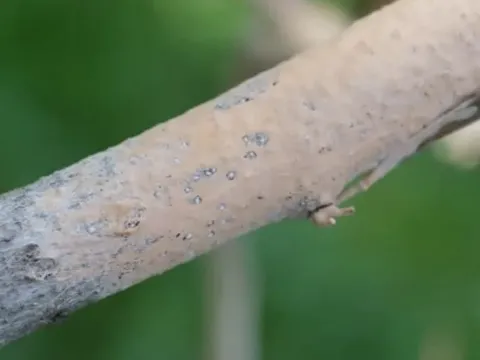
Erythricium salmonicola
Erythricium salmonicola
Erythricium salmonicola is a fungal pathogen belonging to the Basidiomycota division. It is the causative agent of the notorious pink disease, which poses a significant threat to a wide range of woody plants, especially in tropical and humid subtropical environments worldwide.
What the section contains
Erythricium salmonicola
This fungus acts as an obligate parasite, specifically targeting the bark and cambium of trees and shrubs. Its mycelium colonizes the surface and internal tissues of branches, causing severe disruption to the vascular transport system of the host plant, which is critical for its survival.
Identifying the pathogen is primarily based on the visual appearance of a distinctive pink or salmon-colored coating on the affected bark. This colorful layer is a characteristic sign of the fungus in its active sporulation phase, making it relatively recognizable for field diagnosis.
The life cycle of the pathogen involves the production of basidiospores, which are efficiently dispersed by wind, rain splashes, and insects. Once these spores land on a susceptible surface, they germinate to form hyphae that penetrate the bark, initiating the colonization process.
As a necrotrophic pathogen, Erythricium salmonicola secretes specialized toxins that kill plant cells ahead of the fungal front. This feeding strategy allows the fungus to aggressively expand across the plant surface, leading to rapid tissue death and significant structural damage to the host.
The pathogen impacts a diverse range of crops, including cocoa, coffee, tea, citrus, and various ornamental trees. Young plants are particularly vulnerable, as their bark is thinner and more easily breached by the fungal hyphae during periods of high humidity.
The primary damage caused by the fungus is the blockage of sap flow due to the necrosis of bark and vascular tissues. This systemic failure results in the wilting of foliage, branch dieback, and eventually the death of the entire tree if the trunk or main stem is girdled.
Beyond the direct destruction of tissues, the lesions created by Erythricium salmonicola serve as entry points for secondary pathogens, such as wood-boring insects and opportunistic bacteria. This complex infection pattern exacerbates the overall decline of the affected plantation.
The economic impact of this disease is substantial, often leading to reduced crop yields and the necessity for costly sanitary pruning or complete removal of infected trees. In severe cases, entire plantations can be rendered unproductive, leading to catastrophic financial losses for farmers.
Persistence of the fungus in plant debris is a major challenge for management. The pathogen can survive for extended periods in dead wood, meaning that if sanitary protocols are not strictly followed, the disease will inevitably recur in subsequent seasons.
The development of Erythricium salmonicola is heavily dependent on moisture and temperature regimes. It thrives in high humidity (above 80%) and moderate-to-high temperatures, conditions frequently found during monsoon seasons or periods of heavy rainfall in tropical regions.
Spore dissemination is most active during the rainy season. The presence of water droplets on the bark is essential for the movement of spores, facilitating their spread from the upper canopy to lower branches, which can lead to a widespread infection throughout the tree.
In dry periods, the fungus often slows its growth, retreating into the deeper layers of the bark to survive. However, as soon as environmental moisture levels rise, the pathogen resumes its activity, making it a very persistent disease that is difficult to eradicate permanently.
A meteorological approach is vital for disease prediction. By monitoring the frequency of rainy days and relative humidity, agronomists can time their fungicide applications to preemptively block spore germination and prevent the early stages of a pink disease outbreak.
The interplay between seasonal weather patterns and plant growth stages dictates the severity of the outbreak. Understanding this relationship helps in managing orchards effectively, ensuring that protective measures are in place exactly when the risk of infection is at its peak.
The most reliable sign of infection is the emergence of a bright pink or salmon-colored powdery or crust-like growth on the bark. This is the fungus producing its spores, and it often spreads as a continuous patch or along specific cracks in the bark surface.
- Cracking and peeling of the bark in infected zones.
- Sudden yellowing and wilting of leaves on seemingly healthy branches.
- Visible pink mycelial mats forming in the forks of branches.
- Gummosis, or the oozing of sap from the bark, occurring at active lesion sites.
- Gradual desiccation of twigs and branches that eventually lose all structural integrity.
In the early stages, the fungal growth may appear as a subtle, whitish, web-like film. If spotted, it is critical to initiate intervention immediately, as the infection progresses rapidly under humid conditions, eventually turning into the characteristic pink layer.
Once the bark is peeled back from an infected area, one may observe discolored, decayed wood beneath. This indicates that the pathogen has successfully breached the outer layers and is actively killing the internal transport tissues, leading to inevitable branch death.
Differentiation from other bark diseases is crucial. The distinct pink color is unique to Erythricium salmonicola. If the coloration does not match the expected salmon-pink hue, other pathogens or physiological stress factors should be investigated by the agronomist.
Radical sanitary pruning is the cornerstone of control. All infected branches must be removed, cutting at least 10–15 cm into healthy tissue to ensure that the internal mycelium is fully eliminated. All removed material must be burned to destroy the spore source.
After pruning, application of protective fungicides to the cut surfaces is essential. This prevents re-infection through the open wounds. Regular disinfection of pruning tools between trees is also mandatory to prevent the human-aided spread of spores within the orchard.
Chemical control programs often rely on copper-based fungicides. These are applied during the rainy season to create a protective residue on the bark that inhibits the germination of basidiospores, effectively acting as a barrier against the disease.
Cultural management is equally important. Pruning to open up the canopy improves air circulation and sunlight penetration, which accelerates the drying of branches after rain. This lower moisture environment directly hinders the growth and reproduction of the pathogen.
Maintaining high plant vigor through proper fertilization and pest management increases the host's natural resistance. A healthy tree is significantly better equipped to compartmentalize and limit the spread of Erythricium salmonicola, reducing the overall impact of the infection.