
Ergot
Cordyceps purpurea
Ergot, caused by the fungus Claviceps purpurea, is a parasitic disease that affects the ovaries of various cereal crops and wild grasses.
What the section contains
Ergot
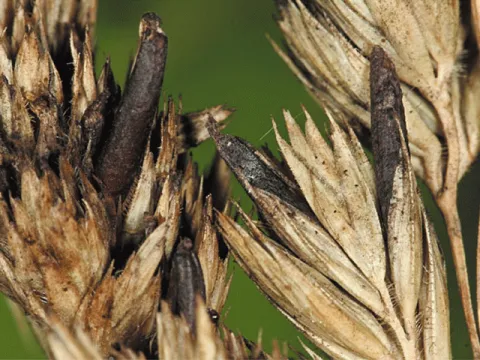
The fungus is characterized by the production of sclerotia, which are dark, horn-shaped masses that replace the healthy grain within the ear of the plant.
The life cycle is complex: sclerotia overwinter in the soil, and in the spring, they germinate to release spores that infect the flowering spikes of host plants.
Asexual reproduction produces honeydew, a sugary fluid containing conidia, which are then spread to other plants by wind, rain, or insects.
The fungus produces toxic alkaloids, specifically ergotamine and ergometrine, which represent a significant health risk to both humans and livestock if ingested.
Ergot primarily infects rye, but it is also common in wheat, barley, oats, and numerous wild grass species found in field margins.
The physical damage results in reduced grain yield, as each sclerotium replaces a potential kernel of grain, directly impacting total harvest weight.
Beyond quantity, the quality of the harvest is severely compromised. Grain contaminated with ergot is often rejected by grain elevators or food processors due to toxicity concerns.
Infected crops show decreased vigor, and the spread of spores within the field can lead to significant economic losses if not managed during the flowering stage.
The presence of ergot in seed stocks can lead to the introduction of the pathogen into previously clean fields, perpetuating the cycle of infection.
The infection window for ergot is strictly limited to the flowering period of the cereal crop, as the fungus must land on an open flower.
Cool and wet weather conditions significantly increase the risk of disease outbreaks, as these factors promote both sclerotia germination and the spread of honeydew.
Extended periods of rainfall during the heading and flowering stages keep the florets open longer, increasing the probability of successful fungal invasion.
Optimal temperatures for the development of Claviceps purpurea fall within the 15°C to 25°C range, which is common in many temperate growing regions.
Conversely, hot and dry weather conditions accelerate flowering and pollination, minimizing the time the grain is susceptible to fungal infection.
The earliest sign of infection is the presence of honeydew, a sticky, sugary exudate that leaks from the infected spikelets and may attract flies and other insects.
As the plant matures, the honeydew disappears, replaced by the development of hardened, dark-purple or black sclerotia that protrude from the glumes.
Infected ears often appear partially sterile, with obvious malformations compared to healthy, fully developed grain spikes nearby.
Farmers can often spot the disease in the field by looking for the distinctive dark "horns" sticking out of the cereal heads during the maturation phase.
During harvest, small pieces of sclerotia may be found in the grain bin, indicating that the crop was successfully harvested but is contaminated.
The primary control method is the use of high-quality, certified, and ergot-free seed, which prevents the introduction of the pathogen at planting.
Crop rotation with non-host crops is essential, as the sclerotia in the soil typically lose viability within a year or two if they do not find a host.
Deep plowing can bury sclerotia at a depth of 5 cm or more, which prevents the germination structures from reaching the soil surface to release their spores.
Mowing wild grasses in field margins and ditches is a crucial practice to eliminate secondary reservoirs that harbor the fungus throughout the season.
While direct chemical control is limited, general fungicide programs aimed at protecting the flowering head can reduce the risk of infection in high-pressure years.