
Ergot
Claviceps purpurea
The causative agent of ergot is the ascomycete fungus Claviceps purpurea, a highly specialized parasite that attacks the ovaries of various grasses.
What the section contains
Ergot
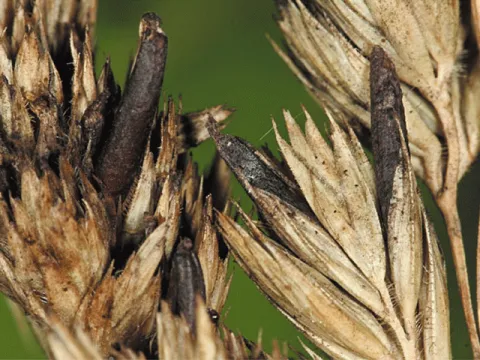
During its life cycle, the fungus produces sclerotia, known as ergots, which are dark purple, hard fungal structures that replace the healthy grain in the ear.
The primary infection occurs in spring when overwintered sclerotia germinate, releasing spores that are carried by wind or insects to the flowering spikes of cereal plants.
Secondary infection is spread by conidia, which develop in a sticky, sweet exudate known as "honeydew," attracting insects that further spread the fungus.
The fungus acts as an obligate parasite, consuming the nutrient reserves of the developing grain and replacing it entirely with its own mycelial mass.
Ergot affects a wide range of cereals, including rye, wheat, barley, oats, and millet, with rye being particularly susceptible to heavy infestations.
Wild grasses such as couch grass, fescue, and foxtail often serve as reservoirs for the pathogen, allowing the disease to persist in the field environment.
The primary damage is the reduction of grain yield and quality, but the most severe issue is the toxicity of the sclerotia due to the presence of alkaloids.
Consumption of contaminated flour or feed can lead to ergotism, a serious condition affecting both humans and livestock, causing neurological and vascular damage.
Market restrictions and the need for expensive cleaning processes make ergot a significant economic threat to grain producers and exporters worldwide.
The infection process is strictly synchronized with the flowering phase of the host plant, as the fungal spores require access to the open florets.
Cool, humid weather conditions during the flowering period significantly promote the germination of sclerotia and the rapid spread of the honeydew stage.
The "honeydew" phase usually becomes visible about two weeks after initial infection, marking the period of peak secondary inoculum production.
By the time the cereal crop reaches maturity, the sclerotia have hardened and fallen to the soil, where they enter a dormant phase until the next growing season.
Erratic weather that prolongs the flowering duration of the crop increases the window of vulnerability, leading to higher levels of field infection.
The initial sign of an ergot attack is the appearance of sticky, cloudy liquid droplets on the flowering spikes, referred to as honeydew.
As the infection progresses, elongated, dark purple or black structures (sclerotia) emerge from the spikelets, clearly visible to the naked eye.
Affected plants often show incomplete grain filling, with the sclerotia taking the place of the developing kernels within the floral glumes.
In cases of heavy infestation, a distinct sweet or pungent odor may be detected in the field during the active exudate phase.
- Appearance of sticky honeydew droplets on spikes.
- Presence of hard, black ergot bodies replacing grains.
- Reduced kernel count in the affected ears.
- Presence of fungal bodies in the harvested grain mass.
The most fundamental control measure is using certified, ergot-free seed, as sclerotia are often spread through contaminated planting stock.
Crop rotation is essential because the longevity of sclerotia in the soil is typically limited to one season, breaking the pathogen's cycle.
Deep plowing of stubble after harvest effectively buries sclerotia, preventing them from germinating and releasing spores during the subsequent spring.
Integrated weed management, especially targeting wild grasses along field margins, is crucial to eliminate the primary sources of seasonal inoculum.
Mowing field borders before the sclerotia reach maturity can significantly reduce the amount of inoculum released into the main crop area.