
Turnip mosaic
Turnip mosaic
Description
How to identify
The causative agent of the disease is the Turnip mosaic virus (TuMV), belonging to the Potyvirus genus. It is a dangerous plant pathogen with a single-stranded RNA genome that infects a wide range of agricultural crops, primarily from the Brassicaceae (Cruciferous) family.
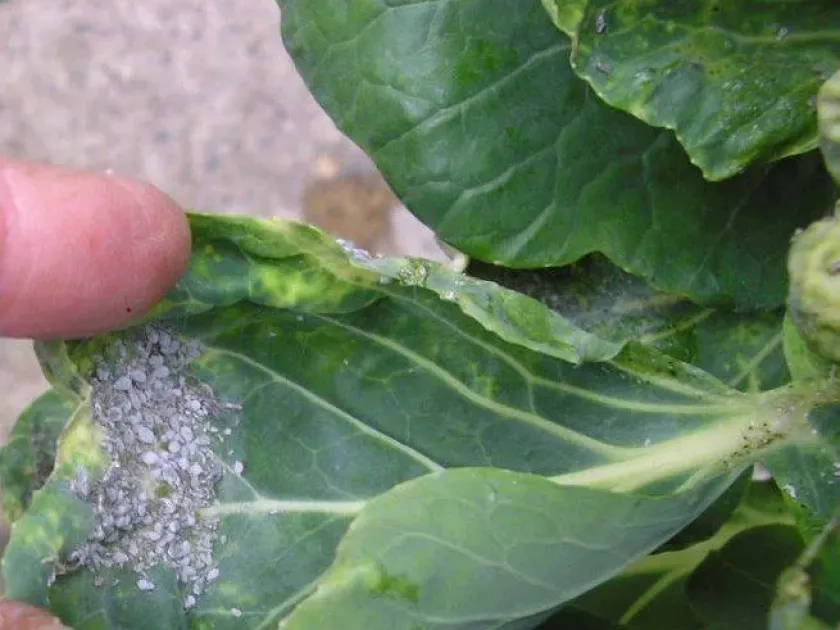
The virus is transmitted in a non-persistent manner, which means the rapid transmission of the pathogen by insect vectors after short feeding periods on infected plants. The primary vectors for spreading the infection in field conditions are various species of aphids.
In addition to aphids, the virus can be transmitted mechanically through cultural practices, contaminated tools, or contact between damaged tissues of neighboring plants, although this pathway is less significant on a large scale.
The stability of the virus outside its host organism is relatively low, yet it successfully persists in perennial weeds and wild cruciferous species throughout the winter period.
The virus taxonomy includes numerous strains that may vary in virulence and host range, which significantly complicates the breeding of resistant varieties and hybrids.
What it damages
The main hosts for infection are members of the Brassicaceae family: turnips, all types of cabbage (white, cauliflower, Brussels sprouts), rapeseed, mustard, radish, and daikon. In some cases, the virus can infect ornamental plants and certain species from other families.
The harmfulness of the virus is manifested in a significant reduction of plant productivity. Affected specimens are severely stunted, their vegetative mass decreases, leading to substantial losses in the market quality of the harvest.
In root crops such as turnips and radishes, deformation of the roots is observed, and their growth becomes uneven, making the produce unsuitable for sale or long-term storage.
When cabbage is infected, the head formation process is disrupted: it becomes loose, underdeveloped, or fails to form entirely, which leads to a total loss of the economic viability of cultivating the crop on those plots.
The infection also lowers the plant's immune response, making them more vulnerable to secondary bacterial and fungal diseases that develop on damaged tissues, exacerbating the overall suppression of the crop.
When it appears
The development of the disease begins in the spring-summer period, when a peak in the activity of insect vectors is observed. Aphids migrate to young seedlings of cruciferous crops, transferring the virus from nearby reservoirs.
Favorable conditions for the intensive spread of the virus include warm, dry weather that promotes rapid aphid multiplication, as well as the presence of abundant weed growth near fields.
The spread of infection within crops occurs in waves, following the cycles of insect migration. The earlier a plant is infected, the more severe the consequences for its growth and crop quality will be.
In the autumn, the virus can continue to circulate in winter oilseed rape crops or on remaining weeds, where it persists until the following spring in host plant tissues.
Failure to control pest populations early in the growing season almost guarantees a massive spread of mosaic on the field if a primary source of infection exists within the range of aphid activity.
Signs of infestation
Typical signs of infection include specific patterns on leaves: the alternation of light green and dark green areas, forming a mosaic design. Gradually, these areas may become necrotic.
The disease is characterized by the following visual symptoms:
- Deformation and curling of leaf blades.
- Appearance of chlorotic spots, rings, or stripes.
- Severe crinkling or puckering of leaf edges.
- Stunting of the entire plant compared to healthy individuals.
- Darkening and death of tissues (necrosis) in acute cases.
When infected at early growth stages, plants often show a sharp reduction in internodes, giving them a stunted, "bushy" appearance that cannot be confused with micronutrient deficiencies.
Symptomatology may vary depending on the specific virus strain and plant cultivar resistance; therefore, for accurate diagnosis in complex cases, serological methods (ELISA) or PCR analysis are recommended.
Control measures
Effective protection against Turnip mosaic is based on an integrated approach, as there is no direct cure for viral plant diseases with chemical treatments under field conditions.
The highest priority is the eradication of weeds from the Brassicaceae family (such as shepherd's purse, field pennycress, and hedge mustard), which act as primary winter reservoirs for the virus.
It is necessary to conduct strict monitoring of aphid populations and apply insecticides at early stages upon detecting pests to prevent massive transmission of the virus to the crops.
It is important to maintain spatial isolation between new crop plantings and areas where disease outbreaks have already been recorded, and to follow crop rotation schemes excluding cruciferous plants for 2–3 years.
The use of certified healthy seed material and the cultivation of modern resistant hybrids are the most effective long-term measures for managing this pathogen.
Discussion
No discussions yet — be the first.