
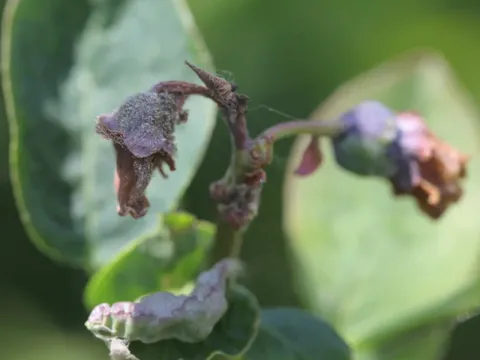
Dothichiza caroliniana
Dothichiza caroliniana
Dothichiza caroliniana is a pathogenic fungus belonging to the Ascomycota division. This microorganism is classified as a pathogen causing necrotic and ulcerative diseases in various woody plants and shrubs.
What the section contains
Dothichiza caroliniana
Systematically, this fungus is closely related to pathogens that cause shoot and bark dieback. It is frequently encountered in forest ecosystems and ornamental nurseries, specifically targeting weakened plant tissues.
The fungal mycelium penetrates deep into the bark and cambium, forming fruiting bodies known as pycnidia. Inside these structures, conidia develop, serving as the primary mechanism for disease transmission during the growing season.
Identifying this pathogen can be challenging, as it often mimics other necrotrophic fungi. Accurate determination typically requires laboratory analysis of the culture and a detailed examination of conidial morphology.
The biology of the species has been studied within the scope of forest phytosanitary surveillance. It prefers tissues with a compromised physiological state, which makes it particularly dangerous for young saplings.
The primary hosts are various deciduous trees, including introduced ornamental species. The pathogen causes the most significant damage under conditions of high humidity and high-density planting.
The pathogen infects the bark of branches and trunks, causing local necrosis. Over time, the necrosis encircles the entire shoot, which disrupts the transport of essential nutrients and water.
The activity of the fungus leads to the wilting and drying of individual branches, and in severe cases, the death of the entire plant. Weakened specimens, especially those stressed by frost or drought, are highly susceptible.
In nurseries, the damage manifests as a loss of market value for saplings and mass mortality shortly after transplantation. This results in direct economic losses for agricultural businesses.
Infection spreads through wind and rain splashes, which carry conidia to neighboring healthy plants. Insects can also act as vectors by visiting damaged bark tissues.
Initial signs of infection appear as small darkened spots on the bark, which gradually depress into the tissue. These areas often develop a reddish or brown discoloration.
As the pathogen develops, numerous small bumps known as pycnidia form within the infected bark. These structures eventually rupture the epidermis, becoming visible to the naked eye.
During the summer, a light or yellowish mass of conidia may emerge from the pycnidia under humid conditions. This is a clear indicator of the active phase of fungal dissemination.
Leaves on the affected branches may yellow prematurely, wilt, and drop, while the shoots themselves become brittle and dry. Characteristic cracks often form at the boundary between healthy and diseased tissue.
Peeling the bark from an infected area reveals browning of the cambium and the presence of dark mycelium. This serves as a key diagnostic feature during field inspections.
The primary control measure involves adhering to strict agrotechnical practices aimed at boosting plant immunity. It is crucial to perform timely pruning of diseased branches, including a portion of healthy tissue.
Disinfecting tools after every contact with infected plants is necessary to prevent spore transmission. It is recommended to treat pruning cuts with protective antiseptic pastes to prevent colonization.
The application of copper-based fungicides is effective in limiting fungal development during the spring season. Preventative spraying helps reduce the overall inoculum density in nurseries.
Maintaining proper planting density and ensuring adequate crown aeration is essential. Excess moisture and overcrowding facilitate the rapid spread of the disease, making regular thinning mandatory.
Disposal of plant residues by burning is a mandatory requirement. Cut branches must not be left in the field, as they serve as a source for the accumulation and spread of the pathogen.