
Dothidella vacciniicola
Dothidella vacciniicola
Dothidella vacciniicola is an ascomycete fungus that acts as a specialized pathogen primarily affecting plants within the Ericaceae family, particularly those in the Vaccinium genus.
What the section contains
Dothidella vacciniicola
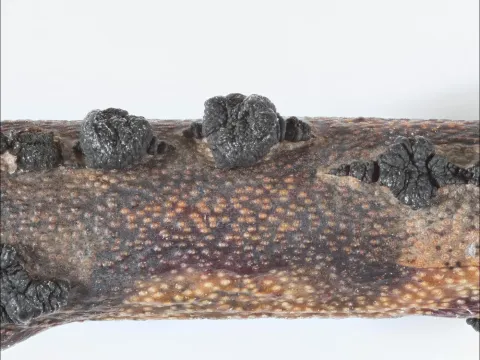
The fungus is characterized by the production of stromatic fruiting bodies that develop within the host plant's tissues, eventually erupting through the epidermis to release spores.
As a pathogen, it thrives in cool, humid environments typical of cranberry bogs or managed heathland plantations where air circulation is restricted.
Taxonomically, it is classified under the order Dothideales. Its biology involves a cycle that is highly dependent on periods of leaf wetness and stable temperatures during the growing season.
Identification often requires careful observation of the specific stromatic structures formed on the leaves and stems, which distinguish it from other common fungal leaf spot pathogens.
The primary hosts for Dothidella vacciniicola are cranberries and occasionally lingonberries. The damage caused by the fungus leads to significant loss of photosynthetic capacity in infected plants.
Infection results in premature leaf drop, which significantly weakens the plants and reduces their vigor over subsequent seasons. This often manifests as reduced vegetative growth.
The impact on fruit production is also notable, as the fungus can infect reproductive structures, leading to reduced flowering success and poor fruit set during the harvest season.
Extensive infections can result in the death of individual shoots or even entire plants if left uncontrolled, leading to patchiness and reduced density within the cultivation area.
Economic damage includes yield loss and the increased cost of disease management programs required to restore the health of the affected plant population.
Signs of infection include small, scattered brown spots on the leaves, which eventually turn grayish or black as the fungus matures and begins to produce its fruiting bodies.
A distinctive feature of these spots is the presence of small, dark, raised dots in the center, which represent the fungal structures where spores are produced.
Infected leaves usually show signs of chlorosis (yellowing) followed by early abscission. This thinning of the foliage is a key visual indicator of the disease's severity.
Stem infections can appear as elongated, necrotic lesions. These can eventually girdle the stem, causing the tissue above the lesion to wilt and die prematurely.
Symptoms are typically most pronounced on older leaves near the base of the plant, where humidity levels remain higher for longer periods during the day.
Effective control requires a multi-faceted approach, starting with the maintenance of good water management practices to prevent waterlogged soil conditions that favor fungal growth.
Cultural practices, such as the removal and destruction of fallen leaves and infected plant debris after harvest, are crucial to reducing the amount of overwintering inoculum.
Chemical control involving copper-based fungicides or appropriate systemic treatments should be applied based on local monitoring and established infection risk thresholds.
Improving airflow within the planting site through proper spacing and weed control is essential to lower humidity levels and discourage the spread of fungal spores.
Regular surveillance programs during the early stages of the growing season help in the timely detection of disease hotspots, allowing for targeted control rather than widespread application.